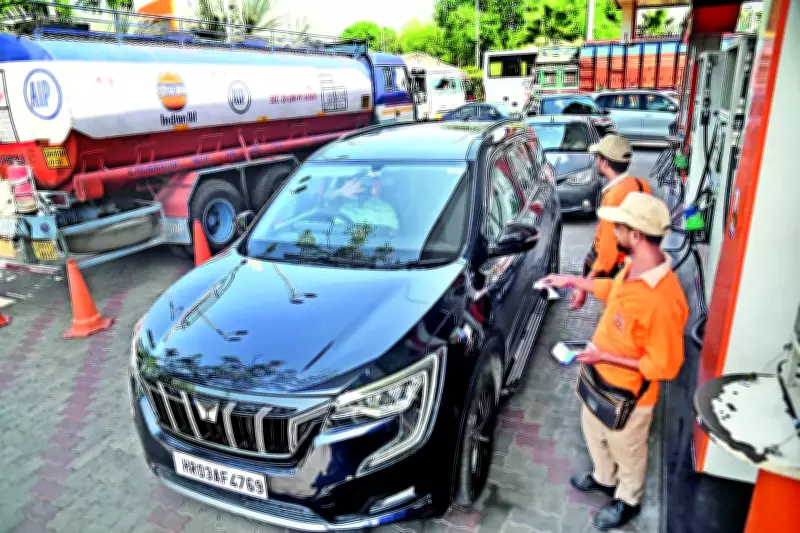
The Chandigarh administration has intensified scrutiny of petrol pumps across the city, with the excise department launching a data-matching exercise to detect potential VAT evasion. Demi-official letters have been sent to major oil marketing companies—Indian Oil Corporation Ltd (IOCL), Bharat Petroleum Corporation Ltd (BPCL), and Hindustan Petroleum Corporation Ltd (HPCL)—requesting detailed records of fuel sales to retail outlets in Chandigarh.
Broader Strategy for VAT Collection
Officials stated that this initiative is part of a broader strategy to strengthen VAT collection for the 2026-27 financial year. Data provided by oil companies will be cross-verified with the turnover declared by petrol pumps in returns filed under the Motor Spirit Tax Act. An official explained, “Both oil companies and fuel stations maintain detailed sales records. By matching these datasets, discrepancies, if any, can be identified and action taken.”
VAT from fuel sales remains a key revenue source for the UT administration, making accurate reporting critical. Authorities believe that any mismatch between procurement and reported sales may indicate tax leakage.

Impact of Electric Vehicles
Officials also acknowledged a gradual shift in consumption patterns due to the rising adoption of electric vehicles (EVs). Government incentives have encouraged buyers to opt for EVs, potentially contributing to a dip in petrol and diesel consumption. One official noted, “While EV numbers are still relatively small compared to conventional vehicles, there are early indications that fuel demand could be getting affected.”
The administration is expanding its enforcement strategy beyond fuel sales, with multiple initiatives planned to improve compliance across various sectors.
VAT Revenue Trends
- VAT collection 2024-25: Rs 563 crore
- VAT collection 2025-26: Rs 586 crore
- Target for 2026-27: Rs 613 crore
- Revenue collected in April 2026: Rs 43 crore
Steps to Boost VAT Collection
- Analysis-based inspections using BIFA, Prime, GST Boweb, and EWB portals
- Daily roadside checking rosters to deter tax evasion
- Surveys of eating outlets to compare footfall with declared turnover
- Measures to improve monthly return filing compliance under GST and VAT
- Data sharing with excise branch to verify liquor resale turnover
Vehicle Registration Trends
A decline has been observed in petrol and diesel vehicle registrations, while EV and hybrid vehicle registrations have risen in recent years.
- LMV Petrol: 14,947 (2022) → 16,697 (2023) → 10,303 (2024) → 7,964 (2025*)
- Diesel: 7,922 (2022) → 6,510 (2023) → 3,895 (2024) → 3,547 (2025*)
- LMV EV: 254 (2022) → 1,013 (2023) → 1,326 (2024) → 1,030 (2025*)
- 2W EV: 752 (2022) → 2,103 (2023) → 1,752 (2024) → 1,216 (2025*)
*Data for 2025 till October