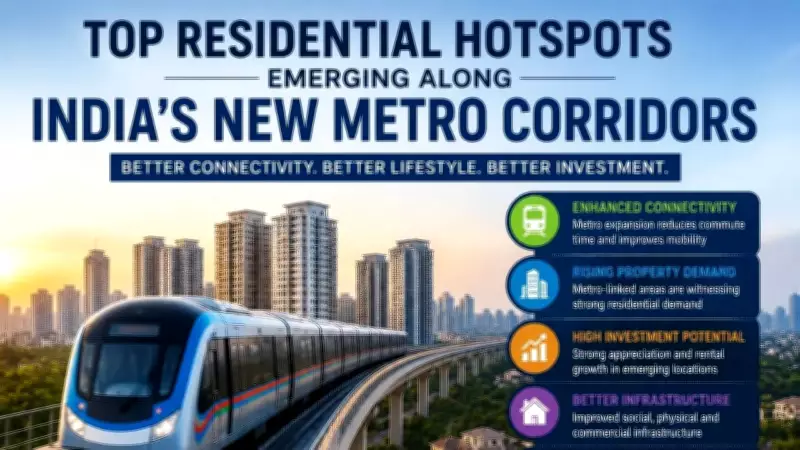
Top Residential Hotspots Emerging Along India's New Metro Corridors
Urban development in India is propelled not only by economic growth but also by substantial investments in infrastructure, particularly metro railways. Metro routes are transforming the real estate landscape in numerous urban areas by enhancing connectivity and reducing travel time, thereby making previously less-developed regions attractive for residential purposes. Metro connectivity is a critical factor in buyers' decision-making, and investment opportunities in metro-connected micro-markets are often highly promising.
As metro networks expand across the country, several residential hotspots are emerging as attractive destinations for both end-users and investors. Here are seven locations that are benefiting significantly from India's new and expanding metro corridors.
Noida Expressway and Greater Noida, NCR
The Noida-Greater Noida Aqua Line has revolutionized connectivity between residential sectors, commercial hubs, and educational institutions. Areas along the Noida Expressway, Sector 150, Sector 137, and Greater Noida have witnessed increasing residential demand due to improved accessibility. Planned metro extensions are likely to further enhance the region's connectivity, while the Noida International Airport adds another growth catalyst. Affordable housing options alongside premium developments continue to attract a wide range of buyers.

Hinjawadi-Wakad-Baner, Pune
Pune Metro Line 3, connecting Hinjawadi and Shivajinagar, is emerging as a major driver of residential growth. Hinjawadi's status as a prominent IT hub has already generated strong housing demand, and improved metro connectivity is making nearby locations such as Wakad, Baner, Balewadi, and Tathawade increasingly attractive. The corridor is expected to reduce travel times significantly and support sustained residential expansion in western Pune.
Thane and Mulund, Mumbai Metropolitan Region
Mumbai Metro Line 4 is reshaping the residential landscape of the eastern suburbs. Areas such as Thane, Mulund, and Ghatkopar are gaining attention from homebuyers due to enhanced connectivity with key business districts. Thane, in particular, has evolved from a suburban extension into a self-sustaining residential hub offering modern housing projects, social infrastructure, and improving transportation networks.
Kharghar, Taloja and Ulwe, Navi Mumbai
The Navi Mumbai Metro network is driving residential development across several emerging nodes. Kharghar, Taloja, and Ulwe are witnessing growing demand because of improved mobility and their proximity to the upcoming Navi Mumbai International Airport. Developers are increasingly launching integrated townships and mid-income housing projects in these locations, making them attractive for both first-time buyers and investors seeking future appreciation.
North Bengaluru
Metro expansion towards North Bengaluru is unlocking substantial residential opportunities in areas near Hebbal, Yelahanka, Jakkur, and surrounding micro-markets. Improved connectivity to the Kempegowda International Airport, industrial corridors, and major employment hubs is encouraging residential growth. The region is attracting both developers and homebuyers looking for larger residential spaces and long-term investment prospects.
Miyapur–LB Nagar Corridor, Hyderabad
One of Hyderabad's most important metro routes, the Miyapur–LB Nagar corridor connects several established and emerging residential neighbourhoods. Areas along the corridor have benefited from better accessibility to employment centres, educational institutions, and commercial districts. As a result, developers continue to expand residential offerings across these locations, catering to both affordable and premium housing segments.
Sholinganallur, Navalur and Siruseri, Chennai
The under-construction Chennai Metro Corridor 3 is expected to significantly boost residential demand along the city's IT corridor. Locations such as Sholinganallur, Perumbakkam, Navalur, and Siruseri are becoming increasingly attractive due to improved connectivity with Chennai's business districts and technology parks. As metro infrastructure progresses, these neighbourhoods are likely to witness continued real estate growth and increased buyer interest.

Why Metro Corridors Are Creating New Housing Destinations
Metro infrastructure does more than improve transportation. It influences where people choose to live, work, and invest. Reduced commuting time improves quality of life, while better connectivity often attracts commercial establishments, educational institutions, healthcare facilities, and retail developments. As a result, areas surrounding metro stations frequently experience rising demand, improved infrastructure, and stronger property value appreciation over time.
For developers, metro corridors provide opportunities to create integrated residential communities in locations that were previously considered peripheral. For buyers, these areas offer a balance between affordability, accessibility, and future growth potential.
India's expanding metro networks are redefining urban growth patterns and creating new residential destinations across major cities. From the Noida-Greater Noida corridor and Pune's IT-driven micro-markets to North Bengaluru, Navi Mumbai, Hyderabad, and Chennai's emerging suburbs, metro connectivity is increasingly shaping homebuyer preferences and investment decisions. As cities continue to grow and transportation infrastructure expands, metro-linked residential hotspots are increasingly emerging as preferred destinations for homebuyers and investors seeking connectivity, convenience, and long-term value.