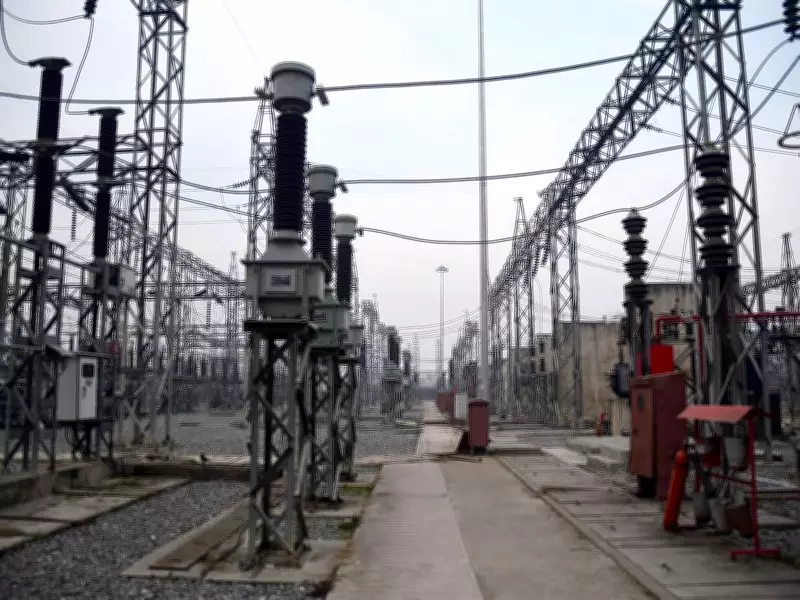
High-voltage transmission and distribution (HV T&D) players continued to outperform other segments during the fourth quarter of FY26, even as the broader sector presented a strong cycle but weaker risk-reward balance, according to a report by Nuvama.
Record-High Backlog and Financial Performance
HV T&D players continued to operate with a record-high backlog, with inflows growing 51.8%, revenue up 36.5% year-on-year, and EBITDA margin expanding 220 basis points year-on-year to 19.9%. This was aided by favourable pricing and operating leverage, the report stated.
Execution Visibility and Valuation
The report noted that while execution visibility remains strong, the current valuation alters the investment proposition. The domestic power sector is heavily reliant on structural expansions to keep pace with systemic consumption.

Transmission Capital Expenditure Roadmap
The Central Electricity Authority (CEA) outlined a 900-gigawatt non-fossil roadmap by FY36, which implies Rs 7.93 trillion of transmission capital expenditure. This plan extends the earlier Rs 9.2 trillion transmission roadmap for financial years 2022 to 2032, enhancing medium-to-long-term visibility for transformers, gas-insulated switchgear, high-voltage direct current equipment, and engineering procurement construction players.
Immediate Supply Pressures
The structural demands are further intensified by immediate supply pressures. India is already facing peak deficit in peak summers and evenings when solar goes off grid, the report stated. To balance this deficit, the report detailed specific generation requirements. In order to meet 6-7% power demand growth, supply growth from renewable energy has to be 35-40 GW yearly and thermal at 10-15 GW yearly.
Alternative Scenario
Alternatively, the report mentioned that if demand growth slows down to 5% while renewable energy additions remain strong, the deficit shifts past FY35E. Hence the need to add thermal can be pushed further and tendering may likely plateau, but the need for thermal will not be completely eliminated.
Non-Power Industrial Companies
In contrast to the utilities space, non-power industrial companies experienced subdued execution during the quarter. The report highlighted that revenues grew by a modest 10% year-on-year, while margins declined 190 basis points to 10.7% due to commodity inflation, rising freight costs, and the depreciation of the rupee. However, order inflows for non-power industrials grew 35.7% year-on-year, driven by data centers, electric vehicles, metals, and electronics.