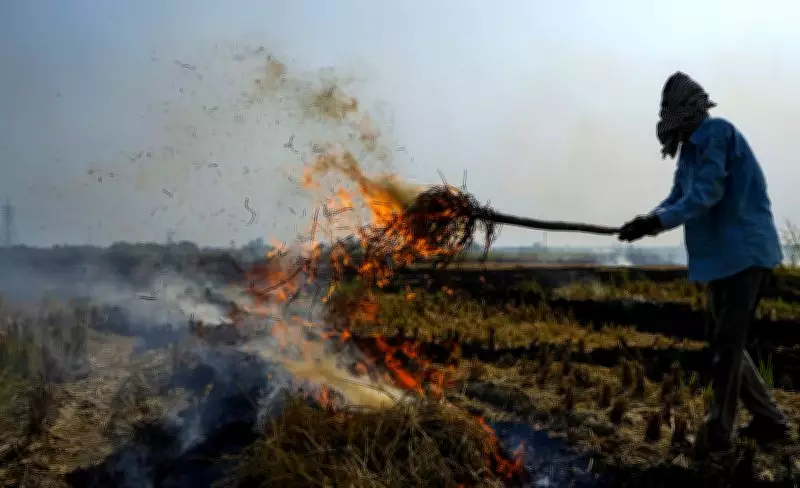
The Haryana Agriculture Department has taken strict action against six farmers in connection with cases of stubble burning, imposing fines as a deterrent against the practice that contributes significantly to air pollution in the region. The department's move underscores the state government's commitment to enforcing the ban on stubble burning, which is a major cause of environmental degradation and health hazards.
Details of the Action
According to official sources, the farmers were found violating the prohibition on burning crop residues in their fields. The department's enforcement teams conducted inspections and identified the offenders, leading to the imposition of penalties. The fines are part of a broader strategy to discourage stubble burning and promote alternative methods of crop residue management.
Impact on Air Quality
Stubble burning has been identified as a key contributor to the severe air pollution that envelops northern India, particularly during the winter months. The smoke from burning fields combines with other pollutants, leading to hazardous air quality levels in cities like Delhi and surrounding areas. The Haryana government has been actively working to raise awareness about the harmful effects of this practice and to provide farmers with viable alternatives.

Alternatives to Stubble Burning
The agriculture department has been promoting several eco-friendly options for managing crop residue, including the use of machinery like happy seeders and super seeders, which allow farmers to sow seeds without burning the stubble. Additionally, the government offers subsidies and financial incentives to encourage the adoption of these technologies. Farmers are also being educated about the benefits of incorporating crop residue into the soil, which improves soil health and reduces the need for chemical fertilizers.
Government's Stance
Haryana's Agriculture Minister reiterated the government's zero-tolerance policy towards stubble burning, stating that strict legal action would be taken against violators. He emphasized that the fines are not meant to burden farmers but to protect the environment and public health. The department has also set up a dedicated helpline for farmers to report any issues or seek guidance on alternative practices.
Community Response
While some farmers have expressed concerns about the financial burden of adopting new machinery, many have acknowledged the need to move away from stubble burning. Local agricultural extension officers are working closely with farming communities to demonstrate the long-term economic and environmental benefits of sustainable residue management.
The Haryana Agriculture Department's decisive action sends a strong message that stubble burning will not be tolerated, and it encourages other states to take similar measures to combat air pollution collectively.