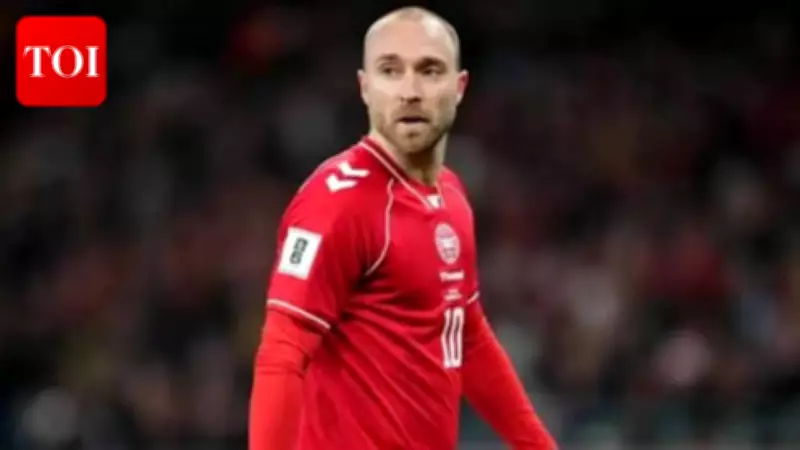
Footballer Christian Eriksen is recovering after collapsing on the field on Sunday. The 34-year-old fell to the ground in the 65th minute of the international match between Denmark and Ukraine, held in the Danish city of Odense. On Monday, the football star confirmed that he had been discharged from the hospital and is now at home with his family. “I am doing well,” he said in a post shared on Instagram.
How Did Eriksen Survive?
The football star survived the terrifying incident thanks to an implantable cardioverter defibrillator (ICD), a tiny device implanted in his chest. “My ICD did exactly what it was designed to do: protect me when I needed it,” Eriksen stated.
What Is an ICD?
An ICD is a small, battery-powered device placed in the chest to detect and stop irregular heartbeats, also called arrhythmias. This device can prevent sudden death in people at high risk of a life-threatening arrhythmia, including ventricular tachycardia (VT) or ventricular fibrillation (VF). Most ICDs are called transvenous ICDs and have a dual function, also serving as a pacemaker, according to the American Heart Association (AHA). The device is implanted in a pouch under the skin of the chest, often just below the collarbone or along the ribs.

How Does an ICD Work?
This life-saving device detects abnormalities in the heartbeat and tries to return it to normal. It is a treatment rather than a cure. When the heartbeat is too slow, ICDs with a pacemaker feature send tiny electrical signals to the heart. If your ICD has a pacemaker feature, when your heartbeat is too slow, it works as a pacemaker and sends tiny electrical signals to your heart. On the other hand, if your heartbeat is too fast or chaotic, the device delivers a shock in order to stop the abnormal rhythm. It operates 24 hours a day. Some ICDs can also correct fast rhythms using gentle pacing and provide backup pacing in cases of bradycardia (slow heart rhythm). They also offer other functions, such as storage of detected arrhythmic events. A healthcare professional can optimize the ICD based on your needs. In Eriksen’s case, the ICD might have detected a dangerously high or abnormal heart rhythm during the match and delivered an electrical shock to reset his cardiac rhythm.
Who Needs an ICD?
According to the AHA, doctors recommend an ICD if you are at risk of a life-threatening ventricular arrhythmia because of:
- Ventricular arrhythmia
- Heart attack
- Surviving a sudden cardiac arrest
- Long QT syndrome
- Brugada syndrome
- Congenital heart disease or other underlying conditions for sudden cardiac arrest
- Cardiac sarcoidosis
This was not Eriksen’s first brush with a cardiac crisis. Back in 2021, he collapsed during a European Championship match under circumstances distressingly similar to this recent incident. At that time, without an internal device, he required immediate CPR and manual defibrillation from paramedics to survive. Following this, the medical team implanted the ICD, which has proved life-saving.