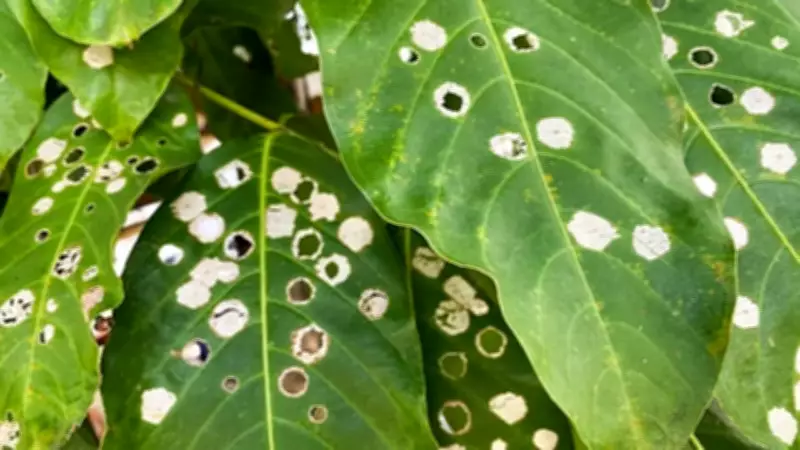
Finding holes in your plant's leaves can be frustrating, especially if the plant appeared healthy just days ago. While a few tiny holes may seem harmless, they often indicate that something is feeding on the plant, hindering its growth or causing stress. Insects are common culprits, but there are other causes as well. Identifying the problem early can help you take action. Here's everything you need to know about holes in leaves.
Insects Are Likely to Blame
Insects should be your primary suspect when you notice holes in leaves. Caterpillars, beetles, grasshoppers, and various chewing insects feed on foliage, often at night or early morning. These bugs may be hidden, leaving only the damage visible. Check the undersides of leaves and inspect plants during cooler weather. Early detection can save your plant and its leaves.
Slugs and Snails Eat Young Leaves
If the damage appears messy, as if something chewed through the foliage overnight, slugs or snails are likely responsible. They thrive in moist environments and prefer young, soft leaves. Slugs and snails are mostly active at night, hiding during the day under pots, stones, mulch, or garden debris. You may never see the pests, but their damage is unmistakable.

Some Plant Diseases Can Also Damage Leaves
Although pests cause most holes, fungal or bacterial infections can also be responsible. Certain fungi create patches that die and fall away, leaving holes behind. This condition is known as "shot-hole disease" and often affects plants growing in dense conditions with limited light and air circulation.
Keep an Eye on Your Plants
The best way to prevent leaf damage is regular inspection. Many people notice problems only when they become obvious. Checking plants every few days helps you spot issues when few insects are present. Don't overlook leaf undersides, stems, and new growth, as these are most vulnerable.
Apply Natural Insecticides Initially
Experienced gardeners often recommend starting with natural insecticides. Techniques include hand-picking insects, releasing predators, and spraying plants with neem oil. Chemical insecticides can harm the plant and other garden creatures, and may lead to chemical buildup indoors. Natural methods are slower but safer and more environmentally friendly.
Remove the Affected Foliage
Heavily damaged leaves can often be saved by removing them. This makes treatment easier and prevents pests or diseases from spreading to other leaves. Improve the plant's general health with more water, fertilizer, and sunlight to encourage new growth. Healthier plants are less susceptible to damage and better able to cope with pests.
Use Garden Hygiene to Prevent Damage
Good garden hygiene is key to prevention. Remove fallen leaves, dead plants, and debris from your yard. Ensure proper plant spacing and clean the area regularly. These steps greatly reduce the risk of pest outbreaks and disease spread. A clean garden saves you effort in the long run.