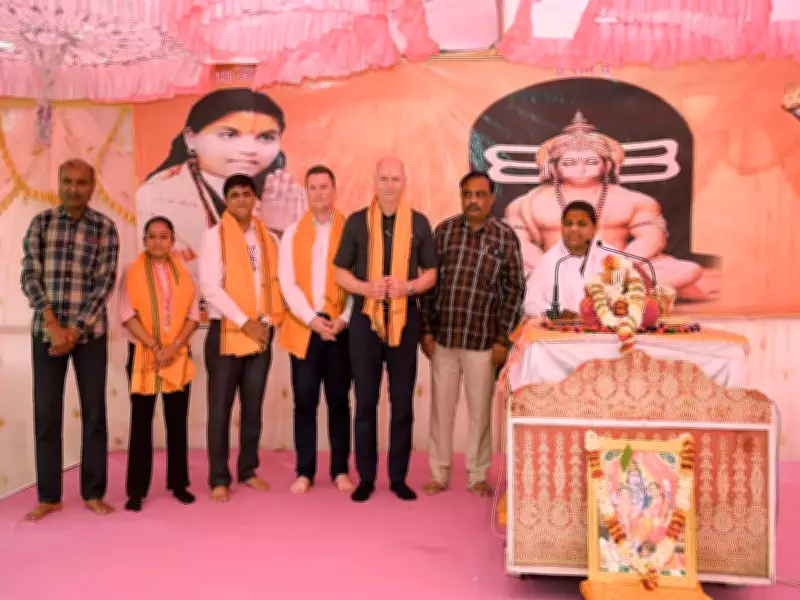
A German delegation recently participated in a Shiv Mahapuran Katha held in Gujarat, marking a significant moment of cultural diplomacy between India and Germany. The event, which took place in the city of Rajkot, brought together spiritual leaders and diplomats to promote mutual understanding and cultural exchange.
Event Highlights
The Shiv Mahapuran Katha, a traditional Hindu religious discourse, was organized by local spiritual groups and attended by members of the German consulate and cultural representatives. The delegation included diplomats and scholars interested in Indian philosophy and traditions.
During the event, the German guests listened to discourses on the significance of Lord Shiva and the teachings of the Shiv Mahapuran. They also participated in rituals and interacted with local devotees, gaining insights into India's rich spiritual heritage.

Cultural Exchange
This initiative is part of broader efforts to strengthen Indo-German ties through cultural diplomacy. The German delegation expressed appreciation for the warm hospitality and the opportunity to experience India's diverse cultural landscape.
Such exchanges are vital in fostering mutual respect and understanding between nations. They go beyond political and economic relations, touching the spiritual and cultural dimensions that bind people together.
Impact on Relations
The participation of German officials in a religious event underscores the growing interest in Indian culture abroad. It also highlights the role of soft power in international relations, where cultural and spiritual exchanges can build lasting bridges.
Local organizers praised the delegation's openness and eagerness to learn, describing the event as a successful example of people-to-people contact. The German delegates, in turn, noted that such experiences enrich their understanding of India's pluralistic society.
Conclusion
The Shiv Mahapuran Katha in Gujarat served as a platform for cultural diplomacy, bringing together German and Indian communities. This event exemplifies how traditional practices can facilitate cross-cultural dialogue and strengthen bilateral relations.