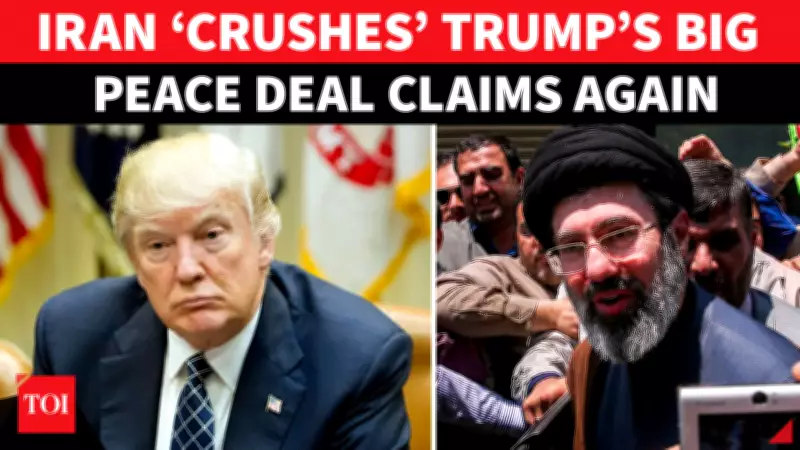
Iranian President Masoud Pezeshkian stated on Sunday that no decision regarding the Iran peace agreement can be made without the explicit permission of Supreme Leader Mojtaba Khamenei. This statement directly contradicts claims made by former U.S. President Donald Trump, who asserted that the deal with Tehran had been largely negotiated.
Trump's Claims Contradicted
Trump had previously claimed that a peace agreement with Iran was nearly finalized, suggesting that his administration had made significant progress in diplomatic talks. However, Pezeshkian's remarks indicate that any such agreement is far from complete and requires the highest level of approval within Iran's political structure.
Secret Talks and Regional Implications
According to media reports, the United States and Iran had allegedly engaged in secret negotiations aimed at reopening the Strait of Hormuz, a critical waterway for global oil shipments. The talks were also intended to prevent further regional escalation and potentially trigger a major diplomatic reset in the Middle East. However, Pezeshkian's insistence on Khamenei's involvement suggests that the final terms of any deal remain uncertain.

Political Dynamics in Iran
The Iranian president's comments highlight the complex power dynamics within Iran, where the Supreme Leader holds ultimate authority over matters of state, including foreign policy and nuclear negotiations. Pezeshkian's emphasis on Khamenei's role may also be an attempt to reinforce the legitimacy of any future agreement while managing domestic expectations.
As the situation develops, the international community watches closely to see whether the reported secret talks will lead to a formal agreement or if Trump's claims were premature. The reopening of the Strait of Hormuz and the potential for a broader diplomatic shift remain key issues in the ongoing negotiations.