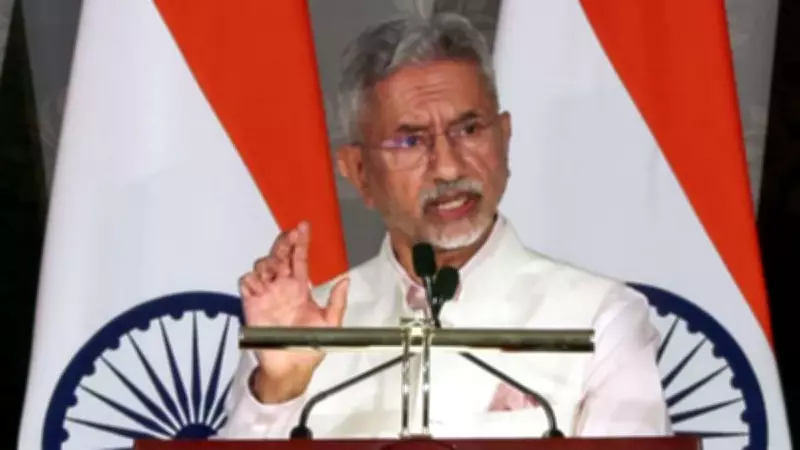
External Affairs Minister S Jaishankar held a significant conversation with United States Secretary of State Marco Rubio, during which he reiterated India's unwavering 'India First' stance on energy security. The discussion, which took place on May 24, 2026, underscored New Delhi's commitment to securing affordable and reliable energy supplies while maintaining strategic autonomy in its foreign policy decisions.
Key Highlights of the Talks
The dialogue between the two top diplomats focused on a range of bilateral and global issues, with energy security emerging as a central theme. Jaishankar emphasized that India's energy policies are guided by national interests and the imperative to ensure stable and cost-effective energy sources for its growing economy. He highlighted that India would continue to engage with multiple partners worldwide, including the US, to diversify its energy basket and reduce dependence on any single source.
India's Strategic Autonomy
Jaishankar's remarks reaffirmed India's longstanding principle of strategic autonomy, which allows the country to pursue independent foreign policy decisions without aligning with any particular bloc. This approach has been a cornerstone of India's diplomatic engagements, particularly in the context of global energy markets that are often influenced by geopolitical tensions. The minister noted that India's energy security strategy is not directed against any nation but is designed to safeguard the country's developmental priorities.

US-India Energy Cooperation
Secretary Rubio acknowledged India's concerns and expressed the US's willingness to deepen energy cooperation. The two sides discussed potential areas of collaboration, including renewable energy technologies, critical minerals, and nuclear energy. Both leaders agreed on the importance of ensuring stable global energy markets and the need for transparent pricing mechanisms. They also touched upon the role of emerging technologies like hydrogen and carbon capture in shaping the future energy landscape.
Broader Bilateral Context
The conversation on energy security was part of a broader review of the US-India comprehensive global strategic partnership. Jaishankar and Rubio also exchanged views on regional security issues, including developments in the Indo-Pacific, Afghanistan, and the ongoing conflict in Ukraine. They reaffirmed their commitment to a free and open Indo-Pacific and discussed ways to enhance coordination in multilateral forums such as the Quad and the United Nations.
India's Energy Challenges and Goals
India, as the world's third-largest energy consumer, faces the dual challenge of meeting rising demand while transitioning to cleaner energy sources. The government has set ambitious targets, including achieving 500 GW of non-fossil fuel capacity by 2030 and reaching net-zero emissions by 2070. Jaishankar's dialogue with Rubio reflects India's proactive diplomacy to secure the necessary technology, investment, and partnerships to realize these goals without compromising its energy security.
The talks concluded with both sides expressing optimism about the future trajectory of US-India ties. They agreed to continue high-level engagements to further strengthen cooperation in energy, trade, defense, and technology. The meeting underscored the maturity of the bilateral relationship, where differences on specific issues are addressed through constructive dialogue.