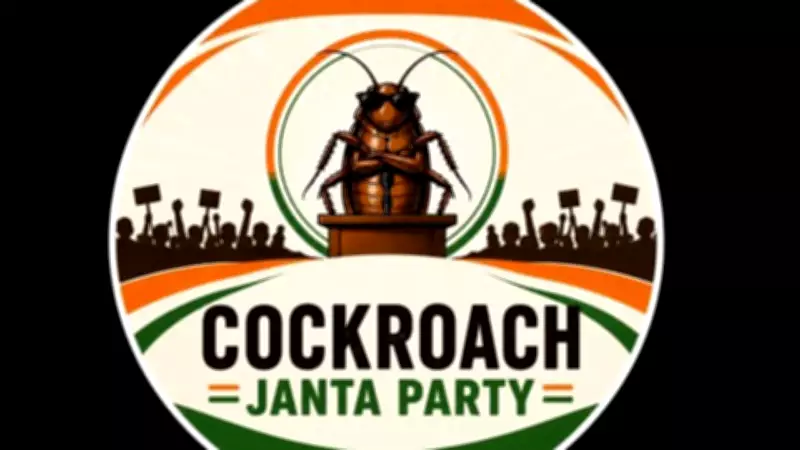
The Cockroach Janta Party (CJP) founder, Abhijeet Dipke, has dismissed allegations from BJP leaders that nearly half of the party's social media followers are from Pakistan. The internet-based movement, which recently gained widespread popularity among young users, has become embroiled in a political controversy.
Refuting the Allegations
Dipke shared a screenshot of audience analytics on X, stating, 'This is the screen recording of our audience demographic which we have shared with media before our account was hacked.' He claimed that over 94% of the audience is from India, questioning, 'Why is a Union minister Kiren Rijiju labelling Indian youth as Pakistani?'
BJP's Accusations
Union Minister Kiren Rijiju had earlier targeted the CJP, writing, 'I pity those who seek their followers in social media from Pakistan & George Soros gang.' BJP leader and Union Minister Sukanta Majumdar alleged that 49% of the CJP's followers are from Pakistan, with only 9% from India.

Kerala BJP president Rajeev Chandrasekhar described the CJP as part of a 'classic cross-border influence operation' aimed at destabilising India and targeting Prime Minister Narendra Modi. He stated, 'In the age of social media, bots, AI and its weaponisation, influence operations are dangerous, effective ways to destabilise by building fake, seemingly organic narratives.'
Defending the Government
Chandrasekhar defended the Modi government's record, asserting that India's rise under PM Modi has triggered resentment among 'foreign vested interests.' He added, 'No cockroach, no petty Indian opposition politician, no Modi-hating joker, no foreign vested interest can stop India's resolve to build a Viksit Bharat.'
Background of the Movement
The CJP trend emerged after controversy over remarks allegedly made by Chief Justice of India Surya Kant during a hearing. Dipke alleged that the movement has since faced coordinated action across multiple social media platforms. The party rapidly became an online sensation through memes and commentary on unemployment, education policy, and alleged examination paper leaks.