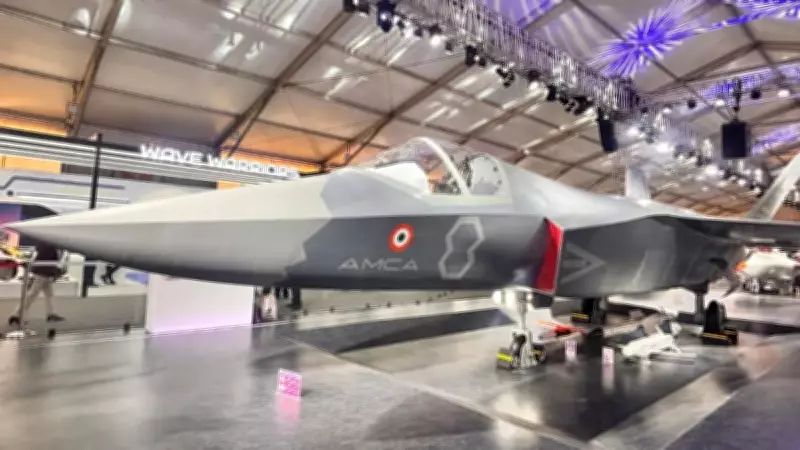
The Defence Ministry has taken a significant step towards bolstering India's indigenous defence capabilities by seeking proposals from three shortlisted companies for the development of the Advanced Medium Combat Aircraft (AMCA). This move underscores the government's commitment to the 'Make in India' initiative and aims to reduce dependency on foreign defence equipment.
Proposals Invited for AMCA Development
The ministry has issued a request for proposals (RFP) to three firms that have been shortlisted after a rigorous evaluation process. These companies are expected to submit their detailed plans for the design, development, and production of the AMCA, which is envisioned as a fifth-generation stealth fighter jet. The aircraft is intended to replace the aging fleet of MiG-29s and Jaguars in the Indian Air Force.
Key Features of the AMCA
The AMCA is expected to incorporate advanced technologies, including stealth capabilities, supercruise, and advanced avionics. It will be a twin-engine, single-seat fighter capable of performing air superiority, ground attack, and reconnaissance missions. The aircraft is designed to be highly maneuverable and network-centric, enabling it to operate in contested environments.

Shortlisted Firms
While the names of the shortlisted firms have not been officially disclosed, industry sources indicate that they include major defence public sector undertakings and private players. The selection process is based on their technical expertise, past performance, and manufacturing capabilities.
Timeline and Production
The Defence Ministry has set an ambitious timeline for the AMCA project. The first prototype is expected to roll out by 2026, with initial operational clearance by 2028. The aircraft is slated to enter service by 2030. The project is expected to generate thousands of jobs and boost the domestic aerospace ecosystem.
Strategic Importance
The development of the AMCA is crucial for India's strategic autonomy. It will not only enhance the Indian Air Force's combat capabilities but also position India among a select group of nations capable of designing and manufacturing advanced fighter jets. The project will also foster innovation in materials, propulsion, and electronics sectors.
The Defence Ministry's move has been welcomed by defence analysts, who see it as a major push for self-reliance. However, they caution that the project must be executed efficiently to avoid cost overruns and delays, which have plagued other indigenous defence programs in the past.
Industry Response
The shortlisted firms have expressed optimism about the project. They are expected to collaborate with international partners for critical technologies while maximizing indigenous content. The government has mandated that the AMCA must have at least 70% indigenous components, a target that will require significant investment in research and development.
The AMCA project is part of a broader effort to modernize the Indian Air Force, which is also pursuing the procurement of 114 multi-role fighter aircraft under the 'Make in India' framework. The successful development of the AMCA will be a testament to India's growing aerospace capabilities and its resolve to become a global defence manufacturing hub.