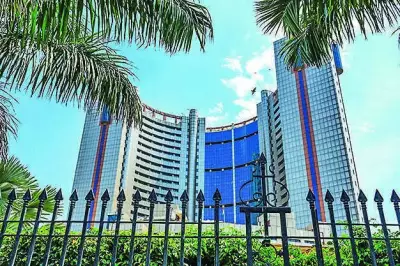
The historic Delhi Gymkhana Club, one of India's most exclusive institutions frequented by bureaucrats, defence officers, politicians, and business elites, faces an uncertain future after the Centre ordered it to hand over its sprawling 27.3-acre premises in Lutyens' Delhi by June 5. The move, initiated through a 're-entry' order by the Land and Development Office (L&DO) under the Union housing and urban affairs ministry, has triggered shock among members, criticism from opposition leaders, and renewed debate over the future of elite colonial-era clubs occupying prime government land.
Why the Centre Asked the Club to Vacate
The Centre stated that the land parcel at 2, Safdarjung Road, adjacent to the Prime Minister's residence on Lok Kalyan Marg, lies within a 'highly sensitive and strategic area' and is urgently needed for strengthening defence infrastructure, governance facilities, and other public security purposes. The order directed the club to hand over 'peaceful possession' by June 5, warning that non-compliance would result in takeover 'in accordance with law'. Officials indicated that the land, along with adjoining government properties, could be redeveloped for strategic and institutional use, including secure residences for top functionaries. This decision aligns with a broader government push to reclaim land parcels around Lok Kalyan Marg; recently, the Centre defended in the Delhi High Court its eviction of the Indian Polo Association from the Jaipur Polo Ground area, citing national security.
A Club Synonymous with Delhi's Elite
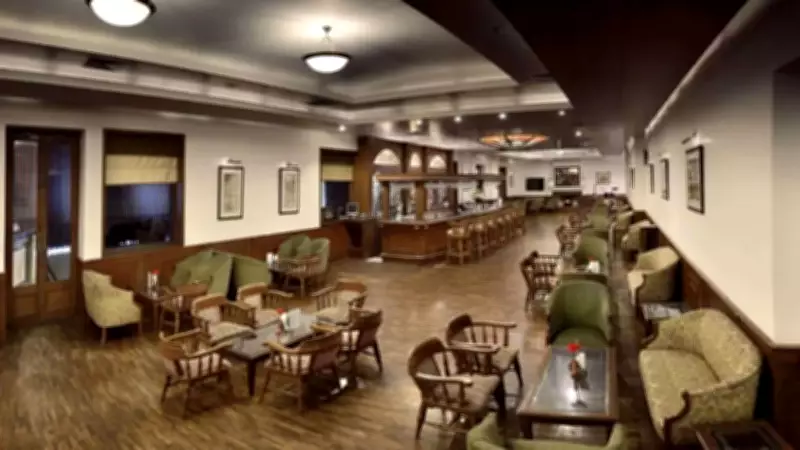
Founded in 1913 as the Imperial Delhi Gymkhana Club during British rule, the institution moved to its current Safdarjung Road premises in the 1930s. After Independence, 'Imperial' was dropped, and it became the Delhi Gymkhana Club. Over the decades, it evolved into one of India's most prestigious and difficult-to-access social institutions, symbolising power and privilege. Spread across lush lawns, the club houses a swimming pool, 26 grass tennis courts, squash courts, multiple dining halls, restaurants, bars, and party venues. Membership traditionally followed a formula: 40% for civil servants, 40% for defence personnel, and 20% for others. Waiting periods often stretched 30-40 years. The club also had a controversial 'green card' system giving preferential membership to adult dependents of existing members, making it nearly impossible for outsiders to join.

Governance Disputes and Allegations of Mismanagement
The Centre's action is seen as the culmination of years of disputes over the club's administration. The Ministry of Corporate Affairs initiated a probe into alleged financial irregularities and mismanagement nearly six years ago. The club witnessed intense factional battles between civil servant and defence personnel groups. Government agencies accused it of straying from its original purpose of promoting sports and recreation; before the National Company Law Appellate Tribunal (NCLAT), the Centre described the transformation 'from a vyayamshaala to a madhushaala' (from a gymnasium to a tavern). The club is currently run by a government-appointed committee following directives from the corporate affairs ministry and the National Company Law Tribunal. Weeks before the takeover order, the L&DO issued a notice asking the club to clear nearly Rs 47 crore in dues, including around Rs 36 crore linked to revised lease rates. Several members said they were caught off guard by the sudden decision, as discussions on payment and lease issues were underway.
Club Members React with Shock
In a communication to members, the club's governing committee said it had convened an urgent meeting and decided to seek immediate clarification from the government. 'The immediate priority of the GC is to ensure operations of the club continue without dislocation,' the statement said, adding that the committee sought an urgent meeting with housing and urban affairs ministry officials. Several members indicated the club would likely challenge the order legally. A senior member noted that the government's national security argument could complicate any legal battle, especially since the lease itself allows re-entry for public use.

'Institutional Heritage': Reactions Pour In
The decision drew political and emotional reactions. AAP leader Saurabh Bharadwaj criticised the move, saying, 'Till now, it was the poor who were being affected, so the rich were not too bothered. Then came the turn of shopkeepers. Now it is the turn of senior officers and professionals who visit clubs. Everyone's turn will come eventually.' Congress leader Udit Raj called the development 'very sad,' describing the Gymkhana as a historic institution. Former IPS officer Kiran Bedi termed it 'unfortunate' and 'truly tragic,' hoping for reconsideration. Recalling the club's sporting legacy, Bedi noted that late Union minister Arun Jaitley oversaw construction of a new swimming pool, and some of Delhi's finest tennis matches were played there. 'The Delhi Gymkhana Club is not just a property — it is part of our institutional and sporting heritage. Change may be necessary, but history and legacy deserve thoughtful preservation,' she said. Capt S Seshadri, president of the Madras Gymkhana Club, expressed sadness, calling it unfortunate for an institution of such stature.
'If It Is for National Security, We Accept It'
Advocate and third-generation member Riya Sachthey said she was initially 'appalled' but acknowledged the lease deed permits re-entry for public use. 'If this land is to be taken by the government for public use, in public interest, for the security of the country, I am fine with it,' she said. However, she stressed that employees should not lose their livelihoods and suggested creating an alternative institution for members if the club premises are repurposed.