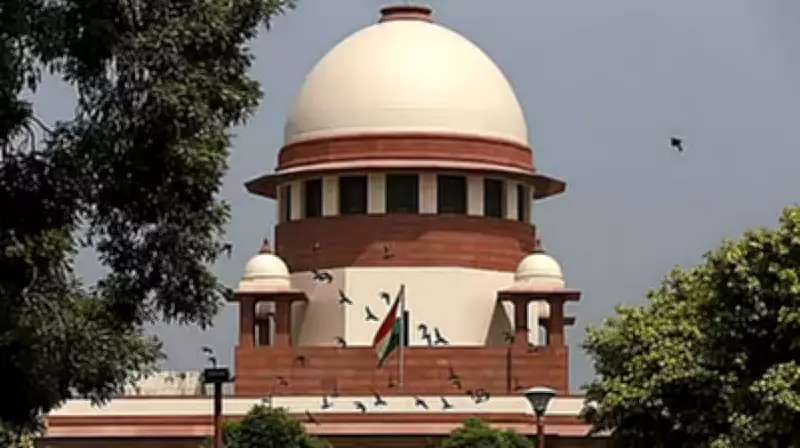
The Supreme Court of India has declined to interfere with the process of time stamping on Voter Verifiable Paper Audit Trail (VVPAT) slips, stating that it is a technical matter that falls within the domain of the Election Commission of India (EC). The observation came during a hearing on a petition seeking the counting of all VVPAT slips to ensure transparency in the electoral process.
Background of the Case
The petition, filed by a group of activists and opposition leaders, argued that time stamping on VVPAT slips is essential to verify the accuracy of votes cast through Electronic Voting Machines (EVMs). They claimed that discrepancies in time stamps could lead to manipulation of results. However, the Supreme Court bench, comprising Justices Sanjiv Khanna and Dipankar Datta, noted that the EC has already implemented a robust system for VVPAT verification.
Court's Observations
The bench observed that time stamping is a technical aspect that the EC is best equipped to handle. The court stated that the EC has the expertise to address any issues related to VVPAT slips and that judicial intervention is not required at this stage. The court further noted that the current practice of randomly verifying VVPAT slips from five polling stations per assembly constituency is sufficient to ensure the integrity of the electoral process.

Election Commission's Stand
The Election Commission had opposed the petition, arguing that time stamping on VVPAT slips is not necessary as the slips are only used for verification in case of disputes. The EC emphasized that its current procedures are adequate and that any changes would require careful consideration of technical and logistical implications.
Petitioners' Arguments
The petitioners contended that without time stamping, it is impossible to ascertain whether a VVPAT slip corresponds to a particular vote cast at a specific time. They argued that this lack of synchronization could undermine the credibility of the electoral process. However, the court remained unconvinced, asserting that the EC's technical expertise should be trusted.
Implications of the Ruling
The Supreme Court's decision reinforces the autonomy of the Election Commission in matters of electoral technology. It also sets a precedent that courts are unlikely to intervene in technical aspects of election management unless there is clear evidence of maladministration. The ruling is seen as a setback for those demanding greater transparency in India's electoral system.
Future of VVPAT in Indian Elections
Despite the court's refusal to mandate time stamping, the debate over VVPAT slips is far from over. Several political parties and civil society groups continue to advocate for 100% counting of VVPAT slips to rule out any possibility of tampering. The EC, on its part, has maintained that the current system is reliable and that any changes would require extensive testing and consensus among stakeholders.
In conclusion, the Supreme Court has left the matter of time stamping on VVPAT slips to the technical expertise of the Election Commission. The court's decision underscores the importance of allowing specialized bodies to handle technical issues without judicial interference. As India prepares for future elections, the role of VVPAT slips and the broader debate over electronic voting will likely continue to evolve.