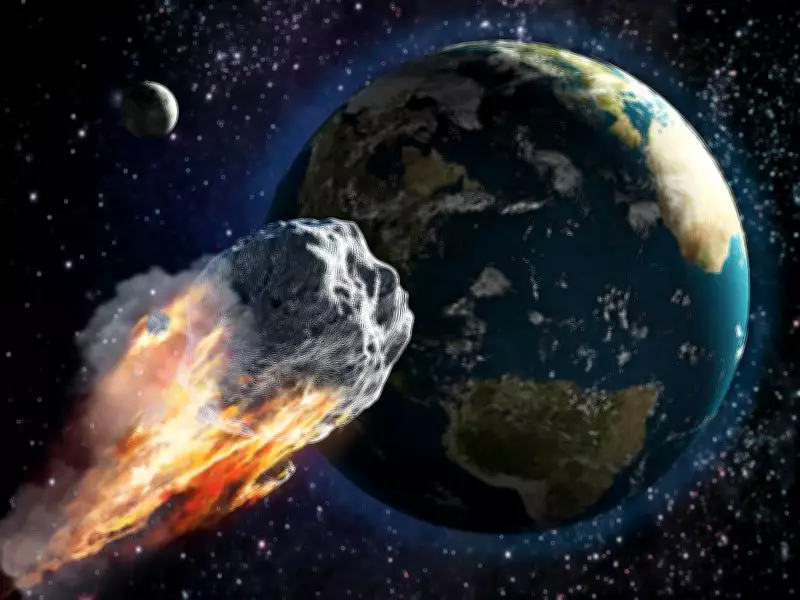
Astronomers are closely tracking two near-Earth asteroids, designated 2026 LD and 2026 KM3, which are set to make close approaches to Earth on June 9. Despite their proximity, scientists have confirmed that neither object poses any threat to our planet.
Asteroid 2026 LD: Size and Distance
Asteroid 2026 LD, measuring approximately 52 metres in diameter—comparable to the size of an airplane—will pass Earth at a distance of nearly 1.14 million kilometres. This distance is more than three times the average separation between Earth and the Moon, ensuring a safe flyby.
Asteroid 2026 KM3: Smaller but Still Safe
The second asteroid, 2026 KM3, is smaller at around 34 metres wide. It will fly by at a distance of approximately 2.35 million kilometres, which is over six times the lunar distance. Both asteroids are classified as near-Earth objects (NEOs) and are being monitored by space agencies worldwide.

Why These Flybys Matter
While these close approaches pose no danger, they provide excellent opportunities for scientific observation and research. Space agencies routinely monitor such NEOs to refine orbital predictions and strengthen planetary defence efforts. By studying these asteroids, scientists can better understand their composition, trajectories, and potential risks in the future.
Planetary Defence Research
Each close flyby offers valuable data that helps improve models for predicting asteroid paths. This information is crucial for developing strategies to deflect any future hazardous objects. The observations of 2026 LD and 2026 KM3 will contribute to ongoing planetary defence initiatives, including those led by NASA and other international organisations.
Conclusion
In summary, while the idea of airplane-sized asteroids zipping past Earth may sound alarming, the reality is reassuring. Both 2026 LD and 2026 KM3 will pass safely, and their flybys serve as important reminders of the need for continued vigilance and research in planetary defence.