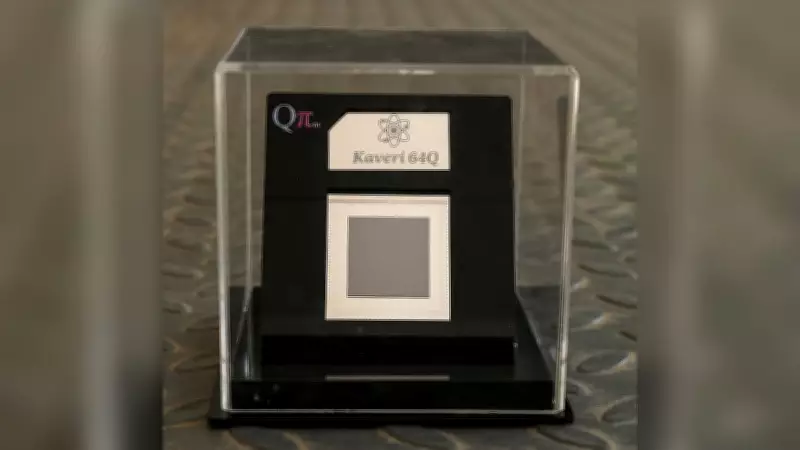
In a groundbreaking achievement for India's quantum computing landscape, a Bengaluru-based startup has unveiled Kaveri, the country's most powerful 64-qubit quantum processor. This development positions India among a select group of nations advancing in quantum technology.
What is Kaveri?
Kaveri is a 64-qubit superconducting quantum processor designed and built entirely in India. It represents a leap from earlier efforts, which typically involved 5 to 20 qubits. The processor is named after the river Kaveri, symbolizing the flow of knowledge and innovation.
Key Features
- 64 Qubits: This high qubit count allows for more complex calculations compared to previous Indian quantum processors.
- Superconducting Technology: Uses superconducting circuits operating at extremely low temperatures near absolute zero.
- Low Error Rates: Features improved coherence times and gate fidelities, essential for reliable quantum computation.
- Scalable Architecture: Designed to be scalable, paving the way for future processors with even more qubits.
Significance for India
This achievement is a major boost for India's National Quantum Mission, which aims to develop quantum computers with 50-100 qubits by 2028. Kaveri demonstrates that Indian startups can compete globally in cutting-edge technology. It also reduces dependency on foreign quantum hardware and fosters a domestic ecosystem for quantum research and applications.

Applications
Quantum processors like Kaveri can revolutionize fields such as cryptography, drug discovery, materials science, and optimization problems. For instance, they can simulate molecular interactions for new medicines or crack complex encryption algorithms.
Challenges Ahead
Despite the milestone, quantum computing faces hurdles like error correction, qubit stability, and scaling. The startup is working on these challenges to improve the processor's performance and reliability.
This development has attracted attention from academia, industry, and government, with potential collaborations to accelerate quantum computing research in India. The startup plans to make Kaveri available for cloud-based quantum computing services, allowing researchers and businesses to access its power remotely.