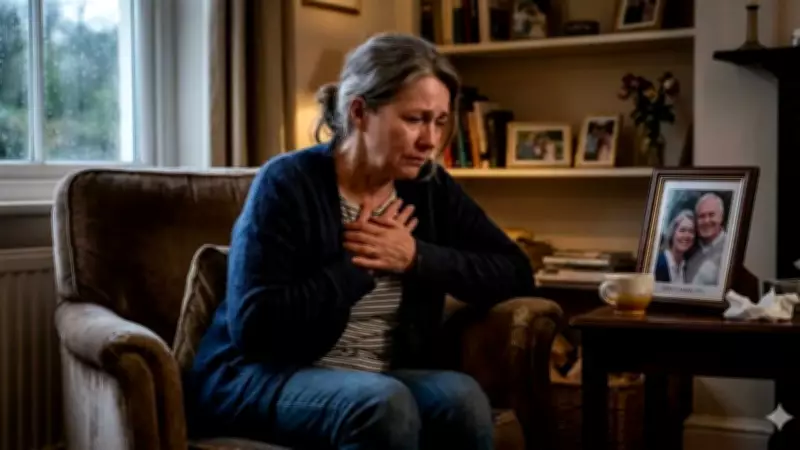
People have long said that heartbreak actually hurts. Poets love the idea. Movies bank on it. Doctors used to roll their eyes and dismiss it as a figure of speech. However, modern medicine has learned that heartbreak truly can break your heart, at least for some individuals.
This year, researchers in the United Kingdom initiated the first major drug trial for the bizarre and devastating condition known as broken heart syndrome, medically termed takotsubo cardiomyopathy.
Woman with Broken Heart Syndrome: What Happened?
Brenda Young, a 57-year-old social worker from Aberdeenshire, Scotland, experienced a life-changing event last November. Minutes after witnessing her mother's death, she felt an intense, overwhelming pain in the middle of her chest. She recalled thinking, “This cannot be happening, not today,” as reported by scientists at the University of Aberdeen via People. She knew something was seriously wrong.

That crushing chest pain led her to the hospital. Initially, doctors suspected a classic heart attack, but her tests revealed a different story. She had developed takotsubo cardiomyopathy, a rare condition where major emotional or physical stress essentially stuns the heart. Instead of a blocked artery, the heart muscle itself suddenly weakens. Brenda is now part of a long, complex study spanning several countries, one that may finally uncover a real treatment. For cardiologists, this is significant: after all these years, no one has fully determined why it occurs or how to fix it.
What Is Broken Heart Syndrome?
In the 1990s, Japanese doctors named the condition after an octopus trap (takotsubo) because the heart changes shape in an odd way during an attack. The event is typically triggered by stress—losing a loved one, divorce, frightening health news, accidents, financial problems, or even huge surprises, whether good or bad. Sometimes, if pure joy triggers it, people call it happy heart syndrome.
The theory is that stress hormones, such as adrenaline, flood the system, and the heart cannot handle the surge. It stops pumping correctly, causing fast, hard chest pain, shortness of breath, and dizziness—symptoms that closely resemble a heart attack. Many people are rushed to emergency care because it could indeed be a heart attack. However, with broken heart syndrome, arteries are not blocked. The muscle simply gives out, usually bouncing back over a week or so. Still, doctors warn that it is not as harmless as it seems. Complications can include heart failure, erratic heartbeats, blood clots, and, in rare cases, it can be fatal.
Interestingly, women are most affected; almost 90 percent of diagnosed cases occur in women over 50. Hormonal changes likely play a major role, but scientists are still investigating why.
Currently, no drug is specifically aimed at broken heart syndrome. Doctors use beta blockers, blood thinners, and other treatments common for heart issues, aiming to help patients recover. However, a proven treatment remains absent.
Inside the Groundbreaking Trial
According to The Guardian and BBC, this new study aims to determine if a targeted therapy can tame inflammation, help the heart heal, and prevent recurrence. Researchers say the condition has been ignored for too long, mainly because people usually recover quickly. However, some patients experience symptoms for months or even years, including tiredness, anxiety, and poor heart function. Sometimes, it recurs.
The mind-body link is gaining attention. Emotional trauma and heart health are now impossible to ignore. Chronic stress already increases the risk of heart disease, strokes, and inflammation. Takotsubo represents the sharp end of that connection: pure emotion causing real, lasting heart changes within hours. In Brenda's case, sudden grief triggered a chemical meltdown. For some people, losing someone unleashes a storm of stress hormones so strong that it scrambles heart function instantly.
One of the hardest aspects is that many patients feel dismissed. People still struggle to believe that sadness alone can lead to hospitalization. The symptoms seem all in your head, but they are not. Doctors can actually see the damage with scans and blood tests. Broken heart syndrome is no longer just a poetic metaphor; it is a medical fact.

The Road Ahead
This month, researchers from the University of Aberdeen announced the start of a seven-year study funded by the National Institute for Health and Care Research (NIHR). Scientists will assess whether a class of medications that relax blood vessels, called renin-angiotensin system (RAS) inhibitors, could be an effective long-term treatment for broken heart syndrome.
Brenda Young is now one of nearly 1,000 takotsubo patients from 40 hospitals participating in the world's first clinical trial for broken heart syndrome, led by Professor Dana Dawson, chair in cardiovascular medicine at the University of Aberdeen. Researchers hope that this new drug trial may finally transform understanding of the syndrome from an unusual medical curiosity into a treatable cardiovascular disorder.
This trial is a big deal. Scientists aim to move the condition from weird curiosity to something treatable and real, serving as a reminder that what happens inside your head can change your body in ways we have only begun to understand.