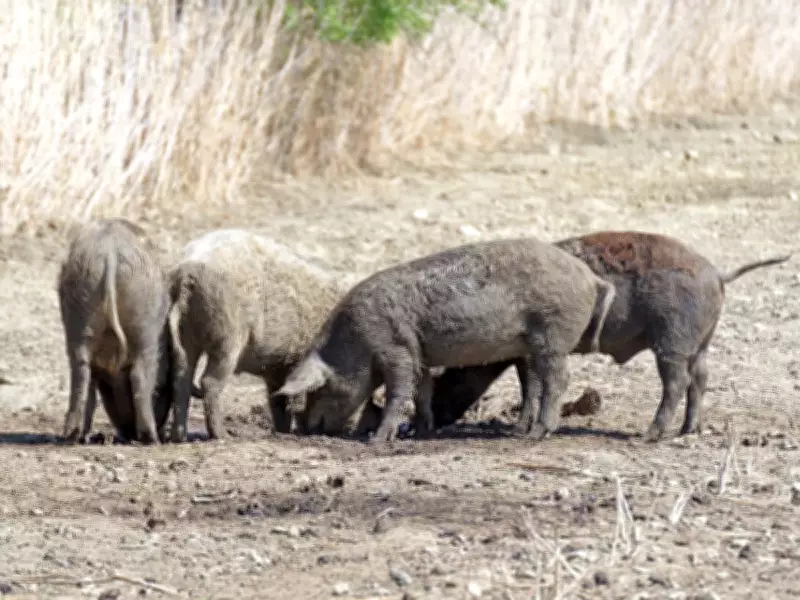
After the 2011 Fukushima Daiichi nuclear disaster and the consequent forced evacuation, thousands of residents, farms, houses, and entire communities were abruptly left behind. Domestic pigs, which escaped and went on to populate forests and surrounding farmlands, were among the domestic animals left behind in the exclusion zone. Fifteen years later, these pigs are helping scientists understand an unusual genetic pattern.
Hybridization and Unexpected Findings
According to research recently published in the Journal of Forest Research, available through Taylor & Francis, escaped domestic pigs interbred with native wild boar in Fukushima, but the most surprising discovery was not the hybridization itself. Instead, scientists identified that domestic pig maternal lineages appeared to accelerate genetic turnover within hybrid descendants, and domestic pig genetic material declined more rapidly than researchers expected based on maternal ancestry alone.
The results may contribute to the current understanding of the effect of domestic animals upon wild populations, and may have significant implications for the management of invasive species throughout the world.

A Rare Natural Experiment Created by Disaster
According to researchers from Fukushima University and Hirosaki University, the Fukushima evacuation led to a situation that is incredibly rare and not easy to recreate elsewhere. With farming largely halted and human activity reduced, escaped domestic pigs were free to move into forests and abandoned farmland. They then began to crossbreed with Japan's native wild boar.
The researchers describe the event as a one-off natural experiment because no additional domestic pigs were introduced and human involvement remained minimal after the initial escape. The hybridization allowed researchers to observe domestic and wild characteristics across numerous generations in an authentic setting, according to Fukushima University.
Over 190 Animals Genetically Analyzed
Researchers investigated this by extracting mitochondrial DNA and nuclear genetic markers from 191 wild boar and 10 domestic pigs between 2015 and 2018, to understand the genetic events following the pigs' release into the natural environment. Since mitochondrial DNA is inherited exclusively from the mother, it is useful when examining maternal lineages. Nuclear DNA represents an overall depiction of an animal's genetic traits.
By comparing the forms of genetic material, scientists could estimate the amount of time that had elapsed since the initial hybridization and estimate how much genetic material from the domestic pigs was present.
The Surprising Influence of the Pig Mother
The geneticists initially presumed domestic pig genetic material would be comparatively high in their hybrid offspring. Instead, researchers found the opposite. Wild boar with domestic pig mitochondrial DNA possessed less domestic pig genetic material than previously anticipated. Many of these domestic pig maternal line hybrids were already over five generations removed from their initial cross-breeding.
According to lead author Professor Shingo Kaneko, the explanation appears to lie in reproduction. The researchers suggest that domestic pig reproductive traits may have contributed to faster generation turnover in hybrid lineages. The study suggests that maternal inheritance may have played a role in transmitting these reproductive traits, which subsequently resulted in higher instances of generation turnover in the hybrid population. As a result, more generations carried domestic pig DNA, which sped up the dilution of those genes when the animals bred again with wild boar.
What the Findings Do and Do Not Mean
The research does not address mutations induced by radiation. This is an important distinction, as news about wildlife at Fukushima tends to stimulate hypotheses about radioactivity inducing mutation; researchers instead focus on hybridization and inheritance patterns between domestic pigs and wild boar. Their findings focus on maternal inheritance and reproductive behavior. The researchers argue that maternal lineage may play an important role in how domestic genes move through wild populations.

The Global Implications
Scientists hope to apply their findings far beyond Japan; populations in Europe, North America and Asia now overlap with wild and feral pigs, and genetic introgression from domestic to wild pigs has already been documented in several areas. A 2021 study published in the Proceedings of the Royal Society B reported evidence of genetic introgression from invasive pigs into wild boar populations, highlighting the growing ecological significance of such hybridization events.
The study suggests that maternal inheritance may play a larger role in hybridization dynamics than is often appreciated, which may assist wildlife management to estimate future populations, identify invasive species more quickly, and plan the most effective response.