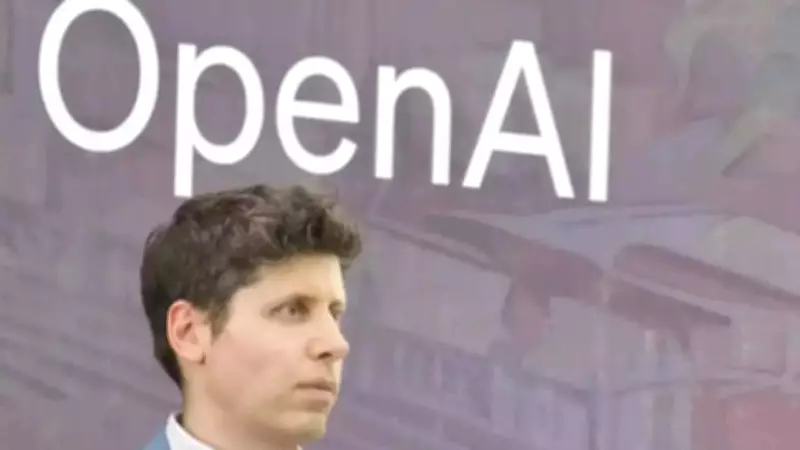
ChatGPT-maker OpenAI has filed for an initial public offering (IPO) in the United States, joining rival Anthropic in a rush to tap investor demand for artificial intelligence (AI) companies. As per news agency Reuters, OpenAI has not disclosed the size or timing of the offering, but the company is reportedly targeting a valuation of up to $1 trillion. The filing also follows a court victory that removed a major legal hurdle linked to a lawsuit filed by Elon Musk.
As stated in the report, OpenAI confirmed that it recently filed confidentially for a US IPO but said a timeline for the listing has not yet been decided. "It may be a while because there are things we want to do that are likely easier as a private company," OpenAI said in a statement to the news agency. OpenAI is expected to make its stock market debut as early as September and is seeking a valuation of up to $1 trillion.
AI Companies Compete for Investor Attention
OpenAI, Anthropic and SpaceX could soon become some of the largest technology companies to go public in recent history. Anthropic filed for a US IPO earlier this month. The Claude-maker was recently valued at $965 billion after a major funding round. SpaceX, led by Elon Musk, has already filed for an IPO and is reportedly seeking a valuation of $1.75 trillion.

Industry experts say the listings will test investor appetite for AI-focused companies and high-growth technology stocks. "OpenAI is keeping options open as Anthropic edged ahead with its filing after a monster funding round," Michael Ashley Schulman, a partner at Cerity Partners, told Reuters.
ChatGPT Growth Fuels Investor Interest
OpenAI has seen rapid growth since the launch of ChatGPT. Reuters reported that the company disclosed earlier this year that ChatGPT had more than 900 million weekly active users and over 50 million paying consumer subscribers. The company also said it was raising $110 billion at an $840 billion valuation from investors including SoftBank, Amazon and Nvidia. According to Reuters, OpenAI generated $2 billion in monthly revenue in March and has grown much faster than several technology giants did during their early years.
OpenAI CEO Sam Altman Shares 'Current Plan' for OpenAI
In a post on X, OpenAI CEO Sam Altman shared a post highlighting the "current plan" for the company. Here's what it said: Every few generations, a new technology changes everything.
Imagine electricity reaching a rural American town in the 1920s. Before power lines arrived, daily life was shaped by physical limits: hauling water, washing clothes by hand, preserving food with ice, and ending much of the day when the sun went down. Electricity did not transform every household overnight, and many of its benefits reached people unevenly. But as access spread, ordinary life changed. Light at night extended the day. Electric pumps, appliances, and refrigeration reduced some of the hardest daily work. Radios brought news, music, and connection from hundreds of miles away into homes and community spaces.
The first promise of electricity was practical, but its deeper impact came from the new possibilities it opened as more people could use it. With time, a lot of new possibilities emerged, with machines and computers greatly accelerating progress in medicine, engineering, and many other fields. By the end of the 20th century the average lifespan had increased by over 20 years and the median inflation-adjusted income tripled or so. These gains were driven in no small part due to the advances in healthcare, sanitation, and living standards, many of which were enabled or accelerated by widespread electrification and related technological progress.
This is happening again with AI. AI will soon be capable of extraordinary things. But the point is not the technology by itself. The point is what people can do with it. It can help someone navigate a medical bill, learn a new skill, start a small business, care for an aging parent, understand a legal or financial decision, turn an idea into something real, or make a scientific discovery.
While the wonder of light at night probably wore off pretty fast, what people decided to do with it did not. And because technology has been a reliable way to deliver prosperity over time, we think AI should be available to everyone to use as much as they need, where and how they need it.

That future will not happen automatically. Transformative technologies can concentrate power, or they can broaden it. They can make life easier for a few, or they can expand opportunity for many. Our approach is rooted in the belief that AI should work for people: helping them pursue their own goals, increasing their capabilities, and distributing the benefits of this technology as widely as possible.
Our first commitment is to build AI in service of humanity. That means we want to empower people broadly, not see power concentrated among a few companies, governments, or individuals. We believe the safer future is one where power is broadly distributed, so more of the world can participate in building a resilience ecosystem.
We are optimistic about AI because we believe it can expand human capability and prosperity. But we are also clear-eyed about the risks. Powerful systems must remain safe, aligned with human intent, and subject to human control. Our mission at OpenAI is to ensure that AGI benefits all of humanity. That means building systems that help people do more of what they choose, not systems that replace human judgment about what matters.
Entirely automating everything is not the future we want. It would be unfulfilling, and it would be dangerous. AI should help people pursue their goals, not become untethered from them. As AI systems become more capable, the human role becomes more important: setting direction, making tradeoffs, applying judgment, and bringing values, taste, care, and responsibility to the work.
A key long-term role for people will be deciding what is worth doing.
We believe that AI doing AI research will become the determining factor of the pace of progress within the next few years. That matters because alignment is itself a hard research problem. To make fast and deep progress, our researchers will need AI systems that can help test ideas, find mistakes, explore alternatives, and iterate alongside us.
But faster technical progress makes human judgment and public coordination more important, not less. The future should be shaped by people, institutions, and societies, not only by the companies building the most capable systems.
As frontier AI development continues, we expect national and global coordination to become more important. We have long believed there should ultimately be an international organization that helps coordinate leading AI efforts to reduce catastrophic risk. Cooperation and shared safety standards are an important part of the path forward, especially because the incentives around commercial and national competition are hard to escape. One goal of such an organization should be to make it possible for the world to take coordinated action, including slowing frontier development when needed, so societal resilience, safety, and alignment can keep pace.
Currently at OpenAI we have three main goals: Build an automated AI researcher—an AI system that can accelerate and increasingly automate the research process itself, while remaining steerable, accountable, and connected to people. Our internal belief is that by March of 2028 we may have a significant fraction of our research being done by AI systems in tandem with our own researchers. To make sufficient progress on alignment, we believe we will need AIs to iterate alongside us. This will help us navigate the transition to the post-AGI world so that we collectively decide the path toward the future.
Accelerate the economy, by accelerating scientific progress, productivity, and economic growth, while working to ensure the gains are widely shared. Everyone should have an opportunity for a meaningful share in the prosperity AI creates.
Give everyone on Earth a personal AGI, empowering them to benefit from one of humanity's most transformative technologies in whatever way they choose.
To be able to deliver on this, we are entering the third phase of OpenAI. The first phase of OpenAI was about doing research toward AGI. The second phase began when our research became relevant to the real world and we became a product company: deploying our systems, learning from how people used them, and making continued progress toward AGI that is safe and aligned with our mission.
Now we are entering the third phase. The economy is beginning to reshape around AI. The central question now is how to make advanced AI abundant, affordable, safe, useful, and easy enough for every person and organization to benefit from it. Frontier capability is only part of the job. The bigger task is turning that capability into tools people can actually use to thrive.
Above all, we believe a broad distribution of power will help lead to a better future. Human history shows that concentrated power creates fragility, while widely shared power makes societies more resilient, adaptable, and free. That is why access matters. It is also why safety, privacy, affordability, open ecosystems, and public oversight matter.
A good AI future cannot be one where a small number of institutions control most of the capability and most of the upside. It should be a future where many people, companies, communities, and countries can build, benefit, and hold power. We believe this transformation should belong to everyone.
If we get this right, AI can become a foundation for greater productivity, creativity, scientific progress, and economic opportunity for the many, and we will achieve our mission: to ensure AGI benefits all of humanity.