When the Sun or Surya is troubled or weak in the horoscope, people usually notice the effects before they identify the cause. Confidence dips, self-doubt creeps in, and authority figures become difficult to handle. You may struggle to assert your authority with confidence and grace. Sometimes, the pattern manifests as a lack of routine, low self-esteem, conflicting relationships with mentors or father figures, or a constant feeling of being invisible despite your efforts.
This is why Sun remedies are important in Jyotish or Vedic Astrology. They do not promise miracles, and Jyotish does not reduce every setback to an affected planet. Planetary affliction is assessed through the whole chart, including house, lord, strength, association, and relevant karakas. These remedies are important because Surya symbolizes atmabala, the word for inner strength, as well as qualities like dignity, clarity, and discipline. They also represent the rightful view. Traditional remedies seek to align you with these qualities. They are spiritual practices but do not guarantee results, and they should be used in conjunction with, not as a substitute for, financial, legal, or mental health advice. Different lineages, or paramparas, teach Sun remedies with slight variations. Still, a few practices are widely accepted across traditional Navagraha worship, or nine-planet worship, and are practical enough to begin without fear.
Start with Sunday Arghya at Sunrise
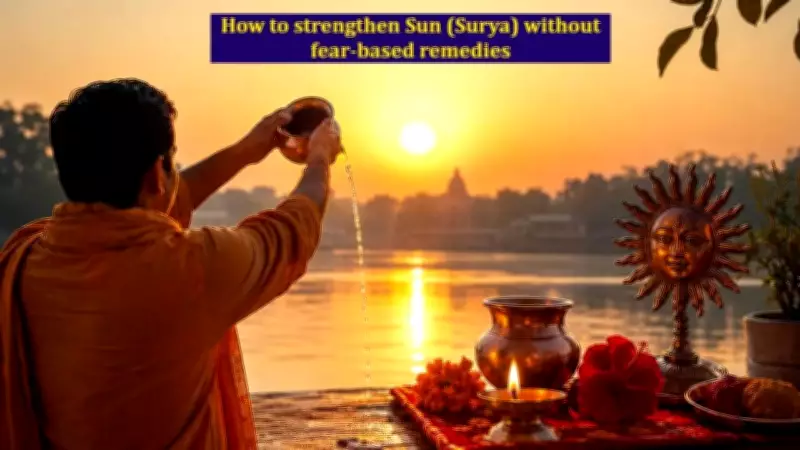
If you do only one remedy for Surya, make it arghya, the offering of water to the rising Sun, on Sundays. This is one of the most familiar and widely followed Sun practices across regions, and for good reasons. In Vedic thought, water offered upward becomes a gesture of reverence, surrender of ego, and conscious connection with light. Surya is the graha, a planetary force that gives brightness and order. When you approach each day with discipline and a sense of gratitude, you teach your mind to approach life with greater vigor.

Use a clean copper vessel if possible. Copper is traditionally linked with Sun energy, and many regional practices recommend it. Fill it with water. As per certain traditions, you can include a red flower or a pinch of sandalwood in red, or even a tiny chunk of jaggery. Face east during sunrise, ideally in a location where sunlight can be seen. Lift the vessel up and pour the water in a thin stream, gazing at the Sun through the stream instead of looking straight at it. Then chant "Om Suryaya Namah" (salutations to Surya) 11 times, or simply pour the water quietly with concentration. Make it easy: clean body, clean vessel, clear intentions. If you live abroad and sunrise timings shift by season, use your local panchang (Hindu calendar and almanac) rather than an India-based time.
Why the Father and Mentor Remedy Is Not Symbolic Fluff
One of the oldest Sun remedies sounds almost too ordinary: respect your father, elders, teachers, and mentors. Yet this is central to Sun work. In texts like Brihat Parashara Hora Shastra, attributed to Sage Parashara, the Sun symbolizes fatherhood, authority, standing, soul strength, and honor. When astrologers inquire about your relationship with father figures, they are not delivering a moral message; they are reading a Surya theme.
This remedy works on the principle that planets are not only external events but also patterns of conduct. If your Sun is weak, repairing arrogance, resentment, defiance without cause, or chronic disrespect toward guides can help settle that pattern. This does not mean tolerating abuse. If a father or mentor has been harmful, keep healthy boundaries. Respect in this context can also mean refraining from public insult, fulfilling duties where appropriate, and honoring the principle of guidance through another elder, teacher, or spiritual mentor.
A practical version is this: on Sundays, call or visit an elder, parent, or teacher and talk honestly. Offer help without drama. Touch their feet if that is part of your tradition, or bow mentally if distance or family history makes physical gestures unsuitable. This is a remedy of conduct, and conduct is where Sun strength often grows.

The Chant and When It Works Best
Mantra, or sacred sound formula, is another classic Surya remedy, but it should not be turned into a performance. For most readers, a short mantra done with regularity is better than a long recitation done for three days and forgotten. A popular and safe option is "Om Suryaya Namah." Another popular mantra is the Surya beej (seed mantra) "Om Hraam Hreem Hraum Sah Suryaya Namah." If pronunciation is difficult, try the shorter form. Chant after bath, facing east, ideally at sunrise or within the first hour of the morning. Sundays are the anchor day, though daily practice is also traditional.
Use a sandalwood or red mala (prayer beads) if you have one for spiritual purposes. Chant 11, 21, or 108 times. Sit on a clean, comfortable asana (dedicated mat or seat for japa) rather than directly on the bare floor, if possible. The reason mantra is prescribed is straightforward in Vedic practice: sound carries bhava (inner feeling), and repetition steadies the mind around the planet's qualities. For Surya, these are clarity, presence, will, and clarity. Do not panic if you miss a day; fear weakens the very Sun quality you are trying to build.
Light, Colour, and the Sunday Altar
Sun remedies are often visual. That is not accidental. Surya is linked with tejas (radiance). A small Sunday worship setup can support that principle without becoming elaborate. On Sunday morning, after arghya, place a clean red, saffron, or orange cloth on a small altar. Offer red flowers if available. Light a ghee lamp (clarified butter) or sesame oil lamp, if that is your family tradition. A few traditions also include jaggery, wheat, or a ripe red fruit. If you keep an image of Surya, use it respectfully. If not, even a simple diya (lamp) before the rising Sun is enough.
Why does this help? Because Jyotish remedies often work by increasing sattva (clarity and harmony) around the graha. Cleanliness, light, warmth, and disciplined repetition are all Sun-coded. The point is not to impress the deity with expensive items but to create a field of order in your own life.
What to Donate, and When Copper Fits
Donation (daan) is one of the most discussed remedies for the Sun, and it can be done sensibly. Traditional lists often include copper, wheat, jaggery, red cloth, and red flowers. Copper donation, where appropriate, is specifically associated with Surya in many remedy traditions. "Where appropriate" matters here: give useful things to an individual or institution that could benefit from them. A copper vessel donated respectfully to a priest, temple community kitchen, or person in need can be meaningful. Random dumping of objects is not daan.
Sunday morning is the usual time. Some people donate after offering arghya and prayer. The logic is that daan reduces ego and loosens attachment, which are common distortions of Sun energy. A strong Sun is not loud pride; it is dignified self-command. Giving with humility supports that. If you are in the diaspora and traditional donation items are hard to source, choose the principle over the object. Offer food support, sponsor educational material, or donate a practical copper utensil to someone who will use it. Intention and usefulness both matter.
Habits That Strengthen Surya More Than People Admit
Many people want a fast remedy but ignore the daily habits that actually feed Sun strength. Surya likes rhythm. Wake up close to sunrise. Keep your word. Dress neatly. Sit and stand straight. Finish what you begin. Eat at regular times when health allows. Avoid chronic lateness. These are not boring side notes; they are Sun remedies in action.
So is ethical conduct. As per traditional astrological thinking, misuse of authority, taking false credit, humiliating juniors, or speaking with contempt can disturb Sun energy even when the chart promises status. If your work demands leadership, lead cleanly. The Sun shines; it does not scheme in corners. Surya Namaskar (Sun salutation) can also be added if your health permits and your doctor has no objection. Done at sunrise with breath awareness, it links body rhythm to solar rhythm in a very direct way.
What Not to Overclaim
This is where fear-based astrology often goes off track. A weak Sun does not mean your life is doomed. A Sunday remedy does not guarantee promotion, victory in disputes, recovery from illness, marriage, or money by a fixed date. Gemstones, yantras, or larger rituals such as Surya shanti (Sun pacification rituals) could be suggested in certain traditions, but they are not casual purchases. They should be considered carefully, especially gemstones, because chart context matters.
Stay away from anyone who tells you that one missed Sunday will trigger disaster, or that every problem with your father, boss, or confidence comes from one planet alone. Jyotish is a sacred diagnostic system, not a machine for panic. If you want to begin this week, do something small and clean. On Sunday at sunrise, take a copper lota (vessel), fill it with water, stand facing east, and offer arghya with "Om Suryaya Namah." Then send one respectful message to a father, teacher, or elder you truly owe regard. That combination—light outside, humility inside—is where Surya remedies start to feel real.