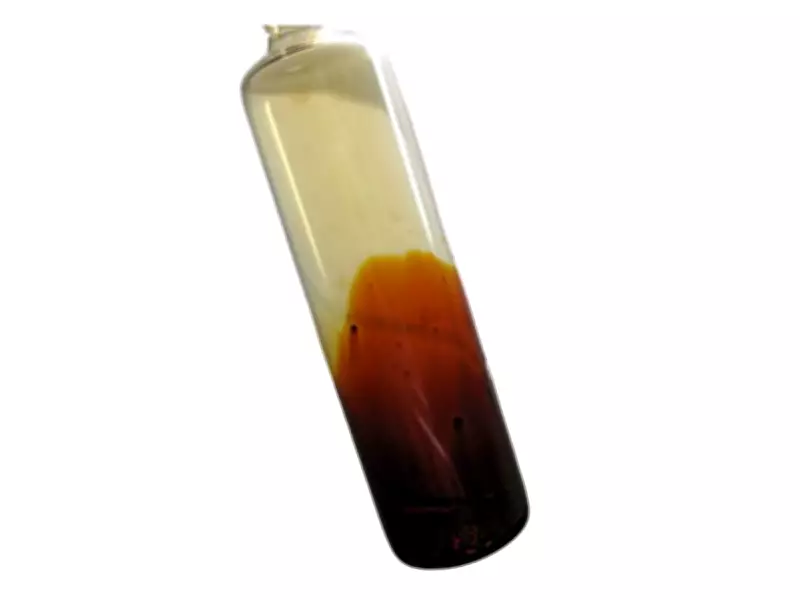
In 1811, Bernard Courtois was not actively searching for a new element. He was engaged in the study of seaweed ash to support the French industrial effort to obtain saltpetre for gunpowder. An additional amount of acid totally altered the situation. Violet vapour rose from the mixture, and the strange colour pointed towards something completely new. The accident did not immediately explain what he had found; however, it did provide chemistry with the key hint. Further research showed the substance was iodine. It would become an element of great importance in science, medicine, and industry. This story illustrates how accidental observations in workshops can lead to major discoveries.
Wartime Workshops, Not a Polished Laboratory
Courtois's discovery was based on practical industrial work rather than a deliberate exploration for a new element. During the Napoleonic Wars, he was engaged in the production of saltpetre, which was the main ingredient used in the manufacture of explosives for military use. Seaweed ash was among the primary ingredients used for this procedure. Chemistry in that context was a part of daily industrial demands. The job was dependent on the heating of water, filtering and adding acids in order to remove plant ash, and then recover the useful substances. This particular context is significant since it shows how chemistry in the beginning was linked to manufacturing. Courtois did not pursue an abstract concept. He was trying to extract the best results out of a mess. The accident occurred within the exact type of hands-on, physical work.
This discovery is also in line with the general pattern of early science, when important results were often derived from materials which were being used to serve other uses. Seaweed ash was valuable as it was able to support industrial activities; however, it also contained trace chemicals which were not fully recognised. The Courtois case illustrates the way that a typical workshop could be transformed into a place of wonder.

The Purple Vapour That Led to Iodine's Discovery
What Courtois noticed was impressive enough to be noticed in a crowded, bustling gathering. According to the documents kept by PubChem, Courtois used sulfuric acid on seaweed ash; heating and acid-induced reactions liberated violet iodine vapour. The reason for this is that it is central to iodine's story, since it was the colour that became the main hint.
Before the advent of modern technology, visual changes were frequently the main concern for scientists. The cloud was more than an intriguing visual display and was the very first indication that the mix contained some unknown substance. The presence of the cloud in violet was what gave the incident its drama as well as the scientific significance. It was first discovered by the human eye long before it was verified through later research in the field of chemistry.
This colour later came to be the name that was officially used for the chemical element. An historical study released in PubMed declares that French researcher Louis-Joseph Gay-Lussac helped give iodine its name, which is the Greek word that means violet. The process of naming demonstrates how tightly early chemistry linked humans to languages. Scientists weren't just identifying elements; they were trying to explain the substances in a manner that would convey the first impression. The colour helped to define the element's character.
How the Vapour Became an Element
When the violet vapour had been identified, the next step was to determine the exact nature of it. The PubChem report notes that Gay-Lussac (and other chemists, later including Humphry Davy) characterised and helped confirm iodine as a new element in 1813–1814, and that the compound was a new substance. This is important since chemical discovery is not finished when something atypical occurs. The phenomenon becomes a reality in the field of science only after it is discovered, tested and incorporated into an overall system.
Courtois was the one who discovered the substance, and helped establish its chemical identity. The tale is an excellent illustration of how scientific credit usually involves collaboration. Someone sees an idea, while another assists to make it accepted as fact.

Seaweed was a key component of the entire research because it was the source of the ash Courtois transformed. The PubMed Central review explains that seaweed naturally has the element iodine. This fact in biology helps to explain why the incident occurred in the first place. Courtois was working on marine materials that contained the necessary element naturally concentrated iodine.
The study also highlights the huge significance of iodine for health, particularly for the human thyroid gland. The initial product of wartime seaweed processing was later transformed into a key ingredient in the human diet and medicine.