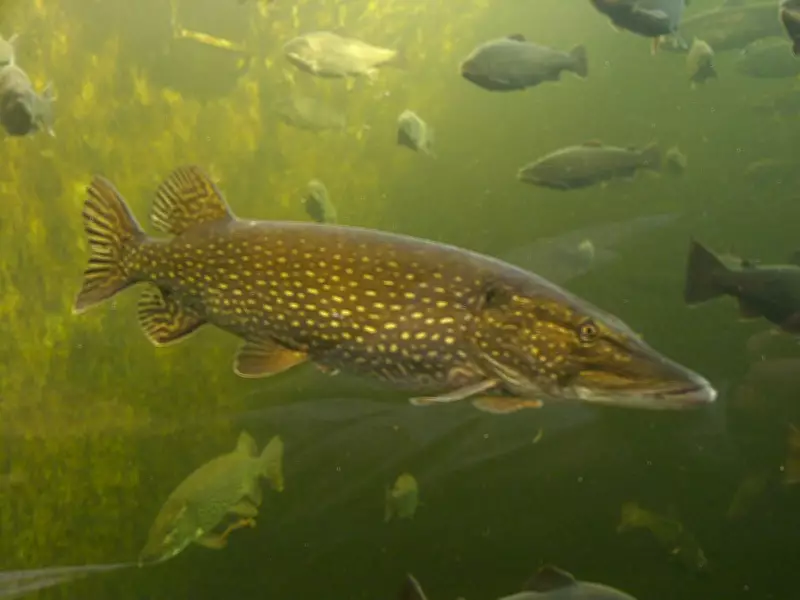
For decades, northern pike were just another fish in Alaska’s waters. However, an illegally introduced population in Southcentral Alaska is now worrying scientists, and climate change may be part of the reason. Rising river temperatures may be causing northern pike to eat more fish than they did just a decade ago, according to a recent study by the University of Alaska Fairbanks. Researchers hope this finding will prompt scientists to take a closer look at how an already stressed native fish population may be impacted by this problem.
This study analyzed northern pike caught in Alaska’s Deshka River, a tributary of the Susitna River system.
How Northern Pike Spread in Alaska
The northern pike's native range did not include many Southcentral Alaska waterways until anglers, defying local regulations, began releasing the species into lakes around the region beginning in the 1950s. From the lakes, the fish began to enter the connected river and wetland system, establishing viable breeding populations. Salmon have their own issues to worry about during their life cycle, but the northern pike, which ambushes prey such as fish, amphibians, and small mammals, would prey on many different things. Its spread concerns biologists because it can move into important salmon habitats.

What Did the Researchers Find?
Researchers collected northern pike from the Deshka River during the summers of 2021 and 2022, brought them back to the lab, and examined the stomach contents of the pike. They then compared this information to the diet of northern pike caught there roughly ten years ago. The study found that fish consumption increased across all age groups. For one-year-old pike, fish consumption rose by approximately 63 percent compared with earlier observations.
Lead author Benjamin Rich, who conducted the research while pursuing graduate studies at the University of Alaska Fairbanks, said the trend is likely to continue if temperatures keep rising. "We expect there will be significant warming in the future, and the amount of fish that pike consume is going to increase with it," Rich said in the university's release.
Warm Water and Food Needs
The explanation lies in basic biology. Fish are cold-blooded, so their body temperature and metabolic rate are closely related to the temperature of the water they live in. As water warms, metabolic demands increase, often requiring fish to consume more food. This effect is significant in water, as temperature is one of the most important factors governing the rate at which fish metabolize energy and consume food. Researchers noted the increase in feeding behavior in the pike fits the expected response of a top predatory species in warming waters. According to the university release, average temperatures in Alaska have risen by about 3°F over the past century, with a substantial portion of that increase occurring in recent decades.
Bad News for Already Struggling Salmon
The findings are particularly worrying because several salmon populations in Alaska have experienced declines in recent years. The study discovered fewer Chinook and coho salmon remains within the pike's stomachs than in the decade prior. Researchers do not necessarily interpret this to mean that pike are preying on these fish less frequently; they suggest less salmon may have been available in the ecosystem to prey upon in general. Reportedly, many Alaskan salmon populations already face the negative impacts of an increasingly warm environment, degrading river conditions, and a number of other ecological changes.
"We know that invasive species and climate are individually associated with freshwater fish extinctions," Professor Peter Westley, a fisheries scientist at the University of Alaska Fairbanks and co-author of the study, said in the university release. "Those impacts may be working together into the future."

A Warning Extending Beyond Alaskan Waters
This single river system is just one place in which these indirect impacts are at play. Warming freshwater ecosystems across parts of the Northern Hemisphere have increased concern for invasive species and the long-term health of local ecosystems everywhere in the UK, Europe, and North America, among other locations. These effects are becoming an important area of research, and researchers are noting the combined impact that invasive species may have with a warming climate. It is clear that a decision made several decades ago is still affecting local wildlife, and, as it turns out, that decision may have increasingly important consequences as waters continue to warm, with the help of a changing climate.