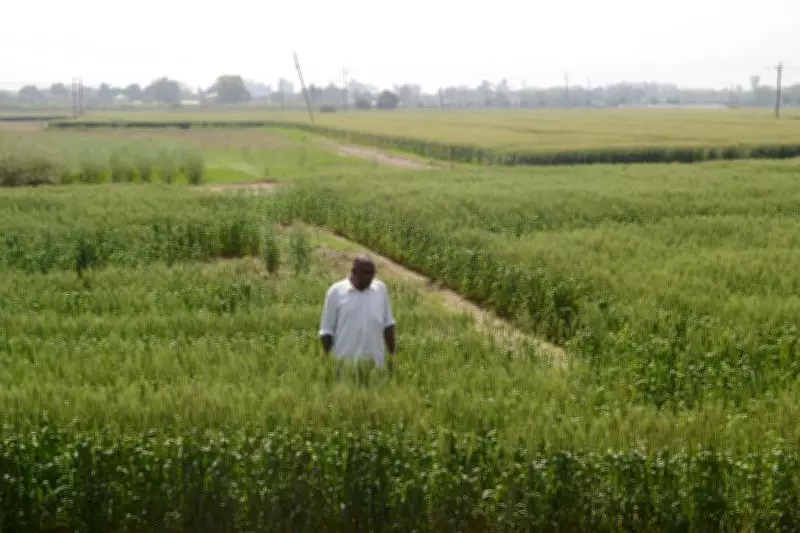
The Haryana Government’s strategic move to procure 332 advanced Organic Carbon Analysis Kits marks a critical turning point for the state’s agricultural future, especially in southern Haryana districts. By deploying these diagnostic tools across 106 government laboratories, the state is shifting from broad-spectrum farming to a model of precision agriculture. This initiative is particularly transformative for districts like Nuh, Gurugram, Faridabad, and Rewari, where the land has long struggled against the harsh realities of a semi-arid climate.
Soil Health Challenges in Southern Haryana
In these regions, soil health has been in a precarious decline. High ambient temperatures accelerate the decomposition of organic matter, causing carbon to oxidise and escape into the atmosphere before it can be integrated into the soil matrix. This process is exacerbated by sandy soil profiles and intensive cropping patterns that leave little room for natural replenishment. As Agriculture and Farmers’ Welfare Minister Shyam Singh Rana noted, the current state of many fields is alarming: “Organic carbon is the soul and backbone of the soil; it acts as a primary food source for beneficial microorganisms and earthworms that maintain soil vitality. If soil testing reveals an organic carbon level below 0.5 per cent, such land is classified as extremely weak and unhealthy, as the soil gradually begins to lose its natural capacity to provide essential nutrients to plants.”
Role of Organic Carbon Analysis Kits
The new testing kits are designed to break this cycle of degradation. By providing farmers with precise data on their soil’s organic carbon content — ideally aiming for levels of 1 per cent or higher — the government is equipping them with the information necessary to move beyond the “vicious cycle” of heavy synthetic fertiliser dependency. According to Rana, the ultimate goal is to restore the land’s natural resilience: “The objective is not only to make agriculture profitable and sustainable, but also to free farmers from excessive chemical use and guide them towards debt-free farming.”

Integrating Science with Traditional Wisdom
For farmers in Gurugram, Nuh, and Rewari, the path to recovery involves integrating science with traditional wisdom. Boosting fertility requires more than just testing; it requires action. Farmers can significantly raise carbon levels by incorporating well-composted organic manures, which act as a direct carbon reservoir. Additionally, adopting minimum tillage — which prevents the rapid loss of carbon — and using crop rotation, particularly with nitrogen-fixing legumes, can stabilise soil structure. Stubble retention and ground cover are further essential practices that shield the topsoil from erosion and heat.
Long-Term Commitment to Stewardship
This state-led initiative represents more than a supply of new equipment; it is a commitment to the long-term stewardship of Haryana’s land. By diagnosing the root cause of soil fatigue, farmers are being empowered to nurture the “soul” of their fields, ensuring that the agricultural landscapes of South Haryana remain productive, profitable, and ecologically vibrant for generations to come.