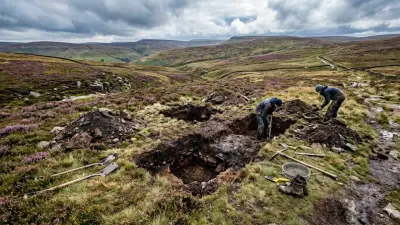
Imagine sifting through the rubble of an ancient city to collect common soil fertilizer when you happen upon a secret tomb housing the personal information of the mightiest rulers the world has ever known. This exact situation occurred in 1887 near the eastern bank of the Nile River when a woman from the nearby town began sifting through the ruins of Tell el-Amarna, an ancient city constructed under the reign of the heretical pharaoh Akhenaten and his wife Queen Nefertiti. The village woman was looking for sebakh, a form of decomposing plant material rich in nutrients used in Egypt as a fertilizer for plants.
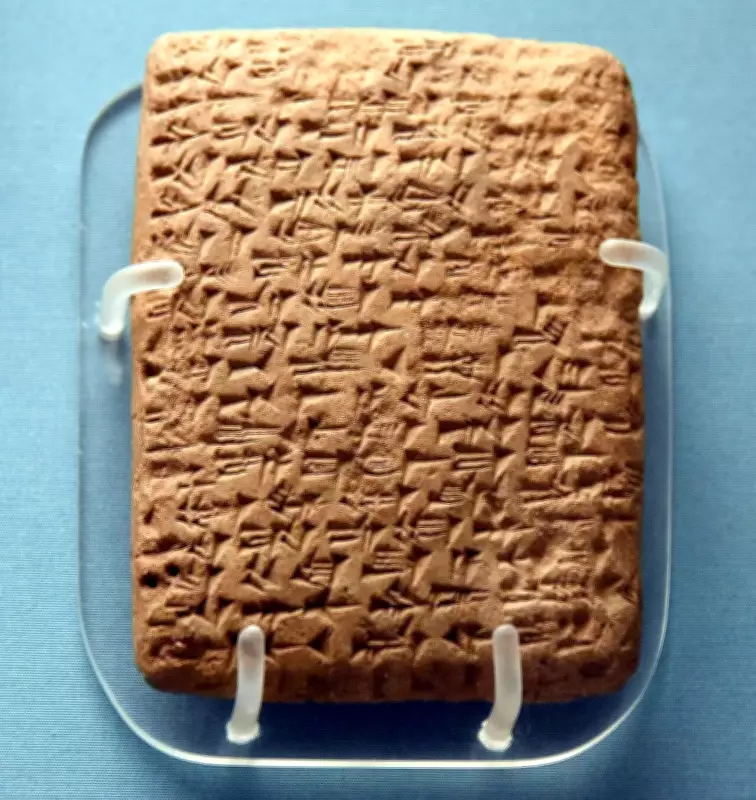
As her simple digging tools cut into the dusty earth near a ruined palace complex, she struck a hidden deposit of small, rectangular slabs of baked clay rather than loose soil. The artifacts were totally covered in numerous tiny, wedge-shaped carvings which differed drastically from the magnificent, pictographic hieroglyphics commonly seen on the monuments of royalty in Egypt. Unaware of their value, the discoverer parted with the mysterious artifacts on the local market for what seemed to be a mere pittance. Before long, linguists worldwide recognized the casual backyard discovery as nothing less than the grand opening of the royal archives of the New Kingdom pharaohs and thus the unveiling of an immense political cache known now as the Amarna Letters.
Building a Complex Network of Bronze Age Alliances
The inadvertent excavation of such tablets amounted to a spectacular watershed moment for historians around the world, due to the fact that they afforded a very rare opportunity to learn the intricacies of international politics of the past era. As stated during the educational lecture series of Smithsonian Associates titled The Amarna Letters: Voices From the Bronze Age, the collection features 400 clay tablets, containing the secret diplomatic messages of the pharaohs in Egypt to other dominant powers of the fourteenth century BCE, such as Babylon, Assyria, and the Hittite Empire. The biggest shock for the researchers was the very nature of the writing. It was not written in the native language of Egypt but rather in a Mesopotamian language called Akkadian in a script known as Cuneiform.

The analysis carried out on the Amarna Letters from The Metropolitan Museum of Art reveals that, due to the fact that Egypt is outside the geographic origin of the cuneiform, the huge volume of information proves that Akkadian was indeed the lingua franca during those times in the ancient Near East. The letters served as a very formal communication process, which indicates that the ancient world was highly integrated through an intricate web of communication, including scribal schools, courier services, and common diplomatic practices in the whole Mediterranean area. The letters reveal a complex network of alliances and political dealings. This find offers a rare glimpse into the international relations of the past. It shows how integrated the ancient world was.
The Tense Reality of Managing an Empire
The breakthrough of the experts who managed to decode the clay tablets led to the discovery that the operations within the Late Bronze Age period were extremely contemporary and political as well as transactional. The information provided by the tablets was not related to the propaganda and pride of the kings that had been recorded on the stone walls of temples. At the same time, Canaan's smaller vassal kings frantically begged the king of Egypt to send archers to protect their vulnerable city-states from both internal insurrection and external threats.

Today, these tablets lie protected in notable museums across the globe, acting as a testament to the fact that human nature, politics, and geopolitics have largely stayed the same throughout the last several thousand years. The ongoing significance of the Amarna archives illustrates the fact that our knowledge about history is constantly being redefined. At times, we do not need grand archaeological expeditions backed up by millions of dollars to rewrite history; all we need is an afternoon of manual labor, which will enable us to unearth voices lost thousands of years ago. What an incredible notion that while for years many farmers who lived in Egypt during those times considered Amarna ruins to be simply an excellent means of providing fertilizer for their crops, there was actually a whole library containing many imperial secrets lying right under their feet!