For decades, the Great Indian Bustard, locally known as the Godawan, was a bird that conservationists worried about. Once considered a contender for India's national bird, the species steadily disappeared from public consciousness as its numbers declined across the country's grasslands. Now, a series of developments over the past few years suggests that the critically endangered bird is finally receiving the recognition conservationists have long hoped for.
World Environment Day Tribute at Qutub Minar
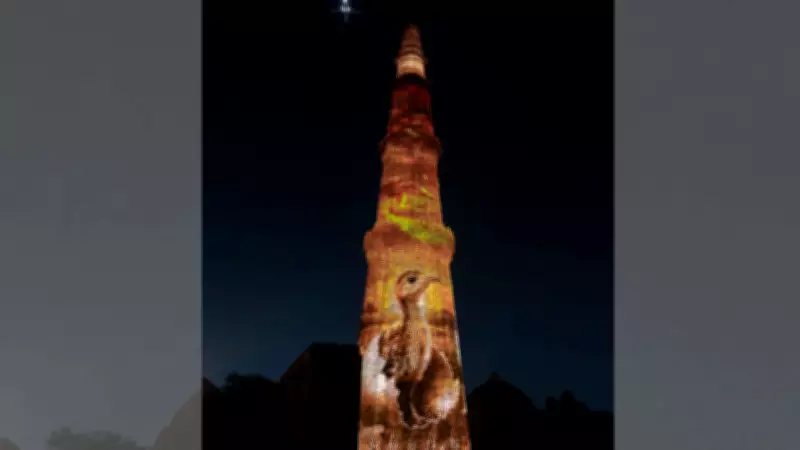
Against this backdrop of growing ecological awareness, World Environment Day saw a public tribute to the bird. Supported by Godawan Estuary Premium Water, Delhi's Qutub Minar hosted a large-scale projection dedicated to the story of the Godawan. The installation was aimed at increasing ecological literacy about one of the world's rarest birds and its gradual resurgence, reaching a wider audience.
The programme was held at Qutub Minar from 8:00 PM to 10:00 PM. Through this visual presentation, the journey of Godawan conservation and revival was showcased, with the primary objective of raising public awareness.

Collaborative Conservation Efforts
Kedar Shrimal, the president of the Gramodaya Samajik Sansthan, said, "What makes this effort encouraging is the coming together of multiple stakeholders with a shared commitment towards conservation. Initiatives like this show us how local communities, conservation experts, private sector partners, the Forest Department, and other government agencies can collectively strengthen efforts to protect the Godawan and its fragile habitat. This growing spirit of collaboration is helping build greater awareness, stronger ecosystems, and renewed hope for the future of the species."
He added, "On the occasion of World Environment Day, a special visual projection was displayed at Qutub Minar from 8:00 PM to 10:00 PM on June 5, showcasing the conservation journey of the Godawan and its remarkable increase in numbers." The presentation highlighted the efforts, achievements, and success stories associated with the conservation of this critically endangered bird, emphasizing the collective commitment of conservationists, local communities, government agencies, and other stakeholders in securing a brighter future for the species.
State-Level Recognition and Breeding Success
In May, Rajasthan officially observed its first state-level Godawan Day, dedicating May 21 to raising awareness about the species and spotlighting ongoing conservation efforts. Around the same time, wildlife authorities and conservation partners reported encouraging developments from breeding and hatchery programmes, with a new batch of hatchlings emerging in protected facilities across the state.
The recovery has been driven by a combination of scientific intervention and community participation. Conservation partners have worked to restore native grasslands, fence vulnerable nesting areas, improve water availability, and support captive breeding programmes designed to improve chick survival rates. One of the programme's lesser-known but critical initiatives has also involved predator management. Additional support has been provided to hatchery and breeding operations through specialised transport facilities that help safely relocate eggs and young birds when necessary.
National Spotlight and Community Role
The bird's growing prominence also reached the national stage when Prime Minister Narendra Modi highlighted the Great Indian Bustard during the 133rd episode of Mann Ki Baat, citing it as an example of India's wildlife conservation efforts and the importance of protecting endangered species.
Equally important has been the role of local communities, particularly members of the Bishnoi community and residents living near key habitats. Working alongside forest officials and wildlife experts, they have helped monitor nesting sites, protect breeding grounds, and create safer conditions for the species to recover.