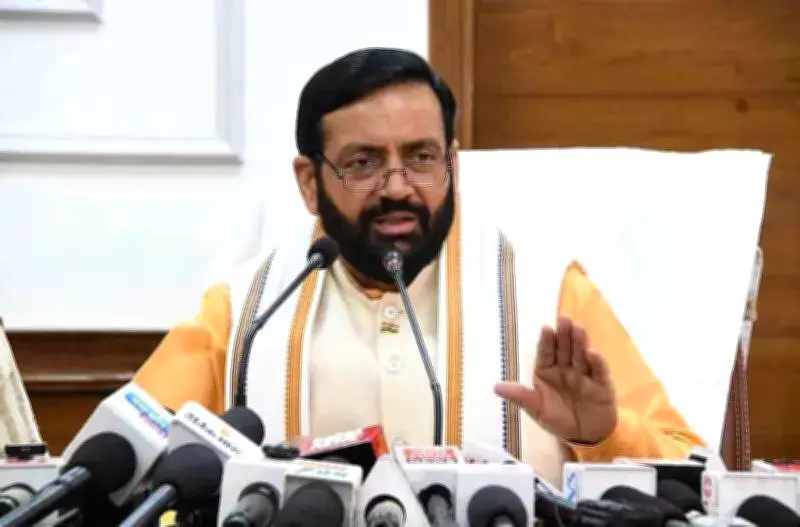
Chandigarh: Haryana Chief Minister Nayab Singh Saini on Sunday announced the upcoming launch of mobile veterinary treatment services to provide doorstep healthcare for livestock across the state. The service will operate daily from 6 am to 10 pm through the toll-free number 1962, with mobile veterinary vans equipped with specialists and attendants reaching beneficiaries within 30 minutes of receiving a call.
Expansion Plans and Vision 2047
Chairing a high-level review meeting on the five-year implementation roadmap and action plan of the agriculture, horticulture, fisheries, and animal husbandry departments at the civil secretariat, Saini directed officials to gradually expand the facility into a 24-hour service to ensure timely emergency care for animals throughout Haryana. The meeting focused on future strategies, institutional reforms, and targets under the state's Vision 2047 framework, aligned with Prime Minister Narendra Modi's vision of 'Viksit Bharat'.
Agriculture and Farmers' Welfare Initiatives
Reviewing the agriculture and farmers' welfare department's roadmap, the CM stressed the need for crop diversification, natural farming, climate resilience, and better residue management. Additional Chief Secretary Vijayendra Kumar informed that the department aims to reclaim nearly 1.40 lakh acres of waterlogged and saline land during 2026-27 and fully restore all affected land by 2031. The state also plans to issue soil health cards to 15 lakh farmers annually and bring 1.5 lakh acres under natural and organic farming clusters. Haryana has additionally set a target of covering 3 lakh acres under Direct Seeded Rice (DSR) cultivation to conserve groundwater and promote climate-resilient agriculture.

Stubble Burning and Jagruk Yatra
To curb stubble burning, the government will distribute 15,000 crop residue management machines every year. The CM also directed officials to launch a statewide 'Jagruk Yatra' to encourage farmers to adopt organic farming, reduce chemical use, and shift towards DSR and crop diversification practices.
Horticulture, Fisheries, and Animal Husbandry
The horticulture department proposed creating clusters for fruits such as apple, pear, and date palm, while the fisheries department explored the use of waterlogged areas for shrimp farming. The animal husbandry department also unveiled plans to modernise veterinary laboratories, strengthen disease surveillance systems, and organise four livestock fairs annually across the state.