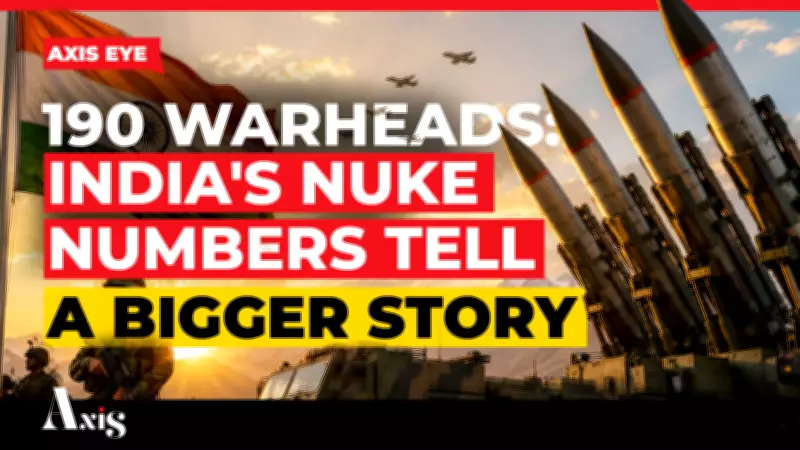
India now possesses 190 nuclear warheads, according to the latest SIPRI Yearbook 2026, widening its lead over Pakistan's estimated 170 warheads. But the real story is not the numbers. It is the strategy behind them.
A Two-Front Nuclear Strategy
India's nuclear modernization is increasingly focused on a two-front challenge involving both Pakistan and China. This shift reflects New Delhi's recognition of simultaneous threats from its western and northern borders. The growing asymmetry in warhead counts is not merely quantitative; it signals a qualitative transformation in India's nuclear posture.
Nuclear Triad and Modernization
India's expanding nuclear triad—the ability to deliver nuclear weapons via aircraft, land-based missiles, and sea-based platforms—is central to this strategy. The development of submarine-launched ballistic missiles and advanced delivery systems enhances second-strike capability, ensuring credible deterrence. This modernization includes upgrades to warhead designs and command-and-control systems.

China's Rapid Nuclear Expansion
While India's lead over Pakistan is notable, China's nuclear arsenal is expanding even faster. Beijing is estimated to have over 500 warheads, with projections suggesting it could reach 1,000 by the end of the decade. This rapid buildup adds a critical dimension to India's strategic calculus, prompting a more robust and flexible nuclear posture.
The Shadow of Operation Sindoor
The recent Operation Sindoor, a hypothetical conflict scenario involving nuclear threats, has underscored the heightened risk of escalation in South Asia. India's expanding nuclear lead provides a buffer against potential coercion, but it also raises the stakes for crisis stability. The operation's nuclear shadow highlights the need for robust crisis management mechanisms.
Impact on Asian Security
India's widening lead over Pakistan is reshaping the nuclear balance in South Asia. It reduces the likelihood of Pakistan resorting to first-use tactics, but it also incentivizes Pakistan to develop tactical nuclear weapons and expand its arsenal. This dynamic could lead to an arms race, further destabilizing the region. Meanwhile, China's nuclear buildup poses a long-term challenge that India must address through both strategic deterrence and diplomatic engagement.
Key Takeaways from SIPRI 2026
- India: 190 warheads, growing triad capabilities.
- Pakistan: 170 warheads, focused on tactical weapons.
- China: Over 500 warheads, rapid expansion underway.
- Regional Implications: Increased risk of arms race, need for dialogue.
As India's nuclear arsenal grows, the strategic landscape of Asia is being rewritten. The numbers matter, but the strategies behind them will determine the future of deterrence and stability in the region.