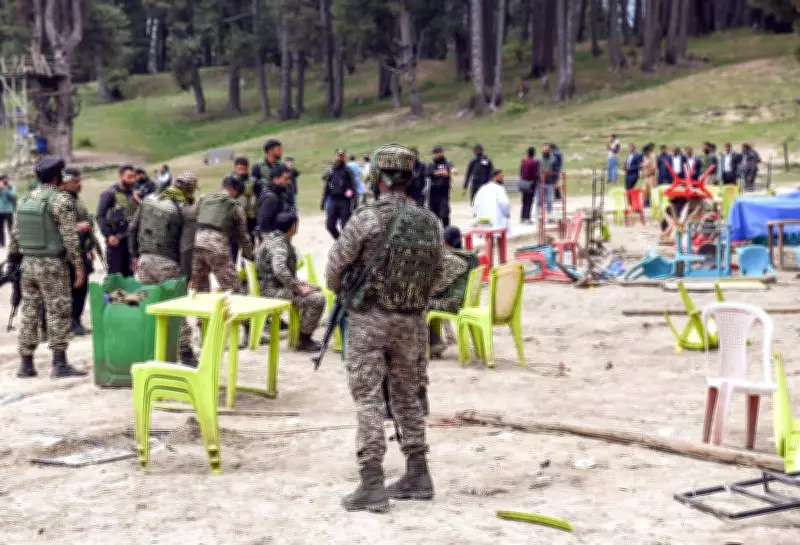
The National Investigation Agency (NIA) is delving into the intricate details of the Pahalgam attack, with a focus on US-made GoPro cameras and a suspected route from China to Lashkar-e-Taiba (LeT) terrorists. The probe has uncovered evidence suggesting that the attackers used sophisticated equipment to document their movements, raising concerns about international terror networks.
GoPro Cameras: A New Dimension in Terror Surveillance
Investigators have recovered multiple GoPro cameras from the site, believed to have been used by the terrorists to record their activities. These devices, manufactured in the United States, were likely employed for reconnaissance and propaganda purposes. The NIA is now tracing the supply chain of these cameras, aiming to identify how they reached the militants in Kashmir.
China Connection Under Scrutiny
Another critical angle being explored is the path from China to the Lashkar operatives. Preliminary findings indicate that some of the equipment and possibly the terrorists themselves may have transited through Chinese territory. This has added a geopolitical dimension to the investigation, with the NIA coordinating with international agencies to map the route.

Lashkar-e-Taiba's Role in the Attack
The NIA believes that the Pahalgam attack was orchestrated by LeT, a Pakistan-based terror group. The agency is examining communication intercepts and financial transactions to establish a direct link between the attackers and LeT handlers. The use of high-tech gadgets like GoPros suggests a level of sophistication not commonly seen in local militant activities.
International Cooperation and Challenges
The investigation has prompted the NIA to seek assistance from US and Chinese authorities. However, diplomatic sensitivities may hinder cooperation, especially regarding the China connection. The agency is also working with Interpol to track the movement of suspects and materials across borders.
As the probe intensifies, the NIA is expected to release more details about the conspiracy. The case highlights the evolving nature of terrorism in the region, where traditional methods are increasingly supplemented by modern technology and global networks.