

AI Investment Craze Spills Into Bond Markets, Raising Red Flags
The artificial intelligence frenzy is no longer confined to stock markets. It has now spilled over into the bond arena. Major technology companies are issuing massive amounts of debt to fund their AI ambitions. However, fixed-income investors are being advised to approach this trend with extreme caution.
Hyperscalers Turn to Debt Markets for AI Funding
Last year, the five leading hyperscalers—Amazon, Meta, Oracle, Microsoft, and Alphabet—saw their equally weighted shares surge by an average of 23%. This performance easily beat the S&P 500's 16% gain. Their success in equities is clear.
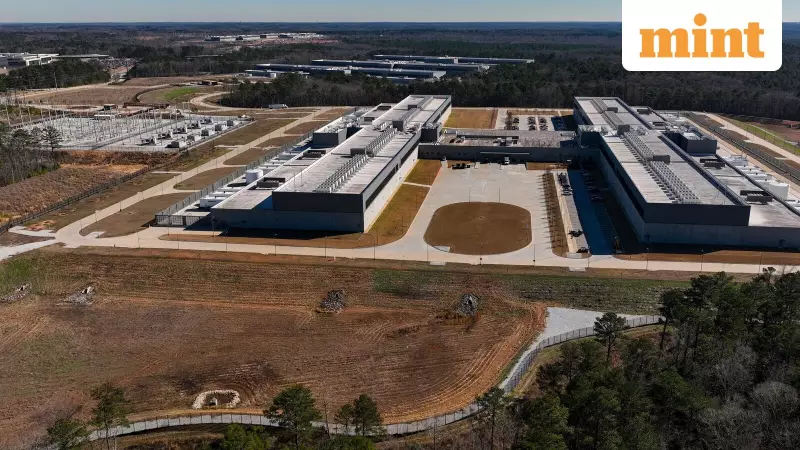
But building AI infrastructure requires enormous capital. These companies need cash to construct data centers. They must purchase specialized chips, install industrial-grade liquid cooling systems, and set up advanced networking equipment.

Initially, these tech giants used their free cash flow to cover AI expenses. Now, they are tapping the debt markets aggressively. In the past year, they issued more than $120 billion in high-grade bonds. That figure is roughly seven times higher than the previous year's issuance. Analysts expect this number to keep growing.
Why Bonds Are Not Stocks: A Fundamental Difference
Bonds function very differently from stocks. Stock investors buy shares hoping for capital appreciation and dividends. Their potential gains are theoretically unlimited. Bond investors, in contrast, typically seek a fixed return through interest payments. They might also expect some modest price appreciation.
More importantly, bondholders take on the risk of total loss if the issuer defaults. For most fixed-income investors, stability and predictability are paramount. Chasing hot themes like AI is often secondary.
"We expect to get our money back," states Ryan Jungk, an investment-grade portfolio manager at Newfleet Asset Management. "All this extra risk for extra reward is not what we necessarily want from our highest-quality issuers."
Attractive Yields Mask Underlying Risks
On the surface, the yields look tempting. Since mid-September, premiums on hyperscaler bonds over ultra-safe U.S. Treasuries have jumped by as much as 0.6 percentage points. Broad high-grade spreads rose by less than 0.05 point during the same period.
Yet, these tech bonds carry significantly greater risks. Take Oracle as an example. Late last year, its gauge for default risk hit a 16-year high. This spike followed projections for higher capital expenditures and a new disclosure of an additional $248 billion in lease commitments. Much of this leasing liability is likely linked to its partnership with OpenAI.
While Goldman Sachs and J.P. Morgan predict megacap tech stocks will dominate this year, the outlook for tech bonds is less rosy. Morgan Stanley, Barclays, Deutsche Bank, and J.P. Morgan are underweighting tech bonds in their portfolios.
The Coming Debt Deluge and Market Capacity Concerns
Bank of America strategists estimate borrowing in the tech sector could reach a staggering $950 billion over the next three years. This expected flood of new debt is a frequent concern among analysts, even though the credit quality of some bonds remains pristine.
For most hyperscalers, default risk is not the immediate worry. Microsoft's gross debt is only 0.22 times its EBITDA. This means the company could theoretically repay all its debt in under three months. Alphabet follows with a ratio of 0.49 times. Amazon's leverage ratio is 0.56 times, and Meta's is 0.57 times. Including lease commitments barely changes these figures, except for Amazon, where the ratio rises to a still-manageable level above 1.
Oracle is the clear outlier with a leverage ratio of 4.1 times EBITDA. The other four companies have substantial room to take on more debt.
Nate Liddle, a senior fixed-income analyst at Columbia Threadneedle Investments, notes a critical point. If these four giants raised their leverage ratios to one times EBITDA by 2030, it would generate $852 billion in new debt. Such issuance would more than double the tech sector's share of the investment-grade debt market. It would jump from 10.5% to about 22%, bringing it close to the banking sector's 23% share.

"There's room on their balance sheets," Liddle says, "but not enough capacity in the market to handle it."
Historical Precedents of Sector Overexpansion
History shows that rapid sector expansion often leads to trouble. In 2014, investors eagerly funded U.S. energy companies at cheap rates. The fracking boom gained immense momentum. Energy became an ever-increasing part of the speculative-grade debt market—until many companies could not repay their debts.
Similar dynamics played out in the early 2000s with a wave of telecom defaults. The mid-2000s housing bust was spurred by widespread excitement over home-price appreciation.
"When a sector of a market goes from very small to very large, those are the environments where you can have excessive risks build up," warns Robert Cohen, head of DoubleLine's global developed-credit team. "You have to be on alert."
The Yield Temptation and Investor Strategies
Despite the risks, the yields are attractive enough to draw some fund managers. A 10-year U.S. Treasury note yields 4.17%. In comparison, Microsoft's 10-year bonds yield 4.22%, Amazon's and Alphabet's yield 4.69%, and Meta's yield 4.92%. Even Oracle, with 10-year yields of 5.78%, has no history of default.
For many investors, a slight yield premium over Treasuries seems like a manageable risk.
"Ultimately, there's going to be some mal-investment. Something's not going to work out economically," says Janet Rilling, a senior portfolio manager at Allspring Global Investments. She recently bought 10-year and 30-year Meta bonds for the firm's Core Plus ETF and mutual fund. She also purchased Oracle five- and 10-year bonds in September. "It's our job to select the winners."
Ed Al-Hussainy, a portfolio manager at Columbia Threadneedle, acknowledges the additional spread is "so fantastic" for fund managers required to buy investment-grade bonds. Yet, he is looking elsewhere. He prefers mortgage-backed securities issued by Ginnie Mae, Fannie Mae, and Freddie Mac.
Among corporate bonds, bank bonds are widely favored on Wall Street. They represent the opposite of tech bonds. "Given elevated capital levels and the prospect for less issuance in 2026," explains Newfleet's Jungk.
The Core Conflict for Bond Investors
Massive speculative capital spending on AI delivers the exact opposite of what bond investors typically seek: safety, certainty, and frugality. The AI theme is driving companies to spend heavily on uncertain future returns.
The clear message for fixed-income investors is this: if you are excited about AI, the stock market might be a more suitable playground. For those prioritizing capital preservation and predictable returns, caution in the tech bond space is warranted.





