

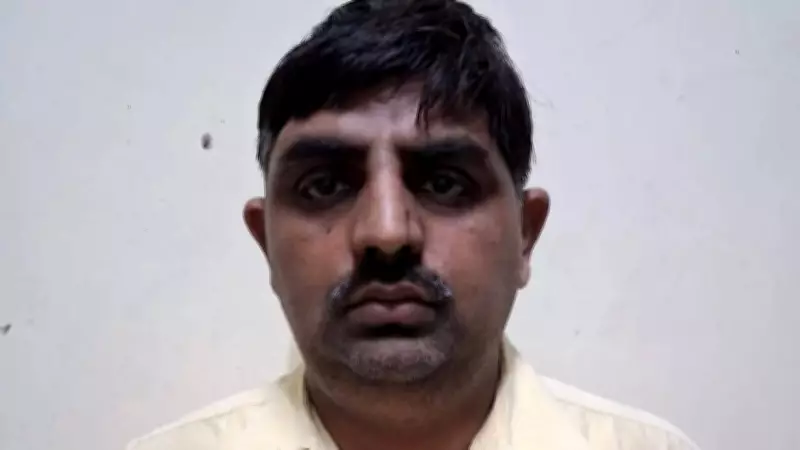
Senior Bank Official Arrested in Uttar Pradesh Mudra Loan Scam Investigation
The Uttar Pradesh Special Task Force (STF) has made a significant arrest in connection with a widespread loan fraud scheme that exploited the Pradhan Mantri Mudra Yojana. On Saturday, authorities apprehended Nitin Chaudhary, a 39-year-old senior bank official, for his alleged involvement in processing fraudulent loans using counterfeit documents and fabricated identities.
Details of the Arrest and Initial Complaint
Nitin Chaudhary, who previously served as a branch manager for Union Bank of India and was currently posted as Credit Manager at the bank's Basant Vihar branch in Delhi, was arrested from his workplace premises. The operation was conducted by a joint team comprising members of the STF and the Cyber Crime Police Station based in Lucknow.
The case came to light following a formal complaint filed by Lucknow resident Raj Bahadur Gurung at the STF headquarters. Gurung reported that he had approached an intermediary to secure a business loan and had signed some bank documents during the process. He was later informed that his loan application had been rejected.

However, approximately five to six months later, Gurung began receiving notifications about pending EMI payments. When he checked his credit report, he discovered, to his shock, that two loans had already been sanctioned in his name without his knowledge or consent. This alarming discovery prompted him to approach the authorities, which triggered a comprehensive investigation.
Uncovering an Organized Interstate Racket
Acting on Gurung's complaint, the STF launched an intensive probe under the supervision of senior officers. Through technical surveillance and intelligence gathering, investigators exposed a well-organized interstate racket involving bank officials, middlemen, and document forgers operating across multiple jurisdictions.
Investigations revealed that the syndicate fraudulently processed loans in the names of unsuspecting individuals by manipulating critical identity documents such as Aadhaar and PAN cards. The photographs on these identification documents were digitally altered and replaced with images of gang members, while forged signatures were used to complete the necessary paperwork.
The STF's investigation determined that more than 100 individuals and entities had been targeted by this scheme, with loans worth several crores sanctioned fraudulently across multiple banking institutions. This represents a substantial financial crime with widespread impact on victims and the banking system.
Previous Arrests and Mastermind Identification
Earlier in the case, on September 13, 2025, the STF had already arrested four accused individuals, including another Union Bank branch manager named Gaurav Kumar. A formal case was registered at the Cyber Crime Police Station in Lucknow at that time.
Subsequent interrogation sessions and analysis of seized documents led investigators to identify Aamir Ahsan as the mastermind behind the entire operation. Ahsan was subsequently arrested on February 15, 2026, marking a significant breakthrough in the investigation.
Nitin Chaudhary, who had been absconding from authorities, was identified as a key conspirator in the scheme. After extensive tracking efforts, he was finally located and arrested from his workplace in Delhi, bringing another crucial player in the fraud network into custody.
Confessions and Operational Details
Additional Superintendent of Police for the STF, Vishal Vikram Singh, provided details about Chaudhary's interrogation. During sustained questioning, Chaudhary disclosed crucial information about the functioning of the fraud network and his specific role within it.
Chaudhary revealed that he had initially come into contact with co-accused Naveed, a vendor associated with the bank's regional office, during his posting in Lucknow. What began as a professional acquaintance soon evolved into a criminal partnership aimed at generating illicit income through fraudulent loan approvals.

The gang devised a systematic plan to exploit vulnerabilities in the Mudra loan scheme. They created fake firms specifically to generate the quotations required for loan approvals. These shell companies—controlled by Naveed and mastermind Aamir Ahsan—served as the beneficiaries where the fraudulently obtained loan amounts were ultimately transferred.
Chaudhary admitted to personally sanctioning multiple fraudulent loans, including:
- A Rs 9 lakh loan in the name of Vishnu Kumar Pandey for the purchase of a generator
- A Rs 15 lakh vehicle loan in the same name using forged quotations
- A Rs 10 lakh loan in the name of Mahendra Pandey for printing machinery
- A Rs 10 lakh loan in the name of Chandrika Prasad
- A Rs 9 lakh loan in the name of Amit Kumar Tiwari
All funds obtained through these fraudulent loans were routed to accounts of fake firms such as "Lucknow Commercial Motors" and others created specifically by the gang. The money was subsequently withdrawn and distributed among the conspirators according to their agreed-upon shares.
Chaudhary further admitted that he had introduced co-accused Naveed to Gaurav Kumar, another bank manager at the Jankipuram branch. Kumar then proceeded to sanction dozens of additional fraudulent loans in exchange for commission payments, thereby expanding the scope and scale of the criminal operation.
Legal Proceedings and Ongoing Investigation
The accused was produced before the Patiala House Court in Delhi, where transit remand was obtained to transfer him to Lucknow for further interrogation. He has since been brought to Lucknow where the investigation continues.
Officials confirmed that forensic examination of seized electronic devices is currently being conducted to uncover digital evidence and trace financial trails that may lead to additional discoveries about the full extent of the fraud network.
The STF believes that more members of the syndicate remain at large, and efforts are ongoing to identify and apprehend them. Investigators are also probing the possible involvement of additional bank officials and attempting to determine the complete magnitude of the scam across other financial institutions that may have been similarly targeted.
This case highlights significant vulnerabilities in loan approval processes and underscores the importance of robust verification mechanisms, particularly for government-backed lending schemes designed to support small businesses and entrepreneurs.





