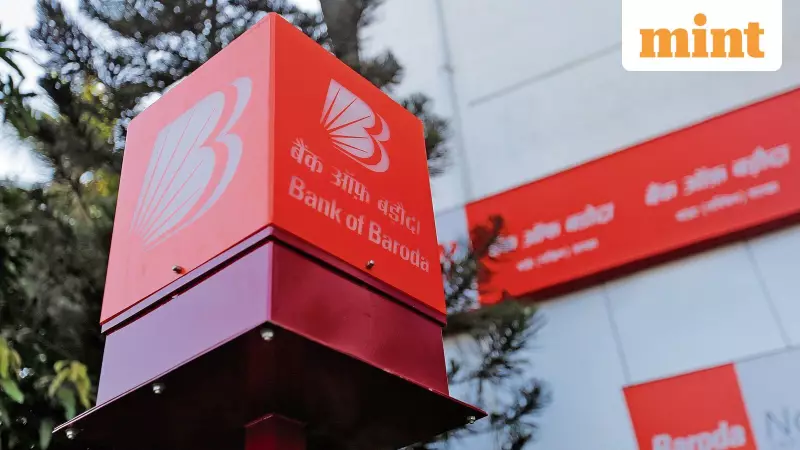
State-owned Bank of Baroda has unveiled an ambitious plan to significantly expand its prepaid card portfolio, setting a target to more than double its current user base within the next five years. The lender is seeking external expertise to achieve this goal, according to an official document accessed by Mint.
Ambitious Expansion Targets and Current Standing
As of November, Bank of Baroda's prepaid card base stood at 454,608 cards. The bank now aims to add an additional 500,000 cards, effectively targeting a total base of nearly 1 million cards by 2029. The strategy involves onboarding approximately 100,000 new prepaid cards annually, encompassing both domestic and foreign currency variants.
Notably, the bank's active card rate is a strong point. Data from the Reserve Bank of India (RBI) shows that as of November, 25% of its prepaid cards were active, translating to 112,801 cards. This performance is notably higher than the banking industry's average active rate of 18%. An active card is defined as one used for at least one financial transaction in the preceding year.

In addition to cards, the bank also reported having 1.1 million wallets, with 994,062 of them being active.
Partner Strategy with Incentives and Penalties
To execute this expansion, Bank of Baroda has issued a Request for Proposal (RFP) inviting external agencies to manage an end-to-end prepaid card module. The project scope is comprehensive, covering the issuance of rupee-denominated prepaid cards, foreign currency cards (including multi-currency options with at least 12 currency wallets), and National Common Mobility Cards (NCMC). It will also handle reward points and cashback processing.
The agreement with the selected service provider will include a performance-linked structure with clear incentives and penalties. The bank is offering a lucrative 20% incentive over the base compensation if the annual target is exceeded. However, to qualify for this bonus, new customers must make their first transaction within 60 days of receiving the card and spend a minimum of ₹50,000.
Conversely, failure to meet the annual distribution target will attract a penalty equivalent to 25% of the quarterly compensation. The bank has also stated that compensation will be clawed back in cases where applications are found to be fraudulent, leading to card cancellation within 180 days, regardless of whether a transaction occurred.
Navigating the UPI Dominated Landscape
The prepaid card market in India operates in the shadow of the colossal Unified Payments Interface (UPI). According to RBI data, NSDL Payments Bank leads the prepaid card space with 38.9 million cards, followed by HDFC Bank with 17.2 million.
While UPI processed a staggering 20.5 billion transactions in November alone, Prepaid Payment Instruments (PPIs), which include cards and wallets, facilitated 899.1 million transactions for goods, services, fund transfers, and cash withdrawals. Experts argue that specific use cases keep PPIs relevant despite UPI's dominance.
Parijat Garg, an independent fintech consultant, highlighted two key growth areas. First, the demand for forex cards is rising with increasing international travel. Government data shows over 30.9 million Indians travelled abroad in 2024, a 10.8% increase from the previous year. Second, India's expanding mass transit systems, like metro networks, present a significant opportunity for contactless prepaid cards, especially NCMCs.
Garg added that while UPI has impacted wallets, PPIs remain crucial for specific applications such as FASTag, gift cards, and corporate solutions. Bank of Baroda's targeted push into this segment indicates a strategic bet on these niche but growing use cases within India's diversified digital payments ecosystem.