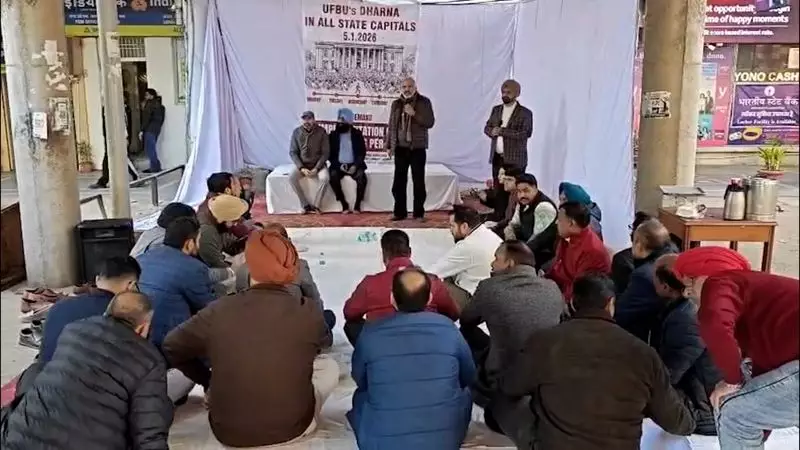
Banking operations across India witnessed a wave of peaceful demonstrations on Friday as employee unions united to press for a series of long-standing demands. The central call was for the implementation of a five-day working week, a move they argue is essential for employee well-being and is already enjoyed by other sectors.
Unions Unite for Core Demands
The protest was orchestrated by the United Forum of Bank Unions (UFBU), an umbrella organization representing nine major bank employee unions. While the push for a five-day banking week took center stage, the unions also voiced strong opposition to the government's policy of privatizing public sector banks. They argue that privatization undermines financial inclusion and jeopardizes job security.
Other critical demands highlighted during the protests include:

- Filling a vast number of vacant positions in banks to reduce excessive workload on existing staff.
- Providing an unconditional pension update for all retirees.
- Ensuring stringent action against fraudulent loan defaulters to protect bank assets.
The UFBU has clarified that these protests are a precursor to more intense agitation if their concerns are not addressed by the Indian Banks' Association (IBA) and the central government.
Chandigarh as a Protest Epicenter
In the Tricity region of Chandigarh, Panchkula, and Mohali, the protest was notably visible. Bank employees gathered at the State Bank of India's main branch in Sector 17, Chandigarh, a key financial hub. The demonstration saw participation from a wide cross-section of bank staff, including officers and clerical personnel from various public sector banks.
Union leaders at the site, including members of the All India Bank Officers' Confederation (AIBOC) and the All India Bank Employees' Association (AIBEA), addressed the gathering. They emphasized that the current six-day work schedule is outdated and leads to burnout. "A five-day week is not a privilege but a necessity for a better work-life balance," stated a union representative, pointing out that RBI and other financial institutions already operate on a five-day schedule.
The Road Ahead and Potential Impact
The nationwide nature of the protest signals deep-seated discontent within the banking workforce. The UFBU has a history of organizing successful strikes, and this demonstration serves as a formal warning to the authorities. The union forum has stated that the ball is now in the court of the IBA and the government to respond constructively.
Should the demands remain unmet, the UFBU has not ruled out escalating their action to include tools like strike ballots, which could potentially lead to nationwide bank strikes. Such a move would significantly disrupt financial transactions, affecting millions of customers and businesses. The unions are leveraging this potential disruption to underscore the urgency of their demands related to staffing, workload, and policy direction for public sector banks.
The protest concludes peacefully, but it leaves behind a clear message for policymakers. The resolution of these issues will determine the future of industrial harmony in one of India's most critical economic sectors.