

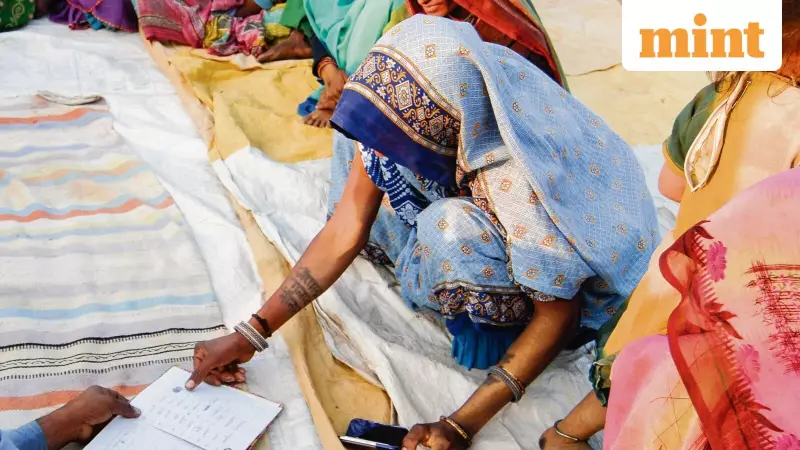
In the heart of rural India, a quiet revolution is unfolding, led by an army of over 142,000 women known as Banking Correspondent (BC) Sakhis. These grassroots agents are transforming access to finance, bringing essential banking services directly to the doorsteps of villagers and bridging the stark urban-rural credit divide.
The Silent Revolutionaries of Rural Finance
The story of Sarika Arjun Chauhan from Barwani district, Madhya Pradesh, exemplifies this change. A trained member of a self-help group (SHG), Chauhan operates as a BC Sakhi, managing a staggering ₹1.5–2 crore worth of transactions every month. To date, she has completed more than 62,000 transactions with a cumulative value of ₹65.15 crore. Her work ranges from opening bank accounts and handling cash to facilitating Aadhaar seeding, all within her community.
This transformation is powered by the Deendayal Antyodaya Yojana-National Rural Livelihood Mission (DAY-NRLM), which links SHGs to formal banking systems. The program has disbursed over ₹11 trillion in loans while maintaining impressively low non-performing assets (NPAs) below 2%. It has created a robust network of community resource persons, including BC Sakhis for digital finance.

The urgent need for such intervention is clear in India's credit distribution. SBI Research reveals a glaring disparity: metro areas receive 60.6% of bank credit, while rural regions get a mere 7.7%. States like Tamil Nadu and Telangana outperform the national credit-deposit ratio average of 79.9%, whereas Jharkhand, Bihar, and the Northeast lag significantly. For rural women, accessing a bank often means losing a day's wages to travel. BC Sakhis eliminate this barrier.
Building a Nationwide Network of Trust
Launched in 2017 with support from the World Bank, the BC Sakhi initiative aims to place one agent in each of India's 150,000 Gram Panchayats. These women are carefully selected based on Aadhaar enrolment, a clean financial history, and smartphone literacy. They undergo a rigorous six-day residential training at Rural Self Employment Training Institutes, followed by certification from the Indian Institute of Banking and Finance, with a remarkable 96.5% pass rate.
Today, their services are vast and vital. BC Sakhis manage accounts, process cash and digital payments, facilitate loans, distribute pensions, and promote insurance schemes like Pradhan Mantri Jeevan Jyoti Bima Yojana (PMJJBY) and Atal Pension Yojana. They often work beyond traditional banking hours and act as educators, raising awareness about financial products.
The impact is profound. A 2024 study by Truagrico documented increased savings, better financial planning, reduced fraud, and greater trust in digital transactions among villagers. BC Sakhis have enabled agricultural loans, supported business expansion, and fostered entrepreneurship. Crucially, they have elevated the financial independence and social standing of women within their communities.
Banks are major beneficiaries too. BC Sakhis have driven customer acquisition and engagement, expanded geographic reach, and reduced branch congestion. Their role in collecting utility bill payments adds further value. Collectively, they have conducted over 375 million transactions worth ₹1.42 trillion. During the COVID-19 lockdown, they proved indispensable by disbursing nearly ₹6,000 crore in relief funds.
Strengthening the Network for a Developed India by 2047
Despite the success, challenges persist. In poorer regions, lower transaction volumes mean reduced earnings for the Sakhis. Outdated equipment and resistance from some corporate BCs to deploy women agents are other hurdles. To address this, experts recommend creating a central BC registry for better data analytics.
The Ministry of Rural Development and NABARD are exploring a dedicated corporate BC model for women. To fortify the initiative, a multi-pronged approach is suggested:

- Enhanced Training: Advanced modules in digital banking, cybersecurity, and financial planning using blended learning methods.
- Service Expansion: Including micro-insurance, loan processing, and acting as information hubs for government schemes.
- Infrastructure Upgrade: Providing modern biometric devices, point-of-sale terminals, and reliable internet connectivity.
- Revised Incentives: Commission models that reward transaction diversity and volume, with special support for low-income regions.
While the digital divide, connectivity issues, and security concerns remain, BC Sakhis have unequivocally proven to be a transformative force. Their strength lies in the familiarity and trust they command as local community members. For India to achieve its goal of becoming a developed nation by 2047, empowering and strengthening this network of 'silent revolutionaries' is not just an option—it is an imperative for delivering widespread, inclusive prosperity.





