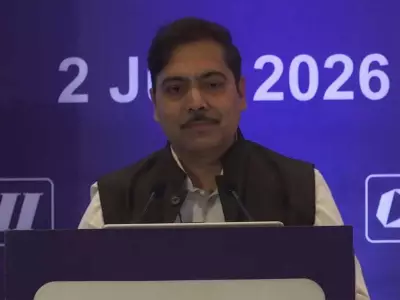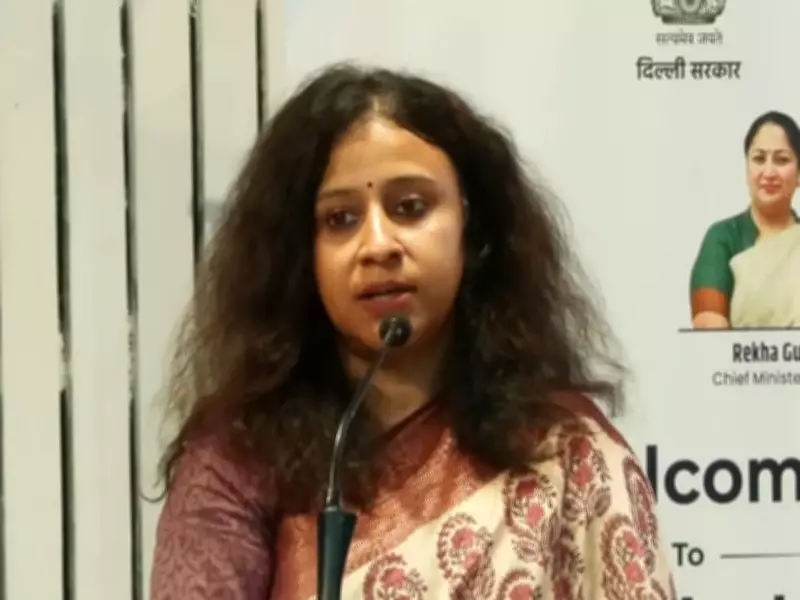
Transport Commissioner Niharika Rai stated on Friday that the success of the Delhi Electric Vehicle Policy 2026 depends on three critical factors: an adequate supply of affordable electric vehicle models, timely disbursal of subsidies, and rapid expansion of charging infrastructure. Speaking at the launch of the policy booklet, Rai emphasized that the policy is designed to cover all major vehicle segments while retaining flexibility for future improvements through operational guidelines.
Three Pillars of Policy Success
"The success of this policy depends on three key factors. First, there must be an adequate supply of affordable EV models. Second, incentives must be disbursed on time. Third, charging infrastructure must be available. These are critical for the policy's success," Rai said.
She noted that the Delhi government has made the policy robust by addressing all key aspects of electric mobility, focusing on reducing pollution from the segments that contribute most to vehicular emissions in the capital. Citing a study by The Energy and Resources Institute (TERI), Rai revealed that 46 per cent of vehicular pollution in Delhi comes from two-wheelers and three-wheelers, while 33 per cent is attributed to commercial goods vehicles. Among these, N1 vehicles—light commercial goods carriers weighing up to 3.5 tonnes—account for the majority of commercial vehicle emissions.

Policy Provisions and Incentives
The policy also considers the Centre's proposed 'Parivartan Scheme', which aims to replace old buses and trucks with cleaner vehicles. Accordingly, the Delhi EV Policy 2026 focuses on N2 category vehicles—medium-duty commercial goods carriers with a Gross Vehicle Weight (GVW) exceeding 3.5 tonnes but not exceeding 12 tonnes. Rai assured stakeholders that while charging infrastructure and battery recycling may not be extensively detailed in the policy document, the implementation plans for both are already prepared.
The Delhi government has committed an investment of Rs 15,000 crore under the policy. Rai called upon all stakeholders, including original equipment manufacturers (OEMs) and dealers, to work together for its successful implementation. She urged OEMs to increase the supply of affordable EV models and support charging infrastructure development. Under the policy, every dealership is required to establish at least one charging station, and dealers must inform customers at the time of booking whether a particular EV model is eligible for subsidy.
Specific Incentive Structures
According to the Delhi Electric Vehicle Policy 2026, buyers of eligible electric two-wheelers can receive a purchase incentive of up to Rs 30,000 in the first year, which will reduce to Rs 20,000 in the second year and Rs 10,000 in the third year. For electric three-wheelers, the incentive is up to Rs 50,000 in the first year, Rs 40,000 in the second year, and Rs 30,000 in the third year. N1 category electric light commercial trucks weighing above 1.75 tonnes are eligible for an incentive of up to Rs 1 lakh, while those below 1.75 tonnes can receive up to Rs 50,000 in the first year.
The policy also provides a 100 per cent waiver of road tax and registration fees for electric cars priced up to Rs 30 lakh (ex-showroom), though they are not eligible for a direct purchase subsidy. Rai highlighted that the policy introduces scrapping incentives and purchase incentives together with mandatory provisions for certain vehicle categories for the first time.
Timeline and Future Mandates
The Delhi Electric Vehicle Policy 2026 was notified by the Delhi Government on July 1 and will remain in force until March 31, 2030. From January 2027, the registration of new petrol three-wheelers will be stopped, and from April 2028, new registrations for petrol two-wheelers will not be allowed. However, those who already own such vehicles can continue driving them.
Rai assured that the government would ensure timely subsidy disbursal while simultaneously creating charging infrastructure across the city. She reiterated that the policy's success hinges on collaboration between the government, OEMs, dealers, and consumers.