The Reserve Bank of India (RBI) has granted a crucial in-principle approval to Fino Payments Bank, paving the way for its transformation into a full-fledged small finance bank (SFB). This landmark decision, received in early December 2025, will allow the bank, promoted by Fino PayTech, to commence lending operations after a restructuring phase. The move marks a significant evolution for the payments bank, which counts major shareholders like Bharat Petroleum, ICICI Bank group, Blackstone, and Intel Capital.
A Digital-First Advantage and Strategic Roadmap
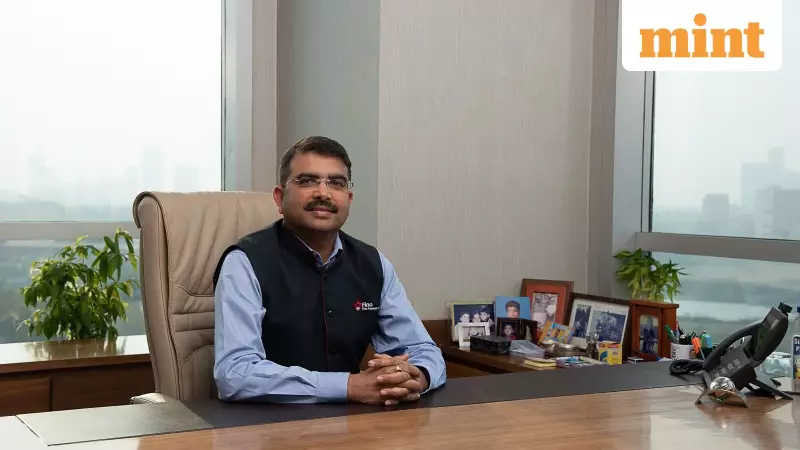
In an exclusive interview, Rishi Gupta, Managing Director and CEO of Fino Payments Bank, detailed the strategic advantages and roadmap for this transition. He emphasized that unlike many SFBs that originated from microfinance institutions a decade ago, Fino's model is inherently digital-first and transaction-led, with a core built on liabilities.
The bank's immediate advantage is its massive scale. It boasts a ready base of over 20 lakh merchants and 1.6 crore customers, with 60 lakh customers actively using UPI. This existing network allows the bank to seamlessly layer deposit and loan products onto established payment relationships. Gupta highlighted that deposits already exceed Rs 3,000 crore, maintained at a low cost of under 2%. This stable, low-cost funding base, requiring Rs 600–800 crore annually, supports a strong CASA ratio.

The nationwide merchant network serves a dual purpose: generating leads and creating a pool of potential borrowers, effectively turning payment channels into credit distribution rails. Gupta also pointed to favorable timing, with Artificial Intelligence (AI) poised to enhance banking operations like onboarding, fraud control, and process efficiency from the outset.
Investment Focus and Lending Product Portfolio
The transformation will be powered by focused investments in technology. The bank is migrating its core banking system to Finacle in January, continuing its heavy digital investment of the past few years. The physical expansion will be measured, with plans for over 100 branches and 100+ asset centres over three years under a hub-and-spoke model. This approach aims to keep fixed costs low. Asset centres will manage merchant relationships and loans, while branches will focus on gathering deposits.
On the lending front, the focus will be squarely on secured credit. The initial product suite will include:
- Affordable housing loans for its core customer base.
- Micro loans against property.
- Small-ticket loans for merchants and MSMEs.
- Gold loans.
Personal loans will be offered selectively, leveraging deep customer and merchant data for risk pricing. Gupta revealed that 35–40% of their merchants already borrow from other sources, presenting a clear opportunity for migration. The bank also plans to introduce secured credit cards linked to deposits in a year or two, alongside insurance and mutual fund distribution services.
Culture, Capital, and Future Ambitions
Gupta stated that the bank's culture, built over its journey from a business correspondent to a payments bank, remains merchant-led, anchored in personal connect and local trust. This will be complemented by an expanding digital outreach. Hiring will be selective, with 500–600 new staff added over two to three years to support the expansion.
Financially, the bank expects to remain profitable throughout the transition. While costs may rise in the initial years as systems are built, revenues are projected to follow. Capital is not an immediate constraint, and the bank does not plan to raise fresh funds in the next financial year unless a specific growth opportunity emerges.
Looking ahead, Gupta expressed the ambition to eventually become a universal bank by around 2035, subject to strong performance over the next five years of SFB operations. A key immediate step is deciding the fate of its existing business correspondent (BC) division, which contributes about Rs 140–150 crore in revenue. As an SFB cannot house a BC arm, this business may be hived off or sold, though no final decision has been made.