

As a landmark year for foreign investment in India's financial sector concludes, industry experts are predicting that the spotlight in 2026 will shift towards the country's older, mid-sized private sector banks. This follows a series of mega-deals in 2025 that saw global giants pour capital into larger Indian non-banking finance companies (NBFCs) and banks.
The 2025 Deal Frenzy Sets the Stage
The stage for this anticipated shift was set by a hectic year of deal-making. The most notable transaction occurred just recently, with Japan's Mitsubishi UFJ Financial Group (MUFG) investing nearly ₹40,000 crore for a 20% stake in Shriram Finance. This deal underscored India's powerful allure for global capital seeking exposure to resilient lenders with strong growth narratives.
This was not an isolated case. Earlier, Dubai's Emirates NBD acquired a 60% stake in RBL Bank for ₹26,853 crore. Other significant investments included Blackstone's ₹6,196-crore stake in Federal Bank and SMBC's 24.22% acquisition in Yes Bank. Abu Dhabi-based investors also made notable moves into Sammaan Capital and IDFC First Bank. These inflows were driven by robust balance sheets, supportive regulation, and India's sustained economic prospects.

Why Mid-Sized Banks Are Now on the Radar
Bankers and advisors now indicate that the focus is evolving. The capital is becoming more selective, moving beyond mere recapitalization to funding banks poised for transformation and scale. Abizer Diwanji, founder of NeoStrat Advisors, notes that capital will flow into superior platforms, not just to banks needing funds. He highlights that older private sector banks are on the cusp of a major transition, potentially through strategic partnerships and infusions.
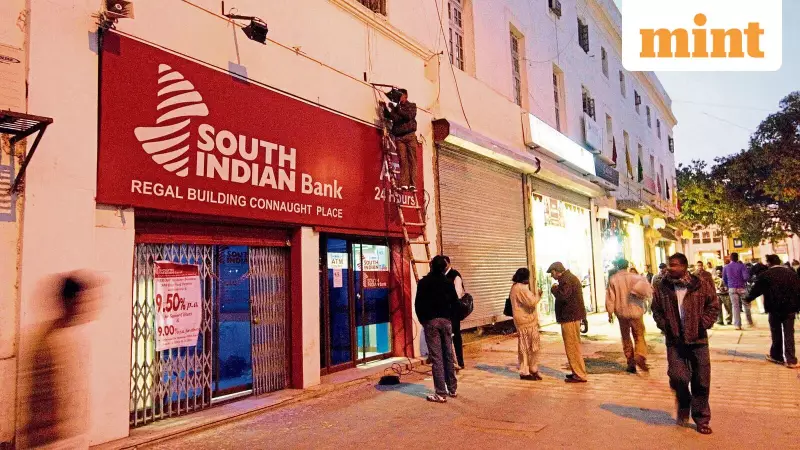
Several banks are being closely monitored by foreign investors. South Indian Bank is frequently cited as a prime near-term candidate, with Karnataka Bank, Tamilnad Mercantile Bank, and Karur Vysya Bank also in the frame. Their appeal lies in untapped growth potential and traditionally conservative, yet solid, financial foundations.
As of the September 2025 quarter, these banks maintained strong capital adequacy ratios (CRAR), all comfortably above the Reserve Bank of India's (RBI) minimum requirement of 9%:
- South Indian Bank: 17.70%
- Karnataka Bank: 20.84%
- Tamilnad Mercantile Bank: 30.96%
- Karur Vysya Bank: 16.58%
- DCB Bank: 16.41%
Vivek Iyer of Grant Thornton points out that these are established brands with significant upside, offering a compelling "less effort, more returns" proposition for global investors, especially those based in south India.
Governance and Funding: The Key Hurdles
Despite the optimism, significant hurdles remain. Experts like Prakash Agarwal of Gefion Capital express skepticism about whether traditional, community-driven banks are prepared for the governance overhaul and strategic shifts that foreign capital demands. These banks often have concentrated loan books and a historically cautious approach to risk.
A critical challenge is funding. With the exception of Federal Bank, most old private banks struggle with access to low-cost deposits and overseas funding, leading to elevated funding costs. Current Account and Savings Account (CASA) ratios present a mixed picture:
- Federal Bank: 31.01% (up from 30.07%)
- South Indian Bank: 31.86% (up slightly)
- Karnataka Bank: 31.01% (up slightly)
- DCB Bank: Fell to 23.52% from 25.61%
- Karur Vysya Bank: Fell to 27.65% from 29.46%
AM Karthik of ICRA emphasizes that capital is abundant, but the decisive factor is how banks plan to use it—whether to clean up legacy issues or fund a new growth model. Foreign investors seek both strong growth visibility and meaningful influence on governance, which can be difficult under existing ownership structures.

The Road Ahead for 2026
The consensus as 2025 ends is clear: foreign capital is eager but highly discerning. The wave of consolidation among small finance banks, payment banks, and urban cooperative banks is creating a more competitive landscape, which could benefit efficient players. For the older private banks, the path to attracting major foreign investment likely involves upfront investments in technology, governance systems, and clear strategic roadmaps.
While South Indian Bank has begun this process, others may need deeper reforms. The message for 2026 is that opportunity exists, but it will favor those mid-sized lenders that demonstrate a readiness to evolve, scale, and meet the stringent benchmarks set by global institutional investors.





