

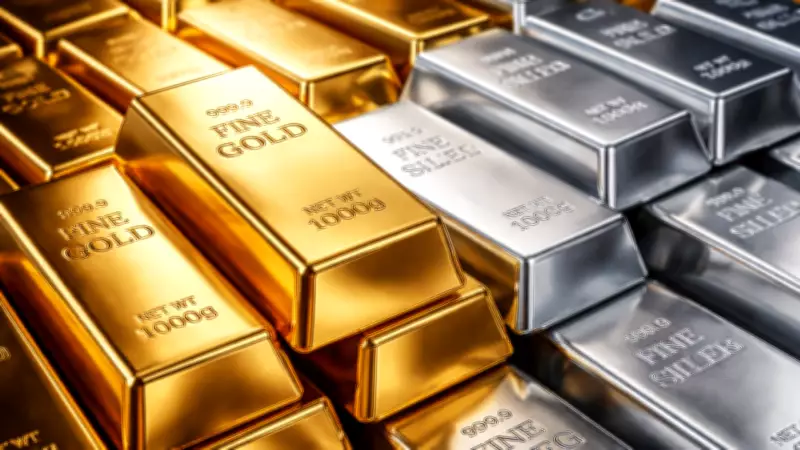
Gold and Silver Futures Witness Sharp Decline After Record Rally
Gold and silver futures experienced a significant downturn on Friday as traders engaged in aggressive profit-booking following the previous day's historic rally. On the Multi Commodity Exchange (MCX), silver futures plummeted by 3.04%, while gold contracts declined by 1.28%. This pullback was largely influenced by bearish sentiment in global markets and a strengthening US dollar.
Historic Highs Followed by Dramatic Reversal
The dramatic shift occurred after both precious metals achieved unprecedented peaks on Thursday. Silver had surged to a record high of Rs 4,20,048 per kilogram before settling lower, while gold touched an all-time high of Rs 1,80,779 per 10 grams. The correction was particularly pronounced in international markets, with Comex gold falling 2.2% to USD 5,236.74 per ounce.
"After hitting record highs, gold and silver prices dropped as a rebound in the US dollar triggered aggressive profit-taking," explained Manav Modi, an analyst at Motilal Oswal Financial Services Ltd. The dollar index recovered from recent lows around 96, and the USD/INR currency pair reached a record high, adding pressure to precious metal prices.

World Gold Council Raises Concerns About Indian Demand
The World Gold Council has expressed apprehension regarding India's future gold imports. As the world's second-largest consumer, India is expected to witness a decline in jewelry demand due to record-high prices. The council also noted that central bank purchases slowed during the fourth quarter of 2025, although robust investor interest helped mitigate this decrease.
Monthly Performance Remains Strong Despite Correction
Despite the current dip, gold is poised for its best monthly performance since the 1980s. Silver also maintains an impressive trajectory, with a potential January gain exceeding 50%, marking its strongest monthly showing ever. Market expert Jigar Trivedi attributed this remarkable performance to "a weak US dollar and shifting US monetary policy outlook."
Precious Metal ETFs Plunge Up to 14%
Gold and silver exchange-traded funds (ETFs) also witnessed substantial declines, plunging by up to 14% on Friday. Investors rushed to book profits as precious metals retreated sharply from record highs, sparking debates over whether this correction presents a buying opportunity or signals the end of the powerful rally.
The selloff followed a remarkable surge in January, during which silver jumped 56%, positioning it for its strongest monthly performance on record. Gold logged its biggest monthly gain since January 1980, rising more than 20% in dollar terms.
Silver-Focused ETFs Lead the Losses
- Zerodha Silver ETF and SBI Silver ETF fell by 14%
- Nippon India Silver ETF dropped 14%
- Kotak Silver ETF declined 12%
- Gold ETFs also slipped, with Nippon India Gold ETF down 10% and ICICI Prudential Gold ETF losing 6%
- ICICI Prudential Silver ETF fell 7%
The domestic selloff mirrored global market trends, where spot silver slid 5.7% to $109.55 per ounce after touching a record $121.64 a day earlier. Spot gold fell 3.9% to $5,183.21 per ounce, having dropped as much as 5% from Thursday's peak of $5,594.82.
Market Volatility Reaches 2008-Crisis Levels
An industry commentary on a global capital markets platform went viral, highlighting that gold's volatility has reached "2008-crisis levels." The analysis noted that gold posted its largest daily swing in market capitalization in history, at $5.5 trillion. Between specific trading hours, gold lost $3.2 trillion in market cap, equivalent to $58 billion per minute, before adding back $2.3 trillion later in the day.
"We are witnessing one of the most historic trading opportunities of all time. Gold's volatility is above 2008 levels," the commentary emphasized, underscoring the extraordinary market conditions.

Factors Driving the Market Correction
The sharp reversal occurred after US President Donald Trump indicated he would soon announce his pick to replace Federal Reserve Chair Jerome Powell, with reports suggesting former Fed governor Kevin Warsh as a likely candidate. "So, a potentially less dovish Fed Chairman pick, a rebound in the dollar, and gold giving way to overbought conditions have contributed to the decline in the price of the precious metal," stated KCM Chief Trade Analyst Tim Waterer.
Expectations of a more hawkish Federal Reserve unsettled investors who had been betting on looser monetary policy. "Gold and silver show very high volatility, and prices dip from record high levels amid heavy profit-taking; safe-haven buying could support prices," observed Manoj Kumar Jain of Prithvi Finmart.
Broader Trend Remains Bullish
Despite the selloff, the broader trend remains strongly positive. Silver is set for its ninth consecutive monthly gain, while gold is heading for a sixth straight monthly advance. "Silver fell about 4% toward $110/oz, retreating from all-time highs as investors locked in profits following the record rally, while rebound in the dollar added pressure on the metal," explained Jigar Trivedi, Senior Research Analyst at Indusind Securities.
Trivedi added that despite the pullback, silver is on track to gain more than 50% in January, marking its best monthly performance on record and extending a winning streak to nine consecutive months. The rally has been supported by persistent geopolitical and economic uncertainty, strong safe-haven demand, a weaker dollar, and a tight physical market with both investment and industrial demand hitting record levels.
Market Outlook and Future Considerations
Looking ahead, traders are turning their attention to upcoming US Producer Price Index numbers, which will provide fresh insights into monetary policy direction. The recent price movements underscore the ongoing impact of economic uncertainty and geopolitical tensions on precious metals markets.
The dramatic fluctuations highlight the complex interplay between global economic indicators, monetary policy expectations, and investor sentiment in shaping precious metal prices. While short-term corrections may occur, the fundamental drivers of the bull market remain intact, suggesting continued volatility and potential opportunities for investors in the coming months.





