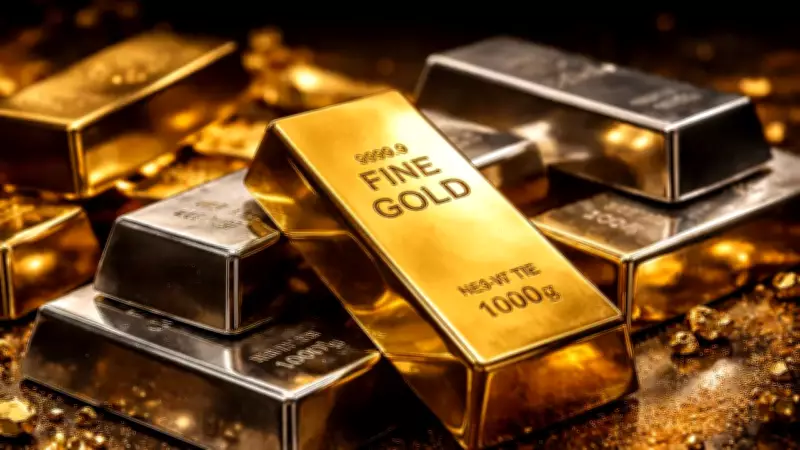
Gold and Silver Prices Navigate Volatile Terrain Amid Strong Investor Demand
The precious metals market has been experiencing significant turbulence in recent weeks, with both gold and silver prices displaying extreme volatility. These assets have witnessed dramatic crashes and rapid recoveries within short timeframes, keeping traders and investors on edge. Despite this rollercoaster movement, both metals continue to trade below their historic peaks achieved in January, as evolving geopolitical developments ease some investor anxieties while profit-taking at elevated levels exerts downward pressure.
Recent Performance and Market Dynamics
Gold and silver recently shattered all previous records, with gold approaching the remarkable threshold of Rs 2 lakh per 10 grams and silver decisively crossing the Rs 4 lakh per kilogram mark. Although prices have retreated from these zeniths, market analysts maintain that the fundamental long-term bullish trajectory remains undisturbed. However, they caution that short-term price fluctuations are likely to persist, creating both challenges and opportunities for market participants.
Kyle Rodda, Senior Market Analyst at Capital.com, provided insight into current market conditions, stating, "Over the last couple of weeks, gold and silver became very dislocated from fundamentals, so they pretty much decoupled from interest rate policy. Yields being lower are obviously supportive of gold today." This commentary highlights how traditional correlations can break down during periods of market stress.

International Market Movements and Economic Indicators
On Wednesday, both precious metals advanced in international markets as US Treasury yields declined following disappointing retail sales data for December. This economic softness, observed ahead of crucial employment figures, increased expectations that the Federal Reserve might have greater latitude to implement interest rate reductions.
Spot gold demonstrated resilience, climbing 0.5 percent to reach $5,049.59 per ounce, while US gold futures for April delivery showed even stronger momentum with a 0.9 percent increase to $5,073.40 per ounce. Silver outperformed significantly, with spot prices surging 2.2 percent to $82.43 per ounce, effectively recovering from a more than 3 percent decline in the previous trading session.
The relationship between bond yields and precious metals remains crucial. Lower yields typically diminish the opportunity cost associated with holding non-yielding assets like gold and silver, while often coinciding with broader macroeconomic conditions that favor their appreciation.
Silver's Remarkable January Performance
January 2026 witnessed a spectacular rally across precious metals, fueled by global uncertainty, shifting currency dynamics, and heightened demand for safe-haven assets. Investors increasingly turned to both gold and silver as protective hedges against market risks, propelling prices to unprecedented levels during the month.
Despite substantial corrections in the final two trading sessions, silver recorded an impressive gain of nearly 19 percent for January. The metal traded near historic highs throughout the month, with silver futures on India's Multi Commodity Exchange establishing fresh lifetime peaks on January 29 when prices first breached the psychologically significant ₹4 lakh threshold.
Silver notably outperformed gold during the opening month of the year, benefiting from its dual identity as both a precious metal and an industrial commodity. Robust industrial demand combined with strong investment interest created sustained buying momentum that propelled silver's exceptional performance.
Record-Breaking ETF Inflows Signal Strong Investor Confidence
January witnessed extraordinary investor interest in precious metals, with mutual fund allocations to gold and silver escalating dramatically as prices climbed. For the first time in recent memory, monthly inflows into gold and silver schemes surpassed investments into equity funds, which have traditionally driven industry growth.

Gold and silver Exchange Traded Funds collectively attracted inflows of ₹33,503 crore during January, more than doubling the ₹15,600 crore recorded in December. This momentum has been building steadily since November, when inflows stood at ₹5,896 crore. By comparison, equity mutual fund inflows moderated, declining 14 percent to ₹24,029 crore in January, although systematic investment plan contributions remained stable at ₹31,002 crore.
Viraj Gandhi, CEO of Samco Mutual Fund, observed this trend, noting, "Performance chasing behavior is clearly visible in data." This sentiment reflects how investors are actively reallocating capital toward assets demonstrating strong recent returns.
Detailed Breakdown of ETF Performance
Net inflows into silver exchange traded funds experienced explosive growth in January, skyrocketing 139 percent to ₹9,463 crore from ₹3,962 crore in December 2025. Assets under management for precious metal ETFs expanded substantially during this period, increasing to ₹1.16 lakh crore in January 2026 from ₹72,652 crore in December 2025, representing month-on-month growth of 61 percent.
These substantial inflows occurred despite noticeable price fluctuations throughout January. Remarkably, even amid market volatility, silver ETFs generated returns of up to 52.28 percent during the first month of the current calendar year.
Among individual funds, Tata Silver ETF delivered the highest return at 52.28 percent in January. Axis Silver ETF followed with gains of 46.09 percent over the same period, while Zerodha Silver ETF posted returns of 45.52 percent. Nippon India Silver ETF, the largest scheme in the segment by assets under management, recorded a respectable return of 44.45 percent.
Gold ETFs accounted for the larger portion of precious metal inflows, attracting ₹24,040 crore in January compared with ₹11,647 crore in December. This represents a significant increase that underscores gold's enduring appeal as a safe-haven asset during uncertain times.
Expert Perspectives on Market Trends
Umesh Sharma, CIO-Debt at The Wealth Company Mutual Fund, commented on the rising popularity of gold ETFs and multi-asset allocation funds, noting that these products have attracted considerable investor interest. He attributed this trend to gold ETFs witnessing record inflows driven by the strong one-year performance of gold and silver relative to other major asset classes.
Akhil Chaturvedi, Executive Director and Chief Business Officer at Motilal Oswal Asset Management Company, highlighted the remarkable scale of inflows, pointing out that combined flows into gold and silver ETFs along with index funds reached a record ₹24,000 crore.
Investor appetite also strengthened considerably for multi-asset allocation funds, which strategically distribute investments across equities, precious metals, international equities, and fixed income instruments. These diversified funds witnessed inflows rise to ₹10,485 crore in January from ₹7,426 crore in the previous month, indicating a preference for balanced exposure across asset classes.
Long-Term Performance and Outlook
Over the past year, gold has delivered impressive returns of 80 percent, while silver has recorded an even more substantial gain of 158 percent in rupee terms. This performance disparity highlights silver's greater volatility and potential for explosive growth during favorable market conditions.
Gold continues to serve as a preferred safe-haven asset during periods of uncertainty, with prices rising substantially over the last few years. Silver's strong rally has been additionally supported by robust industrial demand, creating a unique investment proposition that combines precious metal characteristics with industrial utility.
International gold prices have exhibited fluctuations in recent days as markets carefully monitor various economic indicators to anticipate the likely direction of US Federal Reserve monetary policy. This ongoing sensitivity to macroeconomic data ensures that volatility will remain a defining feature of precious metals markets in the near term, even as the long-term bullish narrative maintains its credibility among seasoned market observers.