

IFSCA Chief Emphasizes Cautious Blockchain Approach to Safeguard Financial Integrity
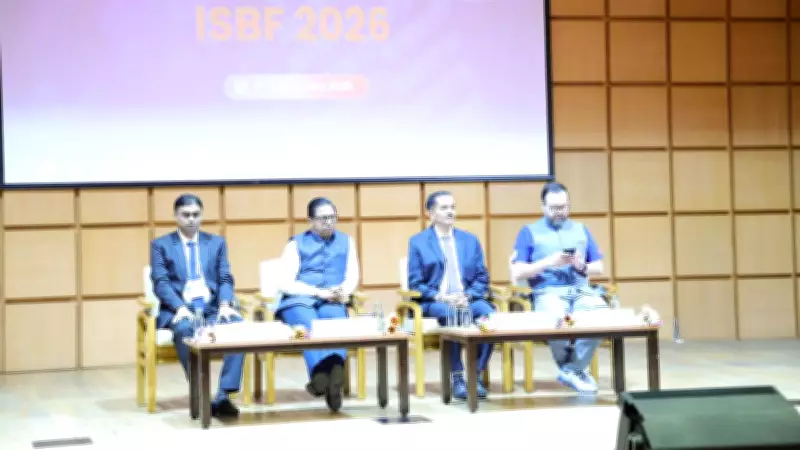
In a significant address at the Indo–Swiss Blockchain Forum 2026, K Rajaraman, Chairperson of the International Financial Services Centres Authority (IFSCA), articulated India's regulatory stance on blockchain technology as one of measured restraint rather than hasty adoption. Speaking at the inaugural session held at Rashtriya Raksha University (RRU) in Gujarat, Rajaraman underscored the critical importance of trust in financial systems, stating, "Trust is very expensive. It takes a long time to build but can be destroyed in a nanosecond."
Regulatory Principles: Same Activity, Same Risk, Same Regulation
Rajaraman elaborated on IFSCA's foundational regulatory principle, which mandates that any technology operating within the financial ecosystem must adhere to standards of accountability equivalent to traditional institutions. "If you perform the functions of a bank, you will be regulated like a bank, regardless of whether your ledger is a SQL database or blockchain," he asserted. This approach, encapsulated as "same activity, same risk, same regulation," aims to ensure that innovations do not compromise financial stability or security.
Distinguishing Blockchain from Crypto Assets
The IFSCA chief drew a clear distinction between blockchain technology and crypto assets, revealing that cryptocurrencies have been explicitly barred from the GIFT International Financial Services Centre ecosystem. "We have not allowed cryptocurrencies into the GIFT-IFSC ecosystem due to concerns around anti-money laundering, counter-terror financing, and financial instability," Rajaraman explained. He highlighted that the inherent volatility and anonymity associated with cryptocurrencies pose substantial risks to financial integrity and national security, necessitating stringent oversight.

Governance Challenges in Decentralized Networks
While acknowledging blockchain's evolution from speculative ventures to a component of global financial infrastructure, Rajaraman cautioned against the governance challenges posed by decentralization. "In traditional finance, there is a clear chain of responsibility when things go wrong. In a fully decentralized network, that safety net disappears," he noted. He further warned that "a system without a defined point of responsibility may be resilient in operation, but fragile in governance," emphasizing the need for robust regulatory frameworks to address these vulnerabilities.
Legal and Evidentiary Hurdles in Blockchain Integration
Rajaraman also pointed to significant legal and evidentiary obstacles in incorporating blockchain into existing judicial and regulatory systems. "Many jurisdictions, including India, require electronic evidence to be certified by a person in charge, which is practically incompatible with decentralized, permissionless blockchains that have no central authority," he stated. Unresolved issues such as cross-border jurisdiction, immutable records, and the admissibility of blockchain-based evidence in courts continue to impede broader deployment. To navigate these complexities, IFSCA is utilizing regulatory sandboxes to test limited, well-defined use cases, including the tokenization of real-world assets.
Forum Highlights and Bilateral Collaboration
The three-day Indo–Swiss Blockchain Forum, organized by RRU's School of Applied Sciences, Engineering and Technology in collaboration with the University of Zurich, convened regulators, academics, and industry experts from India and Switzerland to explore blockchain's applications in finance, governance, and security. RRU Vice-Chancellor Bimal N Patel emphasized the university's role as a nexus for policy, technology, and national security, noting, "Blockchain is increasingly becoming part of the DNA of global financial infrastructure." He stressed the imperative for institutions like RRU to foster innovation that bolsters economic and internal security.

Lena Robra, Head of Swissnex India, highlighted the bilateral significance of the forum, asserting that research-led collaboration between India and Switzerland is pivotal as trust becomes a cornerstone of digital systems. "Trust will become one of the most important currencies," she remarked, underscoring the shared commitment to advancing secure and accountable technological frameworks.





