

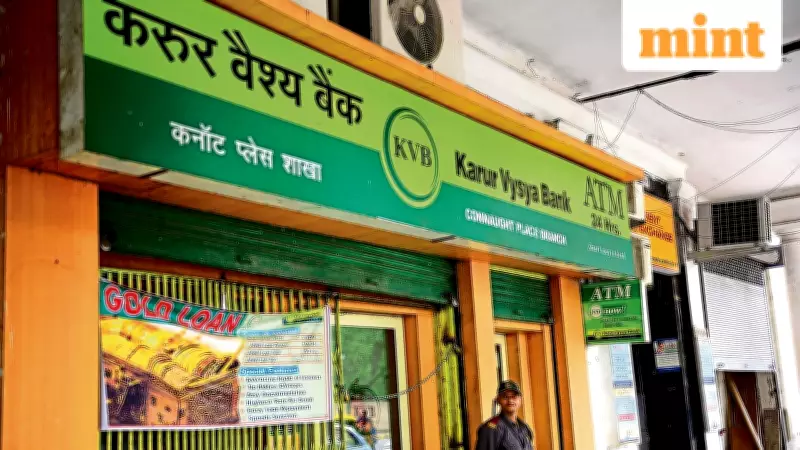
Karur Vysya Bank Share Price: A Comprehensive 3-Year Outlook and Analysis
The stock of Karur Vysya Bank has demonstrated impressive performance over the past year, delivering substantial returns to investors. This analysis delves into the bank's future prospects over the next three years, examining key growth drivers, financial metrics, and potential challenges. It is crucial to note that this editorial does not constitute a stock recommendation but provides informational insights for investors.
Recent Performance and Current Standing
Karur Vysya Bank shares have shown remarkable growth, climbing from ₹185 on 27 January 2025 to ₹293.3 on 27 January 2026. This represents a significant 58% return over the one-year period, substantially outperforming benchmark indices and the Nifty Bank index. The bank, originally established to support local traders and agriculturists, has evolved into a nationwide scheduled commercial bank with extensive operations across India.
Key Growth Drivers for Karur Vysya Bank
The bank's positive trajectory is supported by several fundamental strengths:

- Robust Financial Growth: In Q3 FY26, Karur Vysya Bank reported total business of ₹211,647 crore, marking a 16.29% increase. This balanced growth stems from both lending and deposit activities, creating a solid foundation for future expansion.
- Strong Deposit and Loan Growth: The bank's deposit base grew by 15.57% year-on-year in Q3 FY26, while the loan book expanded by 17.16%. Both metrics are growing above industry averages, indicating healthy business momentum.
- Excellent Capital Adequacy: With a Capital Adequacy Ratio (CRAR) of 16.05% as of 31 December 2025 under Basel III guidelines, the bank maintains a comfortable buffer above the regulatory requirement of 11.5%, providing resilience against potential stress.
- Improving Asset Quality: Gross Non-Performing Assets (GNPA) improved to 0.71% of gross advances as of 31 December 2025, down from 0.83% a year earlier. Net Non-Performing Assets (NNPA) remain below 1% at 0.19%, reflecting strong credit management.
- Beneficial Interest Rate Environment: The current low-interest-rate regime, supported by RBI rate cuts during FY25, is expected to boost demand for loans in segments like home loans, business loans, and consumer credit, potentially enhancing the bank's net interest income.
Financial Performance Highlights: Q3 FY26
The bank's third-quarter results for FY26 exceeded expectations, contributing to a stock surge of up to 10% in trading. Key financial metrics include:
- Net interest income increased by 14.62% to ₹1,239 crore compared to ₹1,081 crore in the same quarter last year.
- Net profit grew by 39% to ₹690 crore from ₹496 crore in the corresponding quarter of the previous year.
- Cost of deposits decreased to 5.47%, down 19 basis points from 5.66% in the year-ago quarter.
- Cost-to-income ratio improved to 42.49% from 47.27% in Q3 of the previous year.
- Net interest margin stood at 3.99%, slightly lower than the 4.04% recorded in the same quarter last year.
Potential Challenges and Risks
While Karur Vysya Bank shows strong fundamentals, it faces industry-wide challenges that could impact future performance:

- Credit and Asset Quality Risks: Economic slowdowns, inflation, or rising unemployment could affect borrowers' repayment capacity, potentially increasing non-performing assets and requiring higher provisions.
- Regulatory and Compliance Pressures: Changes in banking regulations concerning capital adequacy, lending practices, KYC procedures, data protection, and consumer rights may increase operational costs or limit growth strategies.
- Intense Competitive Landscape: The bank competes with both private and public sector banks, as well as fintech companies and neobanks offering digital services. This competition could pressure lending rates, fee income, and customer acquisition costs.
What to Expect Over the Next Three Years
Given the strong Q3 FY26 results and the 58% stock appreciation over the past year, investors should carefully evaluate whether positive developments are already priced into the current valuation. Stocks often experience consolidation periods after significant rallies, making price consideration crucial. Key factors for investor due diligence include:
- Fundamental analysis of the company's financial health and growth prospects
- Assessment of corporate governance standards
- Evaluation of stock valuation relative to peers and historical averages
Karur Vysya Bank's nationwide presence across 22+ states, with approximately 898 branches and over 2,211 ATMs/cash recyclers, positions it well for continued growth. The bank's focus on retail, corporate/wholesale, treasury, agricultural banking, NRI, and SMB services provides diversified revenue streams.
Investors should conduct thorough research and consider their risk tolerance before making investment decisions. This analysis serves informational purposes only and should not be treated as investment advice.





