

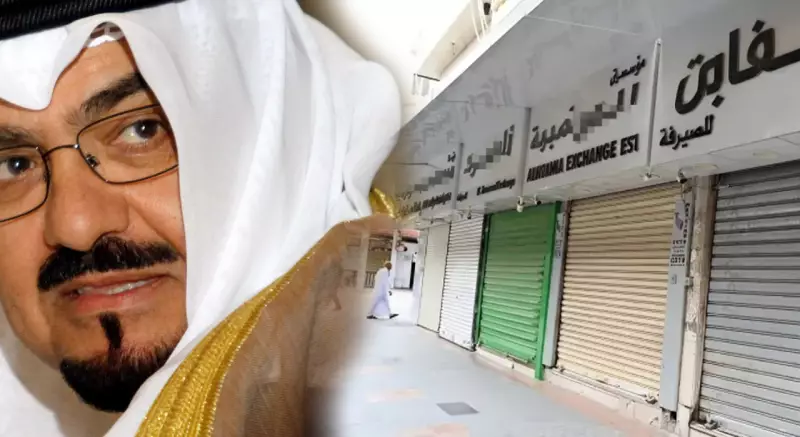
In a major move to tighten control over its financial sector, Kuwait's government has approved a stringent new draft law that criminalises all unlicensed currency exchange activities. The decision aims to dismantle informal trading networks and curb hawala-style operations that pose risks of money laundering and fraud.
Stiff Penalties for Individuals and Businesses
The proposed legislation introduces severe punishments for anyone caught buying, selling, exchanging, or transferring local or foreign currency for the public without an official licence. This applies to operations conducted from physical shops, through online platforms, or via informal networks.
For individual offenders, the penalties include imprisonment for up to six months and fines reaching 3,000 Kuwaiti Dinars, or both. The law also empowers authorities to forcibly close any unlicensed shop or branch involved in such activities.

Business entities, classified as private legal entities, face even harsher financial repercussions. They can be fined between 5,000 and 20,000 Kuwaiti Dinars, alongside the potential closure of their establishments.
Broad Powers for Investigation and Enforcement
Beyond imprisonment and fines, the new framework discusses additional punitive measures. These include the confiscation of equipment and seized funds, the publication of court rulings to name and shame offenders, and various administrative sanctions.
Prosecutors and financial regulatory bodies will receive expanded authority to investigate and pursue cases linked to the shadowy world of informal exchange and hawala networks. The draft decree-law, which amends the existing Law Regulating Commercial Establishment Licenses (Law No. 111 of 2013), was endorsed by the Cabinet during a session chaired by the Prime Minister at Bayan Palace. It now proceeds to the next legal steps before being enacted.
The Scale of the Problem in Kuwait
While Kuwait has not released consolidated figures on prosecuted unlicensed exchange cases, recent enforcement data highlights the scale of the issue. The country's Financial Intelligence Unit received 2,241 reports suspicious of money laundering in a recent cycle. Notably, roughly 29% of these—approximately 640 cases—were connected to exchange companies, indicating significant scrutiny on this sector.
In related crackdowns, the Ministry of Interior recently dismantled three criminal networks involved in forged visas and underground remittance channels, leading to over 20 arrests. These operations often intersect with illegal currency transactions.
Pressure on the formal sector is also increasing. Compliance inspections by the Central Bank have led to the closure or temporary suspension of more than 130 licensed exchange shops for violating anti-money-laundering rules. Officials acknowledge the challenge of quantifying the total volume of money moved through informal hawala networks due to their clandestine nature.
The government states that this legislative overhaul is designed to strengthen financial oversight, protect consumers from potential fraud, and align Kuwait with international standards for combating illicit financial flows.






