NBFCs Emerge as Crucial Financial Bridges in India's Evolving Landscape
India's financial sector is witnessing a profound transformation. While formal banking networks have expanded considerably, substantial gaps remain, particularly in semi-urban and rural regions. Non-Banking Financial Companies (NBFCs) are increasingly stepping into this void, serving as vital intermediaries that drive inclusive finance through trust-based relationships, extensive last-mile presence, and highly adaptable financial products.
Human Connection Meets Digital Innovation
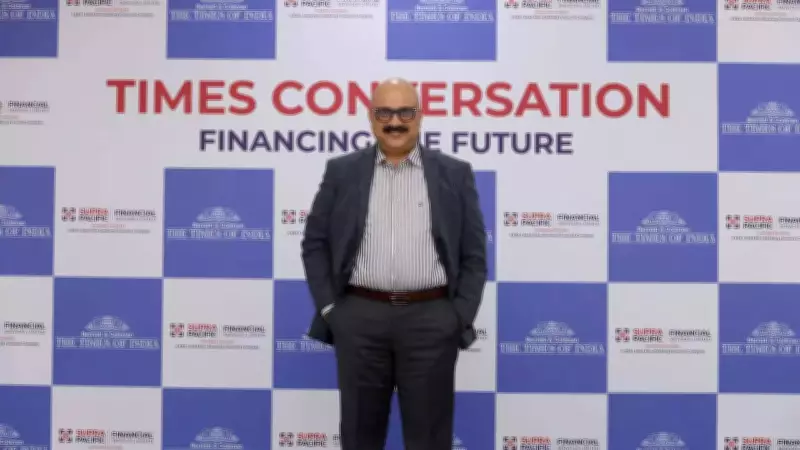
In a recent conversation with The Times of India, Joby George, Managing Director of Supra Pacific Financial Services Limited—an NBFC operating 88 branches nationwide—shared deep insights into this evolution. George highlighted NBFCs' distinctive advantage: their proximity to local communities and capacity to design products around actual needs rather than rigid, one-size-fits-all templates. "Well-crafted financial interventions can change the course of families and livelihoods," he emphasized.
Post-pandemic, digital comfort has grown across customer segments. However, George stresses that technology alone cannot adequately serve smaller towns and semi-urban markets. "People still want someone they can talk to—someone who understands their livelihood and community," he noted. Physical branches remain crucial for building trust, improving collections, and deepening relationships. While technology enables scale, face-to-face interaction establishes the credibility essential in these markets.

Enabling Growth Through Responsible Lending
At the heart of Supra Pacific's philosophy lies a straightforward principle: lending should enable progress, not create burdens. "In today's Indian economy, loans no longer need to be a burden," George asserted. NBFCs can address significant credit needs for first-time borrowers who fall outside conventional banking frameworks, guided by three core pillars:
- Responsible underwriting practices
- Genuine understanding of customer circumstances
- Respect for human dignity throughout the process
From his extensive experience in smaller markets, George identified key behavioral patterns:
- Customers value relationships over interest rates.
- Simplicity in products trumps unnecessary sophistication.
- Respectful treatment fosters loyalty spanning years.
- Community credibility spreads more effectively than advertising.
- Sincerity and consistency are ultimately rewarded.
Everyday Credit Products with Transformative Impact
George emphasized the importance of everyday financial products over complex instruments. Two-wheeler loans, microfinance, and gold loans effectively serve customers often overlooked by traditional banks—including those with low CIBIL scores or requiring quick access to funds. These borrowers, frequently from lower economic strata, utilize funds for personal needs, small business ventures, or shop operations. "When companies lend responsibly, they're not just giving money—they're giving people a chance to grow," he explained.
Gold loans demand particular empathy, as customers pledging gold often face urgent crises. "Gold is emotional capital for Indian families, carrying memories and security," George elaborated. Their appeal lies in speed, fairness, and minimal documentation requirements. During uncertain times, families naturally turn to assets they own. George also noted gold's investment potential, with strong recent returns positioning it as a safe global asset class. He advocates for small-denomination investment products to democratize access to these gains.
Flexibility as a Foundation for Trust
Across rural and semi-urban India, George observed not financial irresponsibility, but widespread credit inaccessibility. Effective products must be simple, quick, transparent, and aligned with cash-flow patterns. He shared an illustrative example: a semi-urban borrower whose income peaked during festival seasons would have defaulted under rigid EMI schedules. By realigning repayment terms, the loan was fully cleared, leading to a repeat expansion loan. "Flexibility protects good customers and reduces family stress," George remarked.

The next frontier involves products that blend digital convenience with local insight, specifically tailored for informal workers, micro-entrepreneurs, and small farmers—millions currently excluded from formal credit systems.
Microfinance: Beyond Small-Ticket Lending
Microfinance should be reframed as confidence-building rather than merely small-ticket lending. Women borrowers often launch enterprises, influence household decisions, and inspire their communities, creating powerful ripple effects. This approach targets potential, not just poverty, and ethical practices consistently yield strong repayment rates.
Addressing Kerala's legacy of 'blade companies' stigma, George clarified the underlying economics: fund costs of 13.5-14% plus operational expenses of 5-6% necessitate interest rates above 20% for viability. Pandemic disruptions led some institutions to unsustainable rollovers. Responsible microfinance must balance access with caution, fueling economic recovery without increasing vulnerability.
Customer-Centric Interactions Build Lasting Relationships
First-time borrowers commonly grapple with documentation fears, credit history gaps, repayment anxiety, interest rate misconceptions, and literacy challenges. NBFCs must patiently educate customers, building their financial confidence. In competitive markets, service quality becomes the key differentiator. "Finance runs on trust, not money," George stated. Treating customers as partners through consistent, transparent, and fair engagement—especially during difficult periods—earns lifelong loyalty.
Listed NBFCs navigate dual oversight from RBI and SEBI, offering product flexibility within regulatory compliance. Timely repayments via debentures and debt instruments build market credibility and facilitate capital access.
Health Insurance: The Next Frontier for Financial Inclusion
George spotlighted insurance as a significant opportunity, where penetration lags behind Western levels despite numerous state and private players. NBFCs can lead in health coverage amid soaring medical costs—hospitalization expenses are rising with increasing ties to global hospital chains. "Health insurance is no longer a luxury; it's a necessity," he urged, particularly for seniors and low-income groups facing mismatched products.
NBFCs' established community trust positions them ideally to create simple, affordable plans that account for irregular incomes and specific vulnerabilities, paired with effective awareness campaigns. This approach reduces anxiety, stabilizes households, and prevents medical debt in an era of persistent healthcare inflation.
India's financial future fundamentally hinges on empathy, adaptability, and trust. NBFCs are uniquely positioned to bridge underserved segments through face-to-face finance, enabling products, and ethical practices. As George envisions, strategically blending digital scale with human understanding will unlock inclusive growth for millions across the nation.