

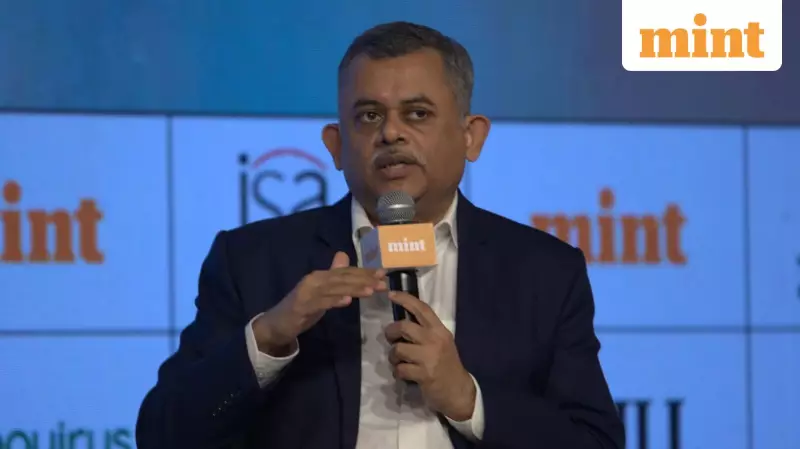
The Reserve Bank of India (RBI) has likely concluded its interest rate-cutting cycle for now, according to a top economist. Neelkanth Mishra, Chief Economist at Axis Bank and Head of Global Research at Axis Capital, stated on Tuesday that rising headline inflation is limiting the central bank's room for further monetary easing.
Inflation Outlook Limits Monetary Policy Space
Mishra, who also serves as a part-time member of the Prime Minister's Economic Advisory Council, explicitly stated he does not anticipate more rate reductions. "I don't expect more rate cuts because headline inflation will start rising," he said. However, he described a scenario of keeping interest rates "lower for longer" as reasonable to factor in.
His forecast projects India's headline inflation to average approximately 4% in the financial year 2026-27 (FY27). This comes after the RBI's Monetary Policy Committee (MPC) implemented a cumulative reduction of 125 basis points in the repo rate during 2025 to bolster economic growth during a period of benign inflation.

Above-Trend Growth vs. Persistent Economic Slack
Mishra emphasized that despite the economy exhibiting strong, above-trend growth, inflationary pressures are expected to remain contained. "Despite above-trend growth, we do not expect inflation to really reach a point where it requires policy tightening," he explained. Trend growth refers to a sustainable growth rate over a medium-term period.
This assessment is based on the existing output gap—the difference between the economy's actual and potential output—which indicates persistent slack. Mishra highlighted in an Axis Bank report dated December 10 that ongoing regulatory reforms are likely to support upward revisions to India's trend-growth assumptions. Given the economic slack, the economy can sustain above-trend growth for several years before inflationary pressures intensify.
Government data released in November showed India's economy expanded by a robust 8.2% in the July-September quarter, surpassing both economist estimates and the RBI's 7% forecast.
Core vs. Headline Inflation Debate Reignites
The Axis Bank report also addressed the significant and persistent divergence between food and core inflation over the past three years. This trend has reignited the debate over whether the MPC's headline inflation target of 4% with a +/-2% tolerance band remains the most appropriate benchmark.
Mishra noted that while core inflation (excluding precious metals) has stayed below 3%, academic research suggests median inflation is a better gauge of underlying price pressures. This metric has been stable near 3% for 18 months, signaling persistent economic slack. "This is why, despite above-trend growth and a rebound in food prices, we expect FY27 headline inflation to average 4%," Mishra stated.
He added that while the debate is inconsequential unless the law changes, core and food inflation trends, which may diverge in the short term, tend to move together over longer periods.
The RBI has already initiated a consultation process on this very issue. In August, it sought views on whether monetary policy should track headline inflation or core inflation (which excludes food and fuel). Furthermore, the central bank released a discussion paper on its inflation-targeting framework seven months ahead of its scheduled review in 2026. The current framework, set in 2021 after government-RBI consultations, is reviewed every five years.






