

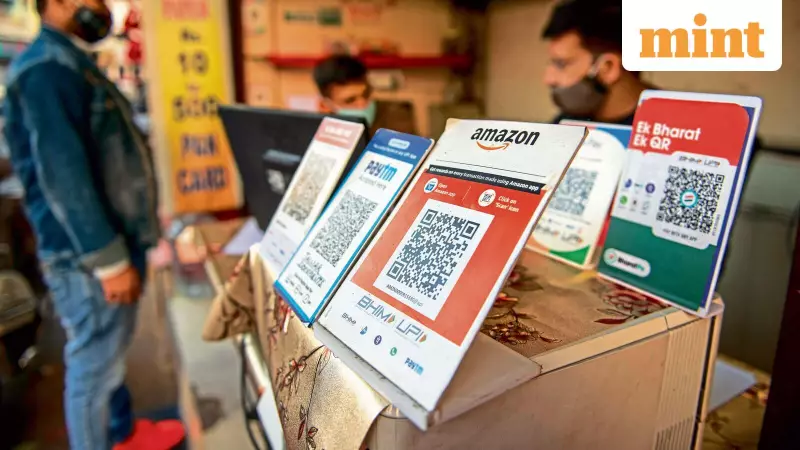
The National Payments Corporation of India's (NPCI) ambitious plan to enforce a market share cap on the Unified Payments Interface (UPI) ecosystem is facing significant practical challenges, according to regulators and financial sector experts. The proposal, which aims to restrict any single app to processing just over a third of total UPI transactions by December 2026, is being described as a tough ask given the current market dynamics.
The Elusive 30% Cap and Glacial Market Shifts
Originally introduced in 2020 to counter concentration risk, the 30% volume cap has seen its deadline postponed twice, with the latest extension pushing it to the end of 2026. The urgency stemmed from the dominance of two players: PhonePe and Google Pay, which together accounted for nearly 80% of transactions at the time.
Recent data, however, shows only a marginal shift. As of October, these two giants still commanded 82% of all UPI transactions, a slight reduction from 86% a year earlier. This 400 basis point gain by smaller apps indicates competition is increasing, but at an extremely slow pace. The Bharat Interface for Money (BHIM) app, NPCI's own offering, saw its share rise to 0.62% in October from 0.2% in October 2024, thanks to a revamp and targeted incentives.

The Core Problem: A Revenue-Less Model and Network Effects
Experts pinpoint the absence of a Merchant Discount Rate (MDR) as the fundamental barrier. Since January 2020, UPI payments have generated zero direct revenue for service providers, eliminating the financial incentive for new or smaller players to invest heavily. Parijat Garg, an independent fintech expert, summed it up: "There are existing apps that have both the reach and the capital to do it, but without any earnings from payments, why would someone do it?"
This economic reality has led domestic banks to largely retreat from the UPI app race, viewing it as a high-cost, zero-return venture. Furthermore, the market is governed by strong network effects. Consumer habits are hard to change; once users adopt an app, it becomes their default. The prevalence of QR codes branded with market leaders' logos further entrenches this behavior, even though the codes are technically interoperable.
Regulatory Skepticism and Search for Alternatives
The Reserve Bank of India (RBI) has publicly expressed doubts about a hard cap. Deputy Governor T. Rabi Sankar, at a recent Mint BFSI Conclave, questioned its feasibility: "How do you implement a cap? Can you ask an entity that is actively doing business to say that you stop acquiring customers?"
Instead of a blunt instrument, experts and industry bodies are proposing softer measures. These include:
- Launching new UPI features exclusively on smaller third-party application providers (TPAPs) to attract users.
- Promoting the use of multi-logo QR codes to improve brand recall for newer apps.
- Implementing a regulatory ceiling on the share of government subsidies (like the 0.15% incentive for small merchant transactions) that any single player can receive, as suggested by the India Fintech Foundation (IFF).
- Incentivising interoperability and offering calibrated regulatory support for smaller players.
A senior payments executive warned that imposing a hard cap could backfire: "If you impose a cap on market share, even companies that are investing in UPI will stop putting in more money." The consensus is that kickstarting a competitive cycle may require reintroducing MDR, at least for larger merchants, to create a viable revenue model.
The spokesperson for PhonePe echoed the implementation dilemma, stating that asking companies to deny services to customers to stay under a cap would erode trust in the ecosystem. With UPI monthly volumes plateauing around 20.5 billion as of November, the quest for a balanced, competitive, and sustainable digital payments landscape continues, with the December 2026 deadline casting a long shadow over the industry's future structure.






