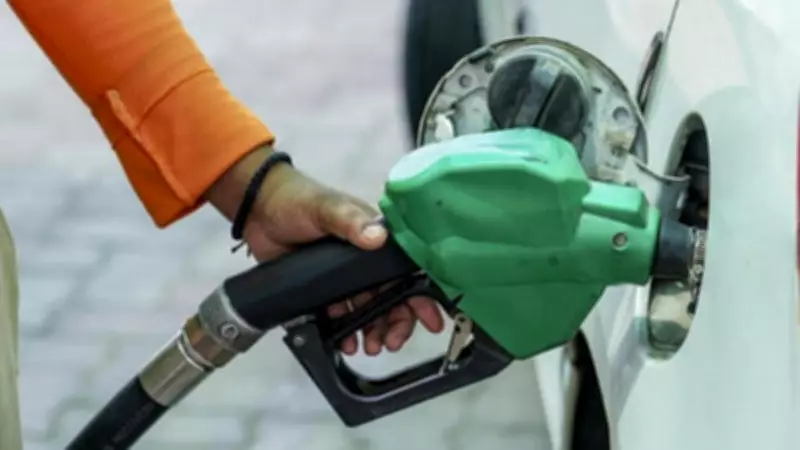
Petrol and diesel prices have been hiked for the fourth consecutive day, with petrol becoming more expensive by Rs 2.61 per litre and diesel by Rs 2.71 per litre. This latest increase has pushed fuel prices to new highs across the country.
Details of the Price Hike
The state-owned oil marketing companies—Indian Oil Corporation (IOC), Bharat Petroleum Corporation Ltd (BPCL), and Hindustan Petroleum Corporation Ltd (HPCL)—revised the prices effective from 6 am on November 4. In Delhi, petrol now costs Rs 110.04 per litre, up from Rs 107.43, while diesel is priced at Rs 98.42 per litre, compared to Rs 95.71 earlier.
Similarly, in Mumbai, petrol is now retailing at Rs 115.91 per litre (up from Rs 113.30), and diesel at Rs 106.31 per litre (up from Rs 103.60). In Chennai, petrol costs Rs 106.53 per litre (up from Rs 103.92), and diesel is at Rs 100.61 per litre (up from Rs 97.90). Kolkata sees petrol at Rs 111.60 per litre (up from Rs 108.99) and diesel at Rs 101.50 per litre (up from Rs 98.79).

Reasons Behind the Increase
The continuous rise in fuel prices is attributed to the sharp increase in global crude oil prices. International benchmark Brent crude has surged past $84 per barrel, marking its highest level in several years. The Organization of the Petroleum Exporting Countries (OPEC) and its allies have been reluctant to boost production despite rising demand, leading to supply constraints.
Additionally, the Indian government's high excise duties and state-level value-added tax (VAT) contribute significantly to the retail price. The central government had reduced excise duty on petrol and diesel by Rs 5 and Rs 10 per litre, respectively, in November 2021, but the recent hikes have eroded those benefits.
Impact on Consumers
The price hike has added to the financial burden of common citizens, affecting transportation costs, logistics, and overall inflation. The rise in fuel prices directly impacts the cost of essential commodities, as transportation expenses increase. Auto-rickshaw drivers, taxi operators, and other daily commuters are feeling the pinch, with many demanding fare revisions.
Industry bodies have expressed concern, stating that the sustained increase in fuel prices could derail the economic recovery post-pandemic. The Federation of Indian Chambers of Commerce and Industry (FICCI) has urged the government to consider a reduction in excise duty to provide relief.
Government's Stand
The government has maintained that the price revision is a market-driven mechanism, and oil marketing companies adjust rates based on international crude prices and other factors. However, opposition parties have criticized the government for not intervening to control prices. Congress leader Rahul Gandhi accused the government of failing to protect the common man from inflation.
Finance Minister Nirmala Sitharaman stated that the government is monitoring the situation and will take necessary steps to ensure stability. She also highlighted that the reduction in excise duty earlier was a significant relief measure.
What Lies Ahead
With global crude prices showing no signs of cooling down, further price hikes cannot be ruled out. Analysts predict that fuel prices may continue to rise in the coming days if the international situation remains volatile. Consumers are advised to plan their fuel purchases accordingly and consider fuel-efficient alternatives where possible.
The government may come under increasing pressure to provide relief, possibly through a cut in excise duty or a reduction in state VAT. However, any such move would have implications for government revenues, which are already strained due to the pandemic.
In the meantime, the common man continues to bear the brunt of rising fuel costs, with no immediate respite in sight.