

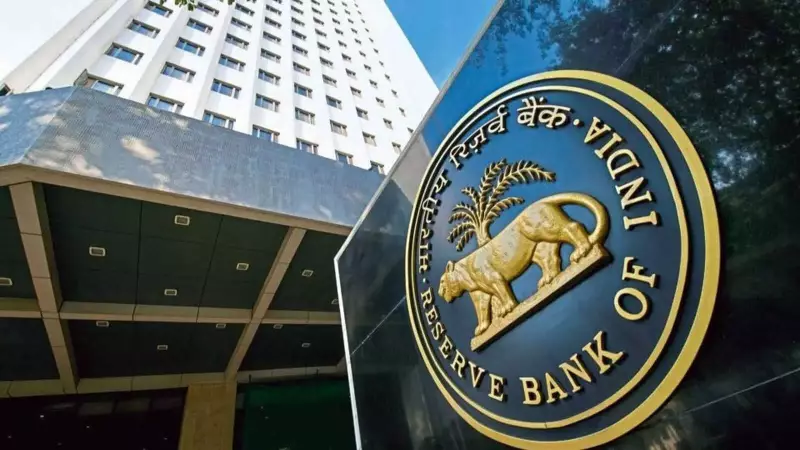
The Reserve Bank of India (RBI) has declared that the Indian banking system continues to demonstrate remarkable resilience and strength. This assessment is based on the central bank's comprehensive annual review, which highlights double-digit expansion in balance sheets and consistent profitability across the sector.
Strong Fundamentals Underpin Growth
In its 'Report on Trend and Progress of Banking in India' for the year 2024-25, released on Monday, the RBI presented a picture of a robust financial system. The aggregate balance sheet of the banking sector expanded by a healthy 11.2% during the year, reaching a staggering Rs 312.2 lakh crore. This growth was supported by nearly parallel increases in deposits and advances.
Deposits grew by 11.1%, while loans saw a slightly higher growth of 11.5%. A key positive indicator was the slower growth in borrowings at just 7%, signaling that credit expansion is being primarily funded by stable core deposits rather than more volatile market sources. Investments by banks also increased by 9.2% over the period.

Profitability and Asset Quality Show Sustained Improvement
The sector's profitability remained strong, marking the seventh consecutive year of profit growth for commercial banks. The net profit for the system rose by 14.7% to Rs 4,01,180 crore. Key profitability metrics held firm, with the Return on Assets (RoA) improving marginally to 1.4% and Return on Equity (RoE) remaining largely stable at 13.5%.
However, the report noted a moderation in the pace of profit growth compared to the previous year. This was attributed to rising funding and operational costs, which compressed the Net Interest Margin (NIM) to 3.1% from 3.3%.
The most striking achievement highlighted in the report is the continued clean-up of bank balance sheets. Asset quality recorded a marked improvement, with the gross non-performing assets (GNPA) ratio falling to a multi-decadal low of 2.2%, down from 2.7%. In absolute terms, gross NPAs declined by 10.2% to Rs 4,31,634 crore.
The net NPA ratio showed an even more impressive improvement, dropping to just 0.5%. Net NPAs fell by 10.6% to Rs 95,388 crore. The slippage ratio, which indicates fresh accretion of bad loans, declined for the fifth year in a row, underscoring the durability of the recovery.
Resilience Built on Strong Pillars
The RBI's report conclusively states that the Indian banking sector's resilience is built on a solid foundation. It is underpinned by a strong balance sheet, sustained profitability, steadily improving asset quality, and high capital buffers. This combination of factors provides the system with the strength to withstand potential economic shocks and continue supporting the nation's credit needs.
The sustained improvement over multiple years, particularly in asset quality, points to a structural strengthening of the sector's health. This bodes well for the financial stability of the country and its capacity to fuel future economic growth.






