

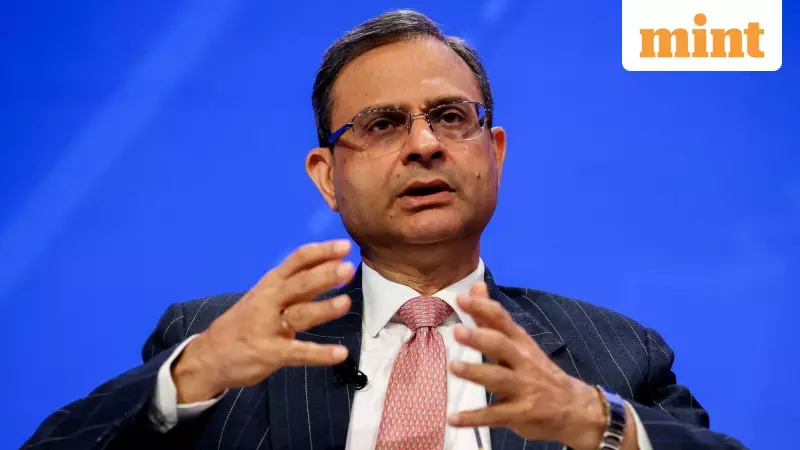
Reserve Bank of India Governor Sanjay Malhotra has emphasized the critical need for financial regulators to strike a delicate balance. He stated that pragmatic oversight must coexist with efforts to encourage innovation, ensure growth, and protect consumers. This central message was delivered in his foreword to the RBI's latest half-yearly Financial Stability Report released on Wednesday.
The North Star: Stability with a Purpose
Governor Malhotra affirmed that maintaining financial stability and strengthening the financial system remain the regulator's unwavering priority, or "north star." However, he clarified that stability is not the ultimate goal in isolation. He stressed that these objectives of stability, innovation, and consumer protection are mutually reinforcing. They are vital for boosting productivity and securing long-term economic expansion for the nation.
"The most important contribution the policymakers can make is to foster a financial system that is robust and resilient to shocks, efficient in providing financial services and promotes responsible innovation," Malhotra noted. This philosophy aligns with the central bank's recent drive to simplify the regulatory landscape.

Deregulation Drive and Economic Resilience
In a significant administrative overhaul, the RBI recently consolidated its rulebook. In November, it released 244 consolidated master directions, which replaced a staggering accumulation of over 9,400 circulars and guidelines built up over decades. RBI Deputy Governor Shirish Murmu explained that this exercise aimed at eliminating redundancy, removing conflicts, and making compliance simpler for regulated entities, not at changing the core regulations.
On the economic front, Malhotra expressed confidence in India's domestic strength. He attributed the robustness of the economy and financial system to strong growth, manageable inflation, healthy corporate balance sheets, substantial buffers, and prudent policy reforms. India's GDP surprised with an 8.2% growth rate in the quarter ending September, surpassing the RBI's own projection of 7%.
The Monetary Policy Committee has subsequently raised its GDP forecast for 2025-26 to 7.3% from 6.8% and lowered its retail inflation projection to 2% from 2.6%. This optimism follows a 25 basis points repo rate cut to 5.25% in December, a decision taken during what the RBI termed a "rare goldilocks period" of robust growth and benign inflation.
Navigating Global Uncertainty and Challenges
Despite the strong domestic fundamentals, the RBI Governor cautioned about significant near-term challenges emanating from external spillovers. He pointed to a volatile and unfavourable global environment marked by geopolitical conflicts, trade tensions, and persistent policy uncertainty. The impact of US President Donald Trump's 50% tariff on Indian goods, particularly affecting textiles and auto components, was cited as an example.
Malhotra stated that while the global economy and financial system have shown more resilience than expected, the outlook for 2026 and beyond remains shrouded in uncertainty. "The contours of policies that are reshaping the global economic landscape remain fluid and untested," he observed. In response, the RBI continues to build strong guardrails to shield the Indian economy and its financial system from potential external shocks, ensuring the hard-earned stability is preserved.






