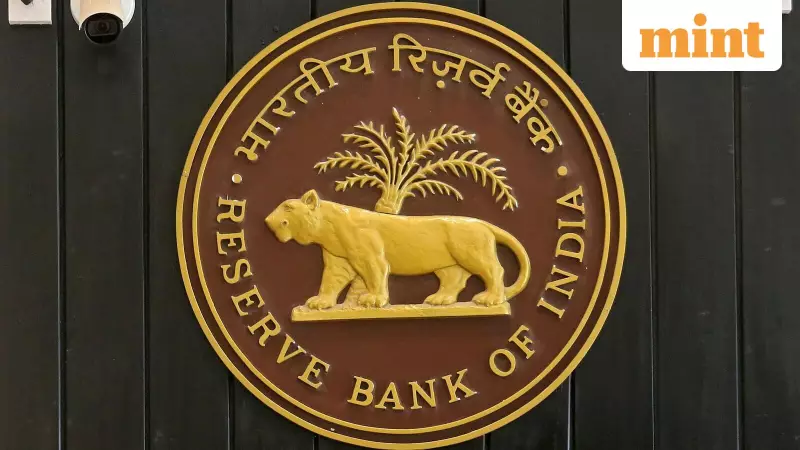
New data from the Reserve Bank of India (RBI) highlights a significant shift in the borrowing patterns of Indian households, with loans taken for personal consumption now commanding the largest share. According to the central bank's Financial Stability Report for December 2025, non-housing retail loans, primarily for consumption purposes, constituted 55.3% of all household borrowings in the first half of the fiscal year 2025-26 (FY26).
The Changing Landscape of Household Debt
This trend marks a consistent rise for the retail consumer loan segment since March 2019, allowing it to surpass traditional borrowing categories. In comparison, housing loans accounted for 28.6% of household debt in H1 FY26, while loans for agriculture and business activities made up the remaining 16.1%. This shift is occurring alongside a broader increase in household indebtedness across the country.
The report notes that the overall debt level of Indian households surged past its five-year average to reach 41.3% of the Gross Domestic Product (GDP) in the last financial year. This marks a "sustained increase" from the five-year average of 38.3%. However, the RBI provides context, stating that India's household debt level remains lower than that of most peer emerging market economies (EMEs).

Comparative Debt Levels and Borrower Profile
India's position is middling among key global economies. The household indebtedness level was lower than in Chile, China, Malaysia, and Thailand, where ratios ranged from 45.1% to 88% of GDP. Conversely, it was higher than in South Africa and Brazil, where levels stood between 33.8% and 36.6% of GDP.
Delving deeper into the consumption loan category, RBI data shows that personal loans alone had a dominant share of 22.3%. These were followed by loans for asset creation, like housing, and then loans for productive purposes. A potentially reassuring finding from the report is the improvement in the risk profile of borrowers. The share of 'prime and above rated' borrowers rose to 56.2% of total household loans by volume and 70.4% by value as of September 2025.
This increase in creditworthiness, evident in both the outstanding amount and the number of borrowers, suggests that the overall resilience of the household sector remains "sound." On the other end, 'subprime' borrowers accounted for 23% of the total number of loans but only 10.2% of the total loan value.
Savings Trends and Asset Allocation
Parallel to the debt narrative, the RBI report also tracks household savings. Net household financial savings improved to 7.6% of GDP in the fourth quarter of FY25 (Q4 FY25). This recovery was driven by a rise in financial assets and stabilising liabilities, with the stock of gross financial assets holding steady above 100% of GDP.
However, the growth in household financial wealth moderated, reflecting corrections in equity and investment fund valuations. In terms of where Indian households park their money, traditional instruments still reign supreme. Deposits, insurance, and pension funds together accounted for 69.2% of household financial wealth as of March 2025.
The share of equities and investment funds saw only a marginal increase. A Securities and Exchange Board of India (Sebi) survey cited in the report indicates that despite growing awareness, penetration of securities market products remains low at just 9.5% of India's 337.2 million households, primarily in urban centres.
The RBI underscored that within the securities market, equity is the dominant asset class for households. It noted that greater diversification into other asset classes could further aid the financialisation of savings and support long-term capital formation for the economy.