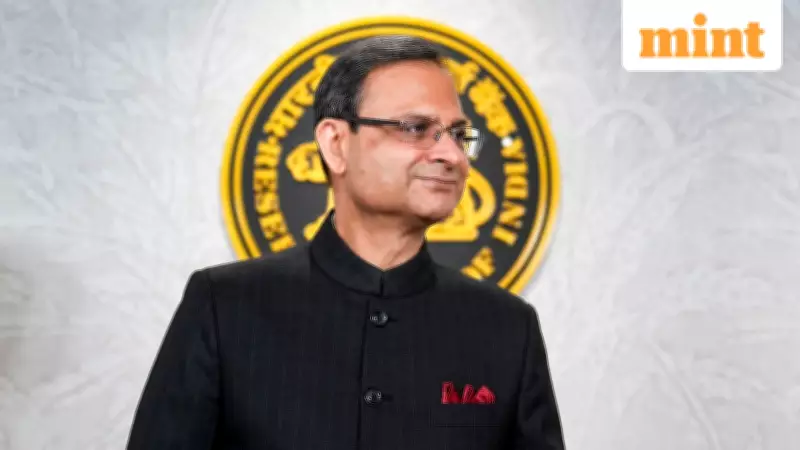
RBI Governor Emphasizes Proactive Liquidity Management Strategy
Mumbai: Reserve Bank of India Governor Sanjay Malhotra announced on Friday that the central bank's approach to liquidity management will be pre-emptive, with substantial allowances made for unexpected fluctuations in government balances, changes in currency circulation, and foreign exchange intervention requirements. This strategic direction comes as the RBI continues to navigate complex financial conditions while supporting economic growth.
Durable Liquidity Measures Implemented
Governor Malhotra detailed that the Reserve Bank executed several measures to provide durable liquidity during December and January. "Based on our assessment of systemic liquidity and its outlook, we announced and undertook further durable liquidity augmenting measures in the second half of January and February 2026," Malhotra stated during his address. These actions reflect the central bank's commitment to maintaining adequate liquidity in the banking system despite challenging conditions.
Financial experts had previously anticipated that the RBI's February policy would concentrate on liquidity measures, given that systemic liquidity remains constrained. Contributing factors include persistently high government cash surpluses and ongoing drains from foreign exchange intervention activities. The central bank's focus on liquidity rather than rate cuts aligns with market expectations and economic realities.

Monetary Policy Transmission Progress
Governor Malhotra provided significant insights into monetary policy transmission, revealing that in response to the cumulative 125 basis points reduction in the policy repo rate, the weighted average lending rate of scheduled commercial banks has decreased by approximately 105 basis points through December. Additionally, the weighted average domestic term deposit rate on fresh deposits declined by 95 basis points during the same period, demonstrating effective transmission of monetary policy decisions to the broader banking sector.
System Liquidity Dynamics
The governor presented detailed liquidity metrics, noting that "system liquidity as measured by the net position under the LAF, which is the liquidity adjustment facility, stood at a surplus of ₹70,000 crore on a daily average basis since the last MPC meeting in December 2025." However, Malhotra highlighted a significant development: "There has, however, been an uptick in February, and now it is almost ₹2 trillion," indicating substantial improvement in banking system liquidity conditions.
Government Securities and Global Influences
Malhotra addressed developments in government securities markets, noting that "G-Sec yields mirroring global trends have continued to harden over the last eight months due to a host of factors." This observation underscores the interconnected nature of domestic financial markets with global economic conditions and interest rate movements.
Forward-Looking Liquidity Commitment
The RBI governor outlined the central bank's future approach, stating: "Going ahead, the Reserve Bank will remain proactive in liquidity management and ensure sufficient liquidity in the banking system to meet the productive requirements of the economy and to facilitate monetary policy transmission." This commitment emphasizes the RBI's dual focus on supporting economic activity while ensuring effective implementation of monetary policy decisions.
Monetary Policy Committee Decision
The Monetary Policy Committee of the Reserve Bank of India maintained the repo rate at 5.25% during its Friday meeting, implementing a pause following a 25 basis points reduction in the December 2025 meeting. This decision reflects careful consideration of current economic indicators, inflation trends, and growth prospects while maintaining stability in financial markets.
The RBI's comprehensive approach to liquidity management, as detailed by Governor Malhotra, demonstrates the central bank's commitment to maintaining financial stability while supporting India's economic growth trajectory through carefully calibrated monetary policy measures and proactive liquidity interventions.