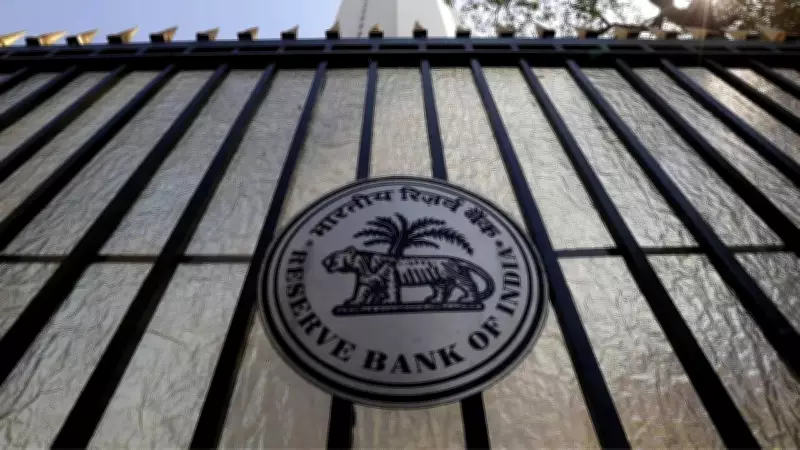
The government and the Reserve Bank of India (RBI) on Friday announced a series of coordinated measures aimed at attracting foreign portfolio investors (FPIs) and non-resident funds to government bonds and bank deposits. The strategy is designed to boost sentiment as well as capital flows, signaling openness, reducing friction, and offering a small subsidy from the RBI in the form of free insurance cover to banks against rupee depreciation. As a result, the rupee strengthened by 84 paise to close at 94.95 against the US dollar, compared with Thursday's close of 95.79, marking its biggest single-day gain in two months.
Key Measures Announced
Bankers believe the biggest impact could come from retail deposits. If individuals are allowed to park even borrowed funds in India to arbitrage the interest rate gap, inflows could surge by $30-40 billion. The proposition is further sweetened by an implicit safety net, with the RBI offering to swap dollars for rupees and back in the future at no cost, effectively hedging currency risk that would otherwise deter such trades. The underlying bet is that a surge in dollar inflows will stabilize the rupee without creating future vulnerabilities.
Concessional Swap and Hedging Support
The RBI also announced a concessional swap facility for external commercial borrowings raised by public sector undertakings, available until September 30, 2026. Additionally, a temporary window has been opened under which the RBI will bear the full hedging cost for fresh three- to five-year foreign currency non-resident deposits mobilized by banks over the same period.

Tax Exemptions for Foreign Investors
In a decisive fiscal-legislative push to complement the monetary stance, the government on Friday exempted foreign investors from income tax on both interest income and capital gains arising from investments in government securities (G-secs). This change was effected through an ordinance amending the Income Tax Act, with effect from April 1. The move marks a sharp departure from the previous regime, where FPIs were subject to a 12.5% long-term capital gains tax on listed securities held for over a year and a 20% withholding tax on interest income from government bonds. This improves the relative attractiveness of gilts in global portfolios.
Widening Participation in Equity Markets
In equity markets, the government widened the participation base by allowing individual persons resident outside India (PROIs) to invest directly in listed Indian companies through the portfolio investment scheme, a route previously restricted to non-resident Indians (NRIs) and overseas citizens of India (OCIs). The investment limit for such individuals has been raised to 10% per company, with the aggregate cap increased to 24%.
Expansion of Fully Accessible Route
The RBI also expanded the Fully Accessible Route (FAR), under which foreign investors can invest without restrictions, to include new issuances of 15-year, 30-year, and 40-year government securities, as well as sovereign green bonds of eligible tenors. Further liberalization was carried out under the general route for FPI investments, with the removal of short-term investment limits, concentration limits, and security-wise caps, while retaining the overall ceiling of 6% of outstanding central government securities and 2% for state loans.
Impact on Rupee and Capital Flows
The measures are aimed at shoring up the rupee, which has been among the worst-performing currencies in Asia, with portfolio investors pulling out close to Rs 2.6 lakh crore so far this year. Besides foreign portfolio investors, the ordinance also covers the Bank for International Settlements, headquartered in Basel. The coordinated actions are expected to boost foreign capital inflows, stabilize the rupee, and signal the government's commitment to an open and attractive investment environment.