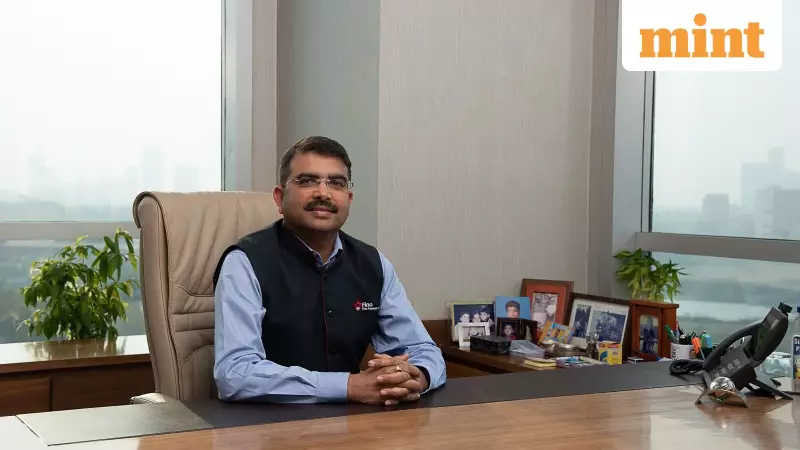
The Reserve Bank of India (RBI) made a landmark announcement on Friday, granting in-principle approval to Fino Payments Bank Ltd (FPBL) to transform into a small finance bank (SFB). This decision makes Fino the very first payments bank in India to receive such a green light from the central bank, setting a significant precedent in the country's banking evolution.
What the In-Principle Approval Means
This crucial in-principle approval is not the final licence. Instead, it provides Fino Payments Bank with a window to fulfil a set of regulatory conditions mandated by the RBI before it can officially operate as a small finance bank. The approval itself is a major milestone, capping off the company's 18-year journey in the financial sector.
The move was made possible under the RBI's 'on tap' licensing guidelines for small finance banks. These rules allow existing payments banks that are controlled by residents and have a minimum operational history of five years to apply for an SFB licence. The RBI confirmed that Fino's application was assessed according to the procedure detailed in these guidelines.

Fino's Strategic Bet on Its Merchant Network
Fino placed its bet on becoming an SFB when it applied for the licence in December 2023. The company's strategy hinges on leveraging its vast, existing merchant network as a foundation for its lending business. This network will serve a dual purpose: as an initial base for disbursing loans and as a channel for collecting repayments.
This network has shown impressive growth, now encompassing 2 million merchants, with 56,000 added just in the quarter ending September. The company's deposit base has also strengthened, with average deposits surging 36% year-on-year to reach ₹2,306 crore in the same quarter.
Outlining the differentiated model, Rishi Gupta, Managing Director and CEO of Fino, explained during the Q2 earnings call that the plan is to utilize the nationwide network of merchants and offices. He noted the company's strong corporate functions and stated intentions to bolster the team on the asset (lending) side.
The Payments Bank Legacy and the SFB Future
Payments banks were originally conceived by a committee led by former RBI board member Nachiket Mor. Their primary goal was to enhance financial inclusion by serving under-banked and unbanked populations. They are permitted to accept deposits of up to ₹2 lakh per customer but are notably prohibited from lending—a key restriction that small finance banks do not face.
Fino has built a substantial customer base within this framework. Its current and savings accounts hit 16 million in the September quarter, with 910,000 new accounts added. The daily account opening rate stood at 9,893, an 11% increase from the previous year.
India currently has six operational payments banks, including Airtel, Jio, India Post, NSDL, and Paytm, alongside Fino. The transition to an SFB would fundamentally change Fino's business model by allowing it to enter the lending arena.
Meeting the RBI's Stringent SFB Criteria
The RBI has set clear and strict criteria for entities wanting to become small finance banks. Applicants must maintain a minimum capital adequacy ratio of 15% of risk-weighted assets. Promoters are required to hold at least 40% of the paid-up voting equity capital for the first five years. If the initial holding is above 40%, it must be brought down to that level within the five-year timeframe.
Fino appears well-positioned on these metrics. As of the September quarter, its capital adequacy ratio was a robust 77.2%, far exceeding the requirement. Promoter shareholding was at 75%, which would need to be aligned with the 40% mandate over the stipulated period.
This approval follows another significant upgrade recently sanctioned by the RBI. On 7 August, the central bank cleared AU Small Finance Bank to transition into a universal bank, the first such upgrade in ten years. Meanwhile, Ujjivan Small Finance Bank, which applied for a universal bank licence in February last year, anticipates a decision by the end of 2025.